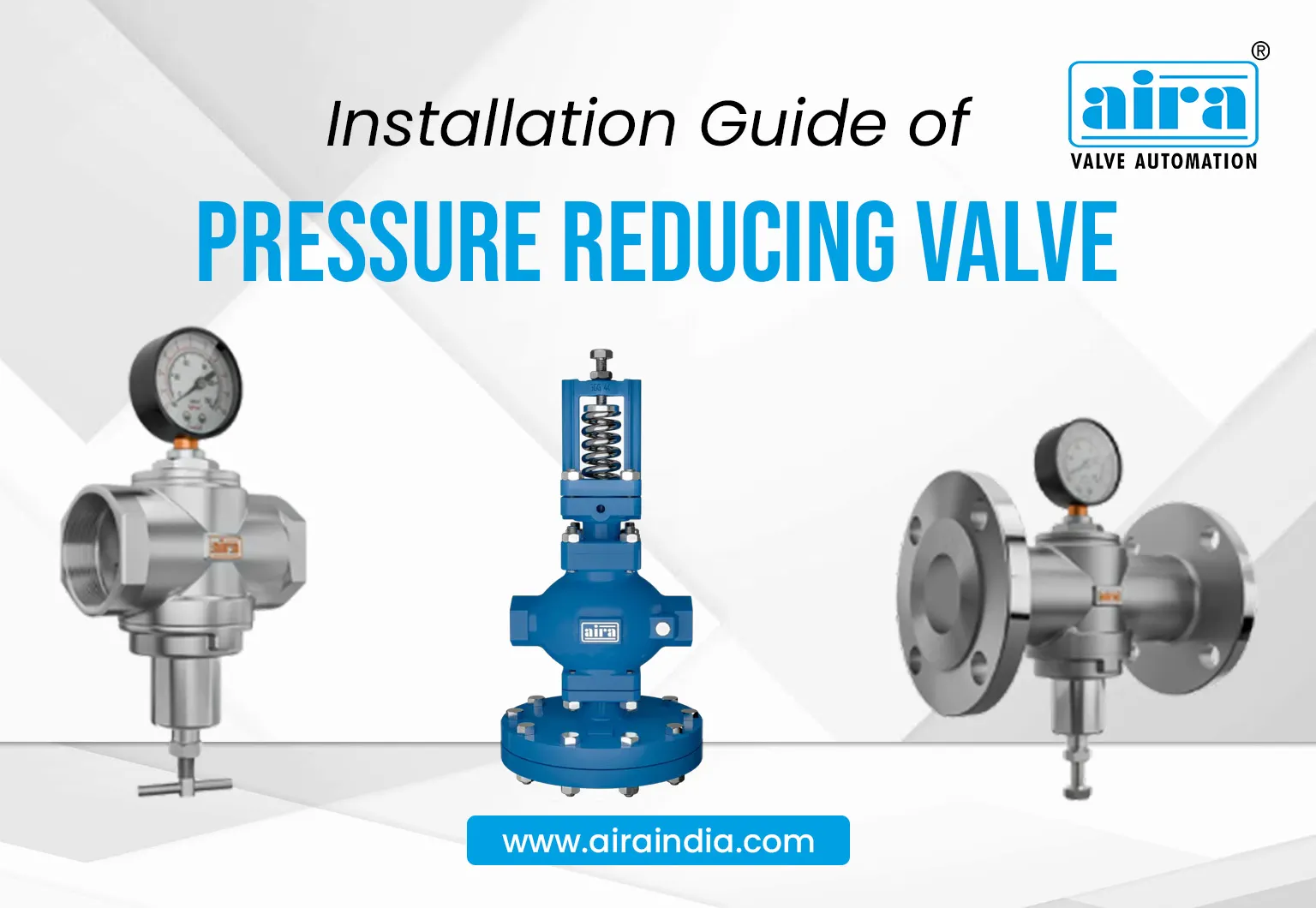
Hello readers! We are sharing an installation guide for Pressure Reducing Valves (PRVs). These valves reduce upstream pressure to a controlled, manageable level to protect pipelines and prevent water hammer. By adjusting the valve settings, stable downstream pressure is guaranteed across residential, institutional, and commercial applications. Note that advanced models may require an external sensor to function correctly. Additionally, the Pressure Independent Control Valve (PICV) utilizes a diaphragm-type DPCV to maintain a steady differential pressure across the orifice, ensuring a consistent flow rate.
Pressure reducing valves can be either direct acting or pilot operated. They are either globe or angle-shaped. The direct-acting valve has gained more popularity in comparison to globe-type bodies with a spring-loaded diaphragm, a spring, and a warm-safe diaphragm connected to the outlet valve. To increase the accuracy of water pressure control, the spring presets strain on the valve seat, which is a pressure-balancing mechanism.
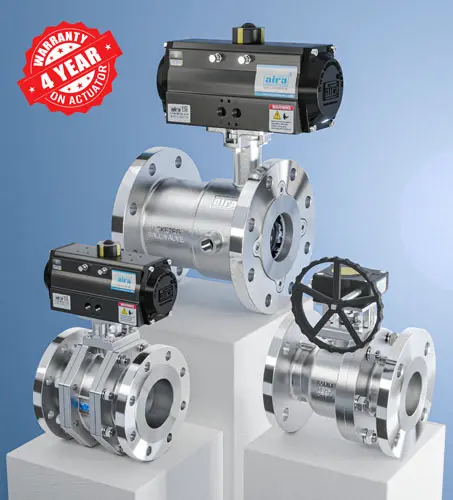
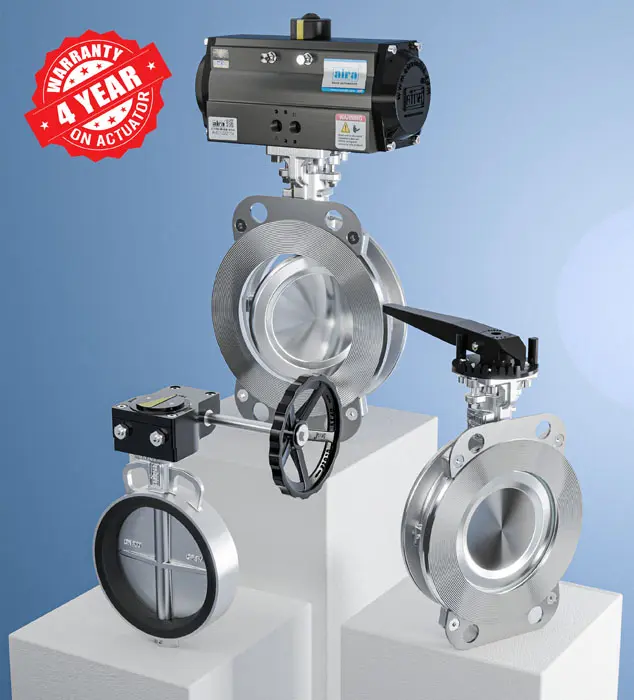
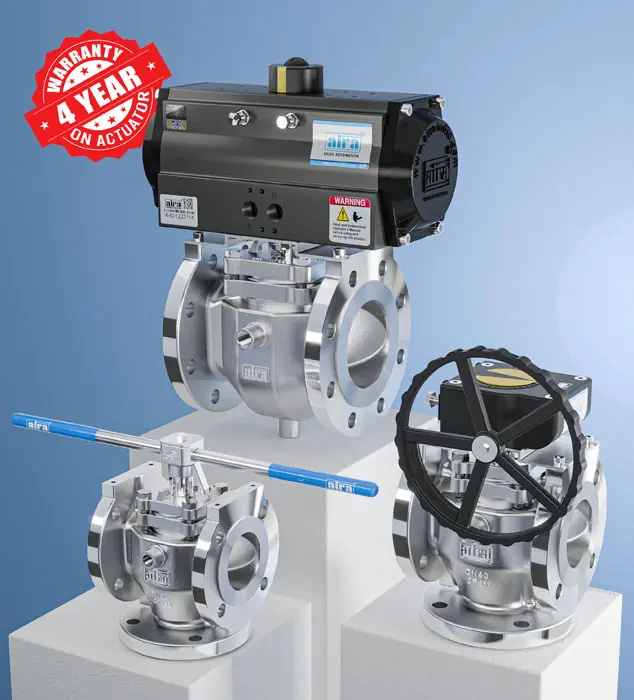
Aira Euro Automation is one of the world’s leading valve manufacturers and suppliers. Various types of industrial valves are available, as well as customised valves to meet the needs of various industries under one roof. Quality control departments test product samples before delivery.
Pressure Reducing Valve Assembly: Components and Configuration
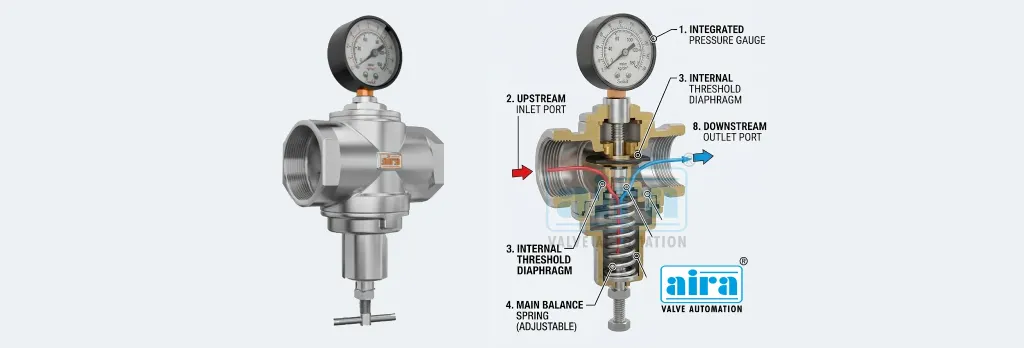
A Pressure Reducing Valve (PRV) assembly is a critical arrangement of components designed to protect downstream infrastructure from high-pressure surges. The core of the assembly is the PRV itself, which modulates fluctuating inlet pressure to a constant, lower outlet pressure. However, for the system to remain functional and maintainable, several auxiliary components are required.
The assembly typically begins with an isolation valve (such as a ball or gate valve) on both the inlet and outlet sides to allow for safe maintenance. A Y-strainer is essential upstream to capture debris and prevent damage to the PRV’s internal diaphragm or seat. Additionally, pressure gauges are installed on both sides to monitor the pressure differential in real-time. In high-stakes industrial setups, a bypass line is often included, allowing the system to remain operational during valve repairs, ensuring continuous flow and system integrity.
How Do You Properly Install and Assemble a Pressure Reducing Valve (PRV)?
Installing a Pressure Reducing Valve requires precision and a specific sequence of assembly to ensure the device accurately modulates water flow. Below is the comprehensive 13-step professional procedure.
Pressure Reducing Valve Installation Steps
- The first step is to determine the pressure of the inlet water. You can do this by attaching a pressure gauge to the hose sill.
- Install the pressure reducing valve if the pressure is exceedingly high.
- Attaching a pressure gauge at both ends with the help of threaded pipe and fittings is the first step towards creating the pressure reducing valve.
- The pressure reducing valve assembly should be positioned before the water pipe to mark where it should be cut.
- Once the main water supply has been shut off, drain any remaining water from the pipes.
- With a tubing cutter, cut the water pipe section on the mark made in step 4.
- It is necessary to remove the pressure gauges and rubber O-rings from the valve assembly.
- A brush of flux should be applied to the ends of the valve assembly.
- Assemble the valve assembly and weld it to the water pipeline.
- The pressure gauges and O-rings should be reinstalled after the assembly has cooled.
- Install a pressure gauge on the outlet side of the valve and turn on the main water supply.
- Using the anti-clockwise adjustment screw, lower the water pressure if it is too high.
- A screw should be turned counterclockwise at the inlet side when the pressure is very low.
Key Applications of Pressure Reducing Valves
Pressure Reducing Valves (PRVs) are essential safety and efficiency components across various sectors. By maintaining a constant downstream pressure, they protect infrastructure and reduce water wastage.
1. Domestic and Residential Protection
At the household level, PRVs act as a primary defense for plumbing systems. High-pressure water from municipal lines can cause pipes to burst or joints to leak.
- Appliance Longevity: They protect electric hot water storage heaters, washing machines, and dishwashers from internal seal failure caused by pressure spikes.
- Noise Reduction: By eliminating “water hammer” and whistling pipes, PRVs ensure a quieter home environment.
2. High-Rise Buildings and Domestic Water Distribution
In multi-story structures, gravity and high-pressure pumps create significant pressure differentials between floors.
- Zonal Control: PRVs are used to create “pressure zones,” ensuring that a tenant on the first floor doesn’t experience dangerously high pressure while a tenant on the top floor has adequate flow.
- Importance in Skyscrapers: Managing vertical water distribution is complex; for a deeper look at this specific challenge, read about the importance of PRV in high-rise buildings.
3. Collective and Multi-Unit Installations
In “collective installations,” such as apartment complexes or office parks, a large-scale PRV is often installed at the main service entrance.
- Centralized Management: This stabilizes the pressure for the entire facility before it branches off into individual units.
- Cost Efficiency: Using a collective installation reduces the need for individual valves in every unit, simplifying long-term maintenance for building managers.
4. Industrial and Manufacturing Settings
In industrial environments, pressure stability is not just about safety—it is about process precision.
- Equipment Protection: Many industrial machines require a very specific PSI to operate. PRVs prevent fluctuations that could lead to machine downtime or product defects.
- Steam and Chemical Lines: Beyond water, PRVs are utilized in steam and chemical processing to ensure that high-pressure boiler output is regulated to safe, usable levels for heat exchangers and reactors.
The pressure reducing valve has a wide range of applications and demand. For various industrial purposes, valve manufacturers like Aira Euro Automation Ltd are always prepared to make according to the user’s requirements.
Ready to Optimize Your System’s Performance?
Ensuring the longevity and safety of your infrastructure starts with high-quality pressure regulation. Whether you are managing a high-rise residential complex or a precision-driven industrial plant, Aira Euro Automation provides the world-class engineering valve solutions you need.
Don’t leave your pipelines to chance. Contact our expert team today to find the perfect Pressure Reducing Valve for your specific requirements, or browse our extensive range of quality-tested industrial valves to keep your operations flowing smoothly.