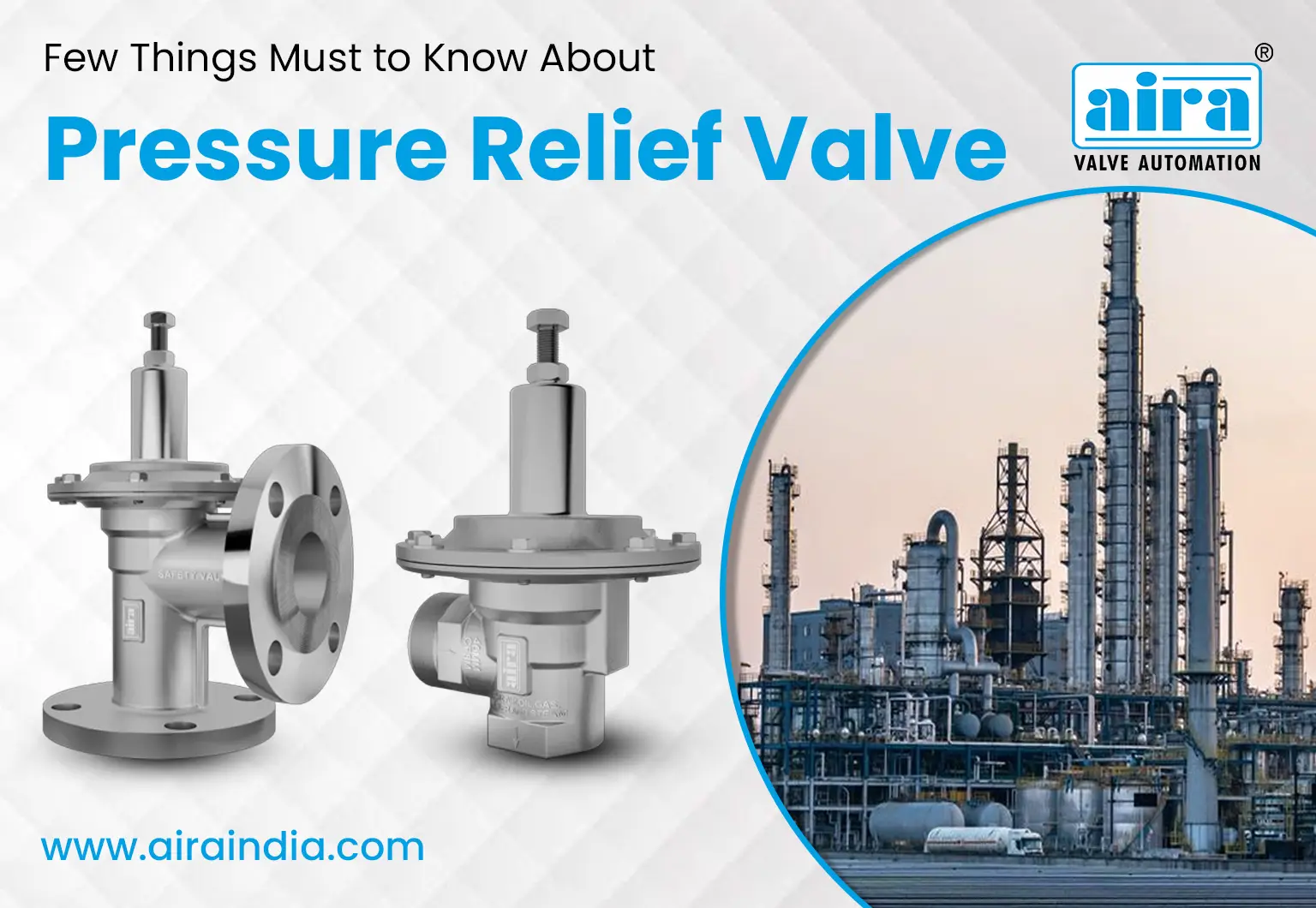
The Pressure Relief Valve is also known as a Pressure Safety Valve and, in short form, as a Safety Relief Valve. Here, we explore what a Pressure Relief Valve is, its history, and how it works. The following topics will definitely clear your confusion and help you choose the perfect pressure safety valve.
What is a Pressure Relief Valve?
A Pressure Relief Valve—often referred to interchangeably as a safety valve or pressure release valve—is an essential safety mechanism designed to protect piping systems, boilers, pressure vessels, and equipment from exceeding their maximum allowable working pressure.
Think of it as an insurance policy for industrial systems. Its primary job is to prevent catastrophic equipment failure, fires, or explosions caused by overpressure conditions.
Pressure Relief Valve History
The very first pressure relief valve was invented by Denis Papin around 1679. He created it for his “digester,” which was an early type of steam pressure cooker, to stop it from exploding due to high pressure.
His design used a simple lever arm with a heavy weight hanging from it to keep the valve closed. For the valve to open and let out steam, the pressure inside the cooker had to become stronger than the heavy weight holding the lever down. To increase the pressure limit, you either had to use a heavier weight or make the lever arm longer.
While this simple system worked, it had major problems:
- Took up too much space: The long lever arms required a lot of room.
- Easy to tamper with: Anyone could accidentally or intentionally move the weight, which could cause a dangerous explosion.
- Unstable: If the machine vibrated or bounced, the weight would shake, causing the valve to open too early and leak steam.
How a Pressure Relief Valve Works
During the operation, the pressure safety valve remains closed until the desired pressure is reached upstream. As the pressure reaches the set point, the valve automatically opens, allowing excessive pressure to pass through as the overpressure increases. When the upstream pressure drops to the desired pressure, the valve is set to close position again.
Pressure relief valves consist of three functional elements:
- Valve element, normally a spring loaded poppet valve.
- Sensing element, normally a diaphragm or piston.
- Reference force element. generally a spring.
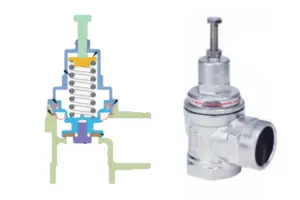
Direct Acting Deadweight Pressure Relief Valves
On early steam locomotives, direct-acting deadweight pressure relief valves were installed to avoid the disadvantages of the lever arrangement. This design applied weights directly to the top of the valve mechanism. The valve size was often undersized to maintain a reasonable weight range, resulting in a smaller vent opening than was required. In many cases, an explosion occurred when the steam pressure rose faster than the vent was able to release. Additionally, bouncing movements prematurely released the pressure.
Readers also like to read: 5 Innovations Shaping the Industry
Direct Acting Spring Valves
It is thought that Timothy Hackworth used direct acting spring valves on his locomotive engine, called the Royal George (circa 1828). To apply force to the valve, Timothy used leaf springs arranged in accordion fashion. Leaf springs would later be replaced with coil springs. It is possible to adjust the spring force by adjusting the nuts holding the leaf springs in place.
In response to the widespread use of steam boilers for powering locomotives, riverboats, and pumps, the direct acting spring relief valve design continued to be refined in subsequent years. Despite steam boilers being less common today, the safety relief valve continues to be a crucial component for protection against catastrophic failure in systems with pressure vessels.
Valve Element
As a valve element, pressure relief valves are commonly made with spring-loaded “poppet” valves. For high-pressure valve designs, the poppet has an elastomeric seal or a thermoplastic seal that seals the valve seat. The spring and the upstream pressure exert opposing forces on the valve when it is operating. Upstream pressure exerts a greater force than the spring power, which causes the poppet to move away from the valve seat, which allows fluid to pass through the outlet port. The valve closes when the upstream pressure falls below the set point.
Sensing element
In many cases, piston-style designs are chosen when higher relief pressures are needed, when ruggedness is an issue, or when tight tolerances are not required. Due to friction from the piston seal, piston designs tend to be slower than diaphragm designs. The diaphragm style is preferred for low pressure applications, or when high accuracy is necessary. Pressure changes are sensed by a thin disc shaped element in a diaphragm relief valve. For special applications, thin convoluted metal is used instead of an elastomer. With piston style designs, friction is effectively eliminated by diaphragms. Moreover, it is often possible to design a relief valve diaphragm that provides a greater sensing area than a piston style design for a particular relief valve size.
Reference Force Element
Mechanical springs are usually used as reference force elements. The spring pushes against the sensing element, closing the valve. It is common for pressure relief valves to be designed with an adjustment that allows the set-point for relief pressure to be adjusted by varying the force exerted by the reference spring.
Conclusion
Pressure safety valve working is a process of monitoring the pressure in the system; if the pressure goes beyond the set limits, then the pressure is reduced to a safe range. The pressure safety valve is one of the most important parts of the process since it acts as a safety valve. Its operation is based on the principle of the diaphragm. If the pressure exceeds the set limits, the diaphragm moves and opens the valve. Pressure relief valve working is a simple process of monitoring the pressure in the system. If the pressure exceeds the set limits, then the pressure is reduced to a safe range. Contact our engineers; they will assist in safety relief valve selection based on your process requirements.