
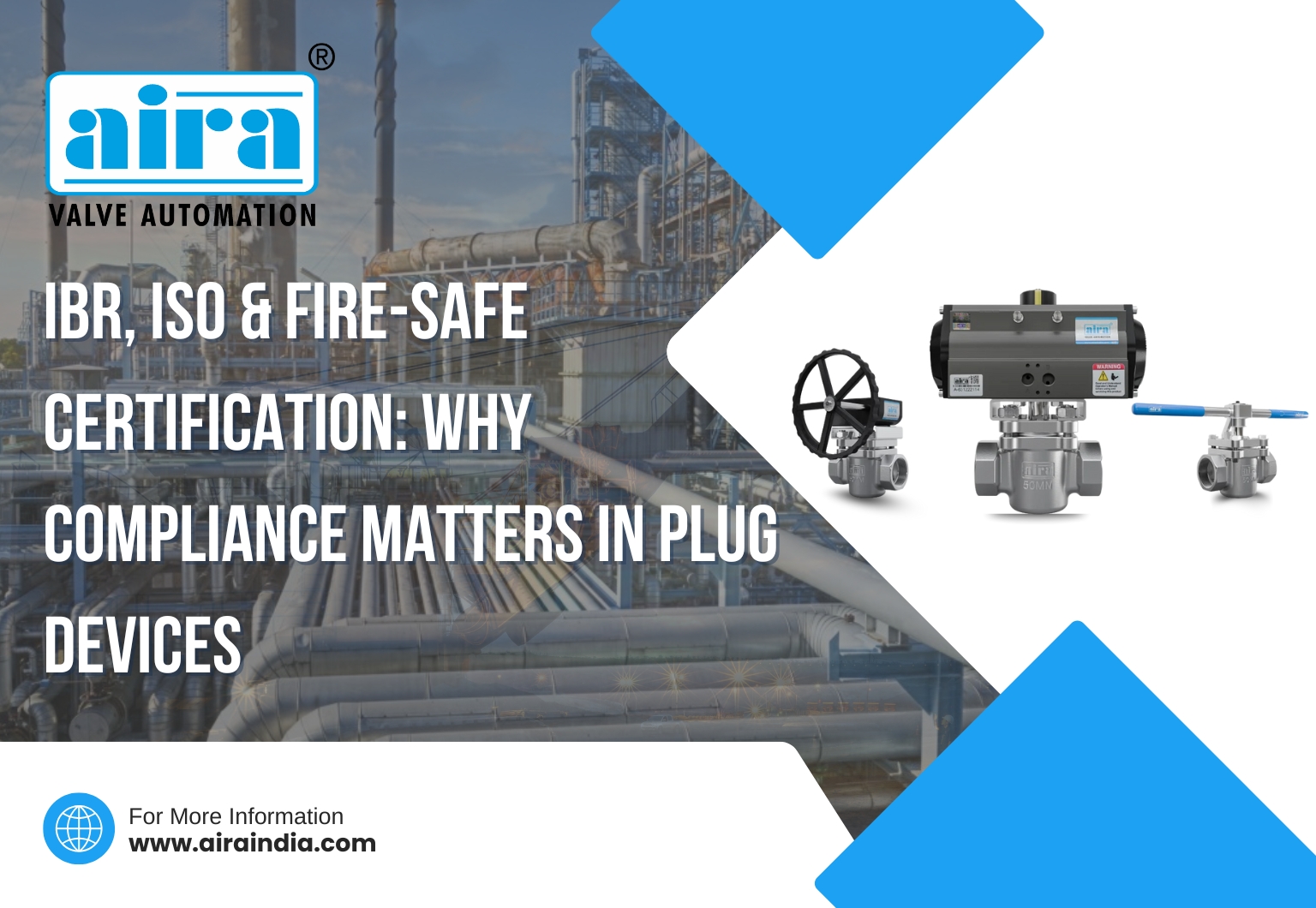
High-risk industrial settings demand absolute precision. Every valve, device, and component must follow strict safety and quality regulations to ensure reliability and smooth workflow. In industries where plug valves manage high pressure, heat, and hazardous media, certifications play a major role in preventing risks.
When these standards are ignored, the consequences can be severe—accidents, equipment failure, costly downtime, and even legal action.
Understanding IBR, ISO, and Fire-Safe Standards
IBR (Indian Boiler Regulations)
IBR certification is mandatory for plug valves used in boiler systems or steam-based applications. It assures that the valve can withstand extreme pressure and heat, making it safe for critical boiler operations.
ISO Certification
ISO standards are globally accepted and ensure that plug valves follow strict quality, performance, and manufacturing guidelines. This helps industries get consistent product reliability across all operating conditions.
Fire-Safe Certification
Fire-safe plug valves are tested to maintain tight shutoff even during fire exposure. This certification is extremely important in industries dealing with flammable or high-temperature media.
These certifications directly influence operational safety, plant compliance, and long-term performance.
Why Certification is Crucial for Plug Valves
Plug valves often operate in demanding environments where pressure, temperature, and corrosive media challenge durability. Certified plug valves ensure long-term performance and reduce the chances of failures.
Also read, Top 5 Tips to Fix Common Valve Mechanism Failures
Non-certified valves may leak, crack, or underperform under extreme conditions, leading to downtime, financial loss, or safety hazards. ISO and fire-safe certified plug valves deliver dependable flow control even when facing tough industrial challenges.
Key Benefits of Compliance in Industrial Operations
Safety and Risk Mitigation
Certified plug valves reduce the risk of accidents by preventing leaks, bursts, or unexpected malfunctions. This protects operators, equipment, and the overall plant environment.
Operational Efficiency and Reliability
Reliable valves ensure uninterrupted operations, minimizing maintenance intervals and unplanned shutdowns. Certified plug valves provide stable performance during critical industrial processes.
Selecting Certified Plug Valves for Your Facility
Choosing the right plug valve involves checking the required certification for your application. Whether your system deals with steam, chemicals, or flammable liquids, matching the valve to the correct standards is essential.
Always verify a manufacturer’s certifications, documentation, and testing procedures. Fire-safe plug valves are especially crucial for oil & gas, chemical plants, and power stations. Partnering with trusted suppliers guarantees compliance, safety, and smooth operation.
Maintenance and Verification of Certified Plug Valves
To maintain certification value, regular inspections are necessary. Ensure proper installation, pressure testing, and torque settings to keep the valve functioning as intended.
Whenever replacing parts, use only certified spares to maintain regulatory compliance. Documenting maintenance activities helps during audits and improves long-term reliability. Proper care ensures your certified valve continues to perform safely and efficiently.
Conclusion
Certifications like IBR, ISO, and fire-safe testing are more than just official requirements—they’re the backbone of industrial safety and reliability. By choosing certified plug valves, companies protect their operations from risks, improve performance, and meet regulatory standards.
Explore certified plug valve solutions from Aira Euro Automation for safe and compliant plant operations.