
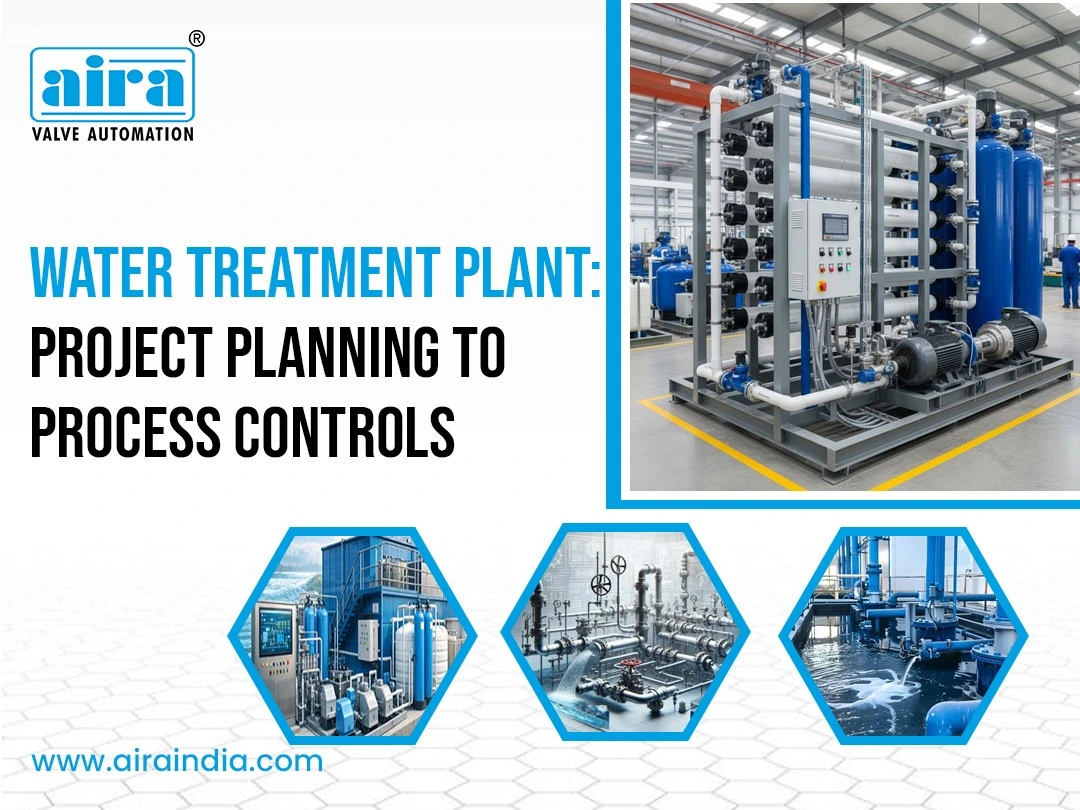
Water treatment plants are essential infrastructure systems designed to convert raw water into usable water for industrial, municipal, and commercial applications. In sectors such as power generation, cement manufacturing, chemicals, pharmaceuticals, and food processing, water quality directly impacts production efficiency, safety, and regulatory compliance.
From initial project planning to advanced process control systems, a water treatment plant requires careful engineering, hydraulic design, and reliable flow regulation to ensure consistent performance.
What is a Water Treatment Plant?
A water treatment plant is a facility that removes suspended solids, dissolved impurities, microorganisms, and chemical contaminants from raw water sources such as rivers, lakes, borewells, or industrial effluent streams.
In industrial environments, water treatment systems are not limited to purification. They also support:
- Boiler feed water preparation
- Cooling tower circulation
- Process water stabilization
- Effluent management
- Zero Liquid Discharge (ZLD) systems
Efficient system design depends heavily on accurate flow management and controlled pressure distribution throughout the plant.
The 7 Steps of the Water Treatment Plant Process
Understanding the core treatment stages is critical when planning or upgrading a facility.
- Intake & Screening
Raw water enters the plant through intake pipelines. Mechanical screens remove large debris.
For isolation in high-volume intake lines, gate valves are commonly installed due to their straight-through flow design and minimal pressure drop.
- Coagulation
Chemical agents are added to destabilize fine particles. Flow accuracy is essential to ensure effective chemical dosing.
- Flocculation
Slow mixing allows particles to form larger aggregates (flocs), preparing them for sedimentation.
- Sedimentation
Heavier particles settle in clarifiers. Large-diameter distribution lines at this stage often incorporate butterfly valves, which offer space-saving installation and efficient flow control.
- Filtration
Water passes through sand filters, activated carbon, or membrane systems.
For maintenance isolation and tight shut-off, ball valves are frequently used in filtration units.
- Disinfection
Chlorination, UV treatment, or ozone systems eliminate harmful microorganisms.
- Storage & Distribution
Treated water is stored in tanks and distributed through controlled pipeline networks, where consistent pressure regulation becomes crucial.
Water Treatment Plant Diagram – Understanding System Layout
A standard water treatment plant diagram typically includes:
- Raw water intake system
- Chemical dosing unit
- Mixing and flocculation tank
- Clarifier
- Filtration system
- Disinfection chamber
- Storage reservoir
- Pumping and distribution network
Each section demands controlled flow, pressure stability, and reliable shutoff mechanisms. Improper flow control may lead to pressure surges, dosing inaccuracies, and long-term system inefficiencies.
Water Treatment Plant Project Planning
Designing a water treatment plant involves both technical evaluation and economic feasibility.
- Capacity Assessment
Plants are designed based on MLD (Million Liters per Day) or LPH (Liters Per Hour), depending on industrial requirements.
- Raw Water Analysis
Parameters such as turbidity, TDS, hardness, iron content, and biological contamination determine treatment selection.
- Process Selection
Options may include:
- Conventional clarification and filtration
- Reverse osmosis systems
- Effluent treatment plants (ETP)
- Zero Liquid Discharge systems
- Hydraulic Design
Accurate hydraulic calculations determine pipeline diameters, pressure ratings, and flow velocity to avoid water hammer and energy loss.
- Automation & Process Controls
Modern water treatment plants integrate PLC-based control systems, SCADA monitoring, and automated flow regulation.
Organizations specializing in industrial valve automation, such as Aira Euro Automation, contribute to water infrastructure projects by supporting reliable flow regulation solutions tailored to industrial conditions.
Process Controls in Modern Water Treatment Plants
Process control systems enhance operational reliability and reduce human intervention.
Key Control Areas:
- Raw water flow monitoring
- Automated chemical dosing
- Filter backwash sequencing
- Pressure management
- Storage tank level control
Reliable valve selection plays an important role in achieving these control objectives. Butterfly valves are often selected for large pipeline sections, ball valves for precise isolation, and gate valves for high-capacity intake systems.
Automation reduces:
- Operational errors
- Energy wastage
- Downtime risks
- Maintenance frequency
What is the Cost of a Water Treatment Plant?
The cost of a water treatment plant varies depending on:
- Plant capacity
- Technology type
- Level of automation
- Material of construction
- Installation and civil work requirements
- Long-term maintenance considerations
Industrial projects involve custom engineering, making cost highly dependent on application and site conditions.
What is the Cost of a 1000 LPH RO Plant?
A 1000 LPH RO plant cost is influenced by:
- Feed water quality
- Membrane specifications
- Pump configuration
- Automation integration
- Monitoring systems
While smaller systems may involve moderate capital expenditure, industrial-grade installations emphasize durability, efficiency, and control system integration.
Importance of Proper Flow Control in Water Treatment Plants
Water treatment systems face common operational challenges such as:
- Pressure fluctuation
- Leakage
- Overdosing of chemicals
- Water hammer
- Maintenance shutdown complexity
Carefully engineered flow control mechanisms improve plant reliability and ensure regulatory compliance. Industrial valve automation solutions contribute to enhanced operational consistency, particularly in large-scale installations.
Industrial Applications of Water Treatment Plants
Water treatment systems are critical in:
- Thermal power plants (boiler feed preparation)
- Cement plants (cooling and dust suppression systems)
- Chemical processing industries
- Pharmaceutical manufacturing
- Food and beverage production
Each industry demands customized flow management, corrosion resistance, and automation compatibility.
Conclusion
A water treatment plant is a complex engineering system that extends beyond purification. It requires structured project planning, accurate hydraulic design, and efficient process controls to ensure sustainable operation.
Reliable flow regulation plays a crucial role from raw water intake to final distribution. As industrial water demand continues to grow, integrating dependable automation and flow control systems remains essential for achieving efficiency, safety, and compliance.
Frequently Asked Questions
What is a water treatment plant?
A water treatment plant is a facility that removes contaminants from raw water using physical, chemical, and biological processes to make it suitable for industrial or potable use.
What are the 7 steps of a water treatment plant?
The seven steps include intake, coagulation, flocculation, sedimentation, filtration, disinfection, and storage/distribution.
What factors affect water treatment plant cost?
Cost depends on plant capacity, automation level, raw water quality, material selection, and installation requirements.
What is the cost of a 1000 LPH RO plant?
The cost varies depending on feed water characteristics, membrane quality, automation integration, and system configuration.
Why is flow control important in water treatment plants?
Proper flow control ensures dosing accuracy, pressure stability, reduced leakage risk, and long-term operational efficiency.
Which valves are commonly used in water treatment plants?
Butterfly valves, gate valves, and ball valves are commonly used in different stages for isolation, flow regulation, and distribution control.