Most industrial buyers skim past the warranty line on a spec sheet — it feels like fine print, not a factor that actually changes a purchasing decision. But for a maintenance or reliability engineer who has to forecast next year’s plant budget, warranty length isn’t fine print at all. It’s one of the few numbers on a product spec sheet that directly predicts unplanned maintenance spend.
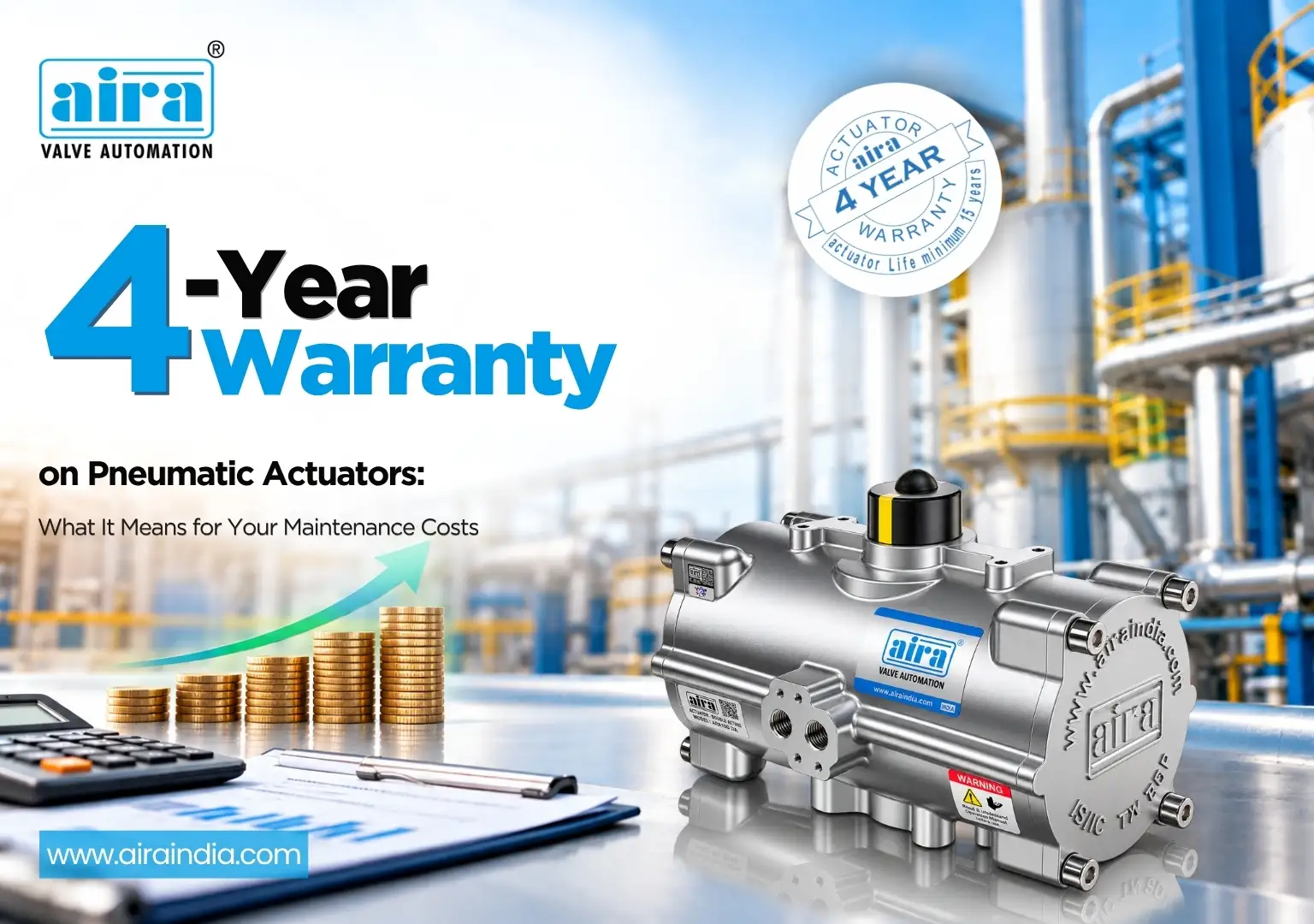
Aira Euro Automation’s pneumatic actuators carry a 4-year warranty — well beyond the 1-to-2-year terms common across much of the industry. Here’s what that actually means in practical, budget-relevant terms.
Quick answer: A 4-year warranty on pneumatic actuators shifts the financial risk of early component failure from the plant’s maintenance budget to the manufacturer, typically covers twice the service life of standard 1-to-2-year industry warranty terms, and signals a level of manufacturing confidence that correlates with genuinely lower actuator failure rates in the field.
Why Warranty Length Is a Real Reliability Signal, Not Just Marketing
A manufacturer offering a 4-year warranty is making a bet — against their own repair and replacement costs — that their product won’t fail for at least that long under normal operating conditions. No manufacturer makes that bet on a product they don’t trust.
This is why warranty length correlates meaningfully with build quality in ways a glossy spec sheet alone doesn’t capture:
- Shorter warranties (12-24 months) often reflect a manufacturer hedging against unknown failure rates, common with actuators assembled from mixed third-party components with varying quality control standards.
- Longer warranties (4 years) are only sustainable if the actuator is genuinely built to last that long — because the manufacturer is directly on the hook for replacement costs if it doesn’t.
For a maintenance engineer comparing two actuators with similar specs on paper, warranty term is often the clearest signal of which manufacturer actually has the field data to back up their reliability claims.
The Direct Maintenance Budget Impact
Here’s where the warranty term stops being an abstract confidence signal and starts affecting actual numbers on a maintenance budget:
Reduced unplanned replacement costs. An actuator failure inside the warranty period means replacement or repair cost sits with the manufacturer, not your maintenance budget. Over a typical 4-actuator failure scenario across a plant’s operating life, the difference between a 1-year and 4-year warranty can represent a meaningful chunk of avoided capital expenditure.
More predictable budgeting. Maintenance teams plan annual budgets around expected failure rates. A longer warranty period effectively extends the window where actuator-related capital costs are protected, making multi-year maintenance forecasting more reliable — fewer surprise line items eating into budget reserves meant for other equipment.
Lower total cost of ownership, not just lower upfront price. An actuator with a shorter warranty might carry a lower purchase price, but if it requires replacement in year two while a 4-year-warrantied actuator keeps running, the “cheaper” option often ends up costing more once replacement labor, downtime, and procurement overhead are factored in.
Reduced downtime risk. Every actuator failure isn’t just a part replacement — it’s unplanned downtime while the issue is diagnosed, a replacement is sourced, and the valve is brought back into service. A longer warranty period, backed by genuine reliability, reduces how often that disruption happens across a plant’s operating calendar.
Why We Can Offer This
A 4-year warranty isn’t a promotional gimmick — it’s only possible because of how Aira actually manufactures actuators. Our reverse-integrated process means:
- Consistent component quality, because critical parts aren’t sourced from varying third-party suppliers with inconsistent quality control
- Rigorous testing before shipment, catching defects before they become field failures — exactly the kind of testing covered in our quality policy
- Design engineering that accounts for real operating conditions, rather than a generic actuator design applied across every application regardless of duty cycle or environment
A manufacturer assembling actuators from inconsistent third-party components simply can’t offer this warranty term sustainably — the failure rate math wouldn’t work in their favor. Ours does, because the actuator is built to actually last that long in the first place.
What “4-Year Warranty” Actually Covers
For maintenance teams evaluating this in practical terms, a warranty period like this typically protects against:
- Manufacturing defects in materials or workmanship under normal operating conditions
- Premature mechanical failure not caused by improper installation, misuse, or operation outside rated specifications
- Component failures that occur despite proper maintenance practices being followed
As with any industrial equipment warranty, coverage assumes the actuator is installed, operated, and maintained according to manufacturer specifications — proper air quality, correct pressure range, and routine inspection intervals all factor into whether a failure falls under warranty coverage. Your procurement team should always confirm exact warranty terms and conditions directly with Aira at the time of order.
How This Fits Into Your Actuation Package
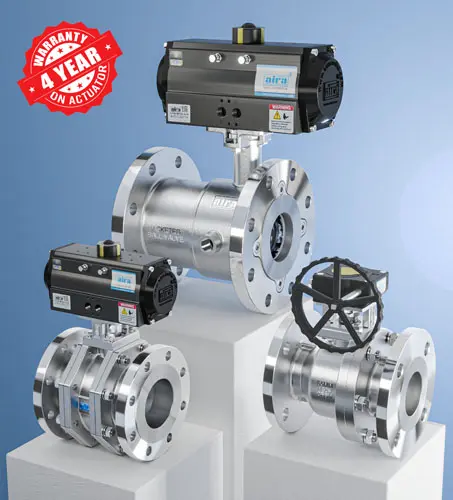
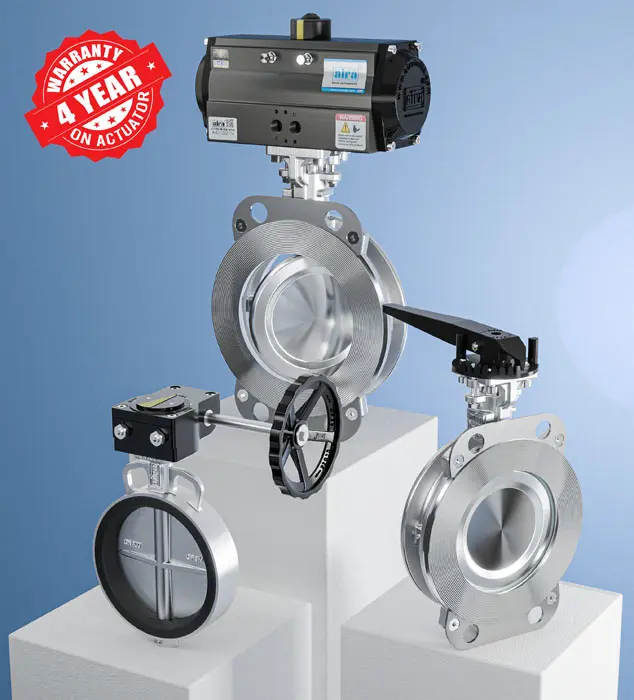
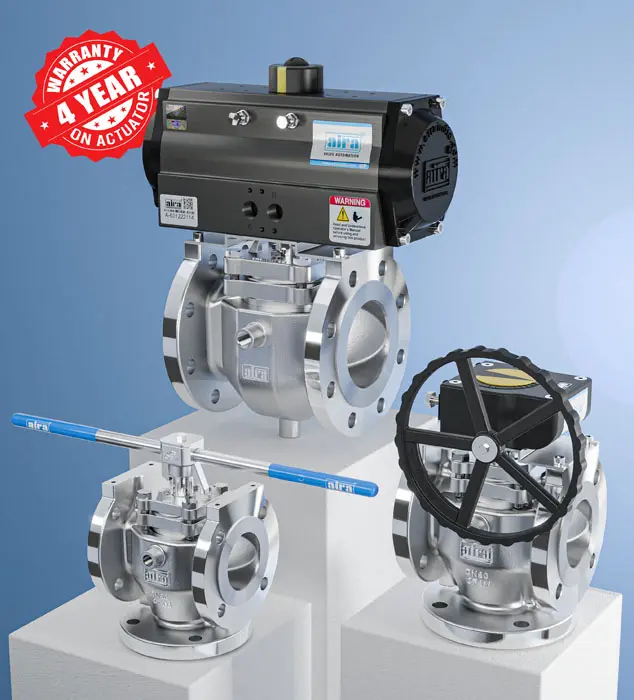
A warranty on the actuator alone only tells part of the reliability story — the valve, actuator, and accessories need to work together as a coordinated system. Our pneumatic actuators are engineered to pair directly with our ball valves, butterfly valves, and accessories — positioners, limit switch boxes, and solenoid valves — as a complete, coordinated automation package, rather than requiring maintenance teams to troubleshoot interface issues between mismatched components from different suppliers.
For applications in hazardous areas, this same actuator range is available with appropriate ATEX certification, so the warranty advantage doesn’t come at the cost of compliance flexibility.
What to Ask Your Current Actuator Supplier
If you’re currently sourcing pneumatic actuators elsewhere, it’s worth asking a few direct questions:
- What is the actual warranty term, in writing, not just verbally stated?
- What specifically voids the warranty, and are those conditions realistic for your actual operating environment?
- What has been the real-world failure rate within the warranty period, based on their field data?
- Does the actuator warranty match the valve warranty, or are you managing two separate claims processes for a single automated assembly?
The answers to these questions often reveal more about actual product reliability than the spec sheet ever will.
Make Warranty Term Part of Your Procurement Checklist
A 4-year warranty on pneumatic actuators isn’t just a selling point — it’s a direct input into your maintenance budget forecasting and a genuine signal of manufacturing confidence. Talk to our team about how this fits into your plant’s automation and maintenance planning.
Get a Quote from Aira Euro Automation | +91 90994 77256 | mkt@airaindia.com
Frequently Asked Questions
How long is Aira Euro Automation’s pneumatic actuator warranty?
Aira Euro Automation’s pneumatic actuators carry a 4-year warranty, significantly longer than the 1-to-2-year terms common across much of the industry.
Why does a longer actuator warranty matter for maintenance budgeting?
It shifts the financial risk of early component failure from the plant’s maintenance budget to the manufacturer, making multi-year maintenance costs more predictable and reducing unplanned capital expenditure.
Does a longer warranty always mean a more reliable product?
Generally yes — manufacturers only offer extended warranties sustainably if the product is genuinely built to last that long, since they bear the replacement cost for failures within the warranty period.
What typically voids an industrial actuator warranty?
Improper installation, operation outside rated specifications, and failure to follow routine maintenance practices are common exclusions. Always confirm exact terms directly with the manufacturer at the time of order.
Can Aira’s pneumatic actuators be used in hazardous area applications?
Yes, the actuator range is available with appropriate ATEX certification for use in classified hazardous areas, alongside the standard 4-year warranty coverage.