Most industrial valve companies in India started the same way Aira Euro Automation did — small, under-resourced, and competing against established importers who assumed no domestic manufacturer could match international…
Read More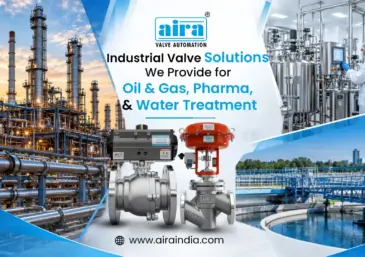
A valve that performs perfectly in a chemical plant can fail spectacularly in a pharmaceutical clean room — not because it’s poorly made, but because it was never designed for…
Read More
A certificate on a website is easy to claim and hard to verify — which is exactly why procurement teams at serious EPC contractors and process plants don’t just take…
Read More
Walk into most valve companies in India and you’ll find a warehouse, not a factory. Components arrive from a dozen different job-work vendors, get assembled, tested, boxed, and shipped out…
Read More
gWhen a pipeline fails, a batch gets contaminated, or a plant shuts down because of a faulty valve, nobody remembers how much money was saved by buying the cheaper option.…
Read More
Ammonia and urea plants run some of the most punishing process conditions in the chemical industry — high pressure, high temperature, and highly corrosive media, often all at the same…
Read More
Slurry handling is arguably the toughest service a valve can be put through. Mining operations move enormous volumes of ore fines, tailings, and mineral concentrate suspended in water — mixtures…
Read More
Walk through any textile dyeing unit, and you'll notice something quickly — the air smells of chemicals, the floor is often damp, and the pipelines are handling everything from caustic…
Read More
Sugar processing is one of the most demanding continuous-flow operations in the process industry. From cane crushing to juice clarification, evaporation, crystallization, and finally centrifugation, a sugar mill runs as…
Read More
When an HVAC system starts underperforming, the instinct is to look at the big-ticket items: the chiller, the cooling tower, the air handling unit, or the control system. These are…
Read More