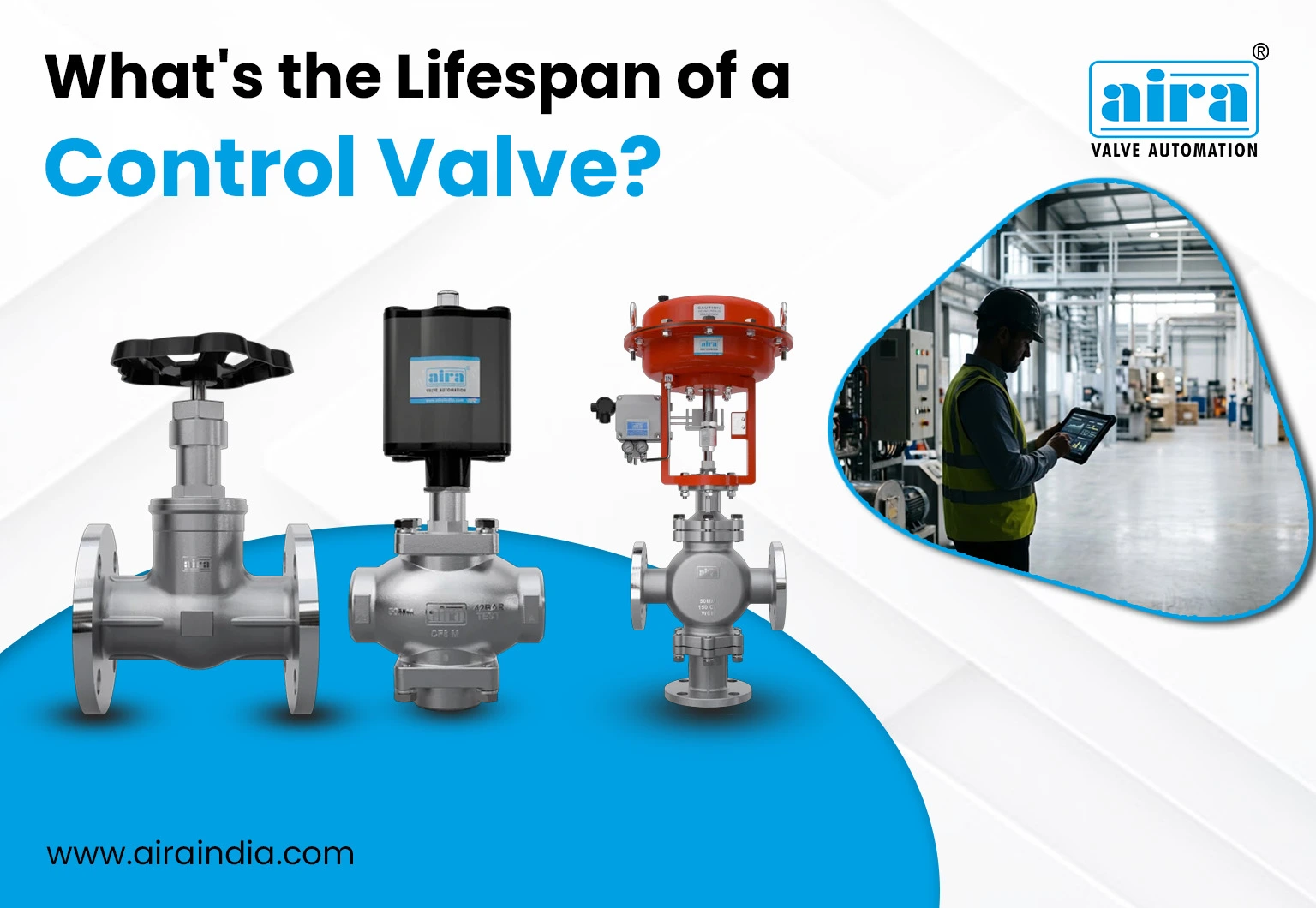
If you manage a process plant, at some point, you have probably asked this question: How long is this control valve actually going to last? It is a reasonable thing to want to know both for budgeting purposes and for planning maintenance outages. But the honest answer is that there is no single number that applies to every valve in every application.
A control valve in a clean water service, operating at moderate pressure and cycling a few times per hour, can last twenty years or more with basic maintenance. The same valve body handling abrasive slurry at high velocity might need trim replacement within eighteen months. The application determines the lifespan far more than the calendar does.
That said, there are clear factors that influence how long a control valve lasts, and understanding them helps you make better decisions about maintenance, replacement timing, and specification.
What Is the Average Lifespan of a Control Valve?
In typical industrial service, a well-specified and properly maintained control valve body can last anywhere from 10 to 25 years. The trim of the internal parts that do the actual flow control work often needs replacement more frequently, typically every 3 to 10 years, depending on service severity.
The actuator and positioner have their own life cycles. Pneumatic diaphragm actuators typically last 10 to 15 years before the diaphragm needs replacement. Smart positioners may need replacement or major servicing every 8 to 12 years.
These are general guidelines. The actual service life in your application depends on several specific factors.
Factors That Determine Control Valve Lifespan
1. Process Fluid Characteristics
The nature of what flows through the valve is the single biggest determinant of how long the trim lasts.
- Abrasive fluids — Slurries, catalyst-laden streams, or fluids carrying solid particles erode valve trim surfaces rapidly. Even hardened trim materials like Stellite or tungsten carbide have finite erosion resistance. In severe abrasive service, trim replacement every 12 to 24 months is not unusual.
- Corrosive fluids — Acids, caustics, and chlorinated compounds attack both valve body and trim materials. The right material selection at the specification stage is critical to achieving acceptable service life.
- High-temperature fluids — Steam above 400°C, hot oil, or thermal fluids accelerate wear on soft seat materials and packing. PTFE packing has a practical temperature limit of around 230°C; above that, graphite or other high-temperature materials must be used.
- Flashing and cavitation — When fluid pressure drops below its vapour pressure as it passes through the valve, vapour bubbles form and collapse violently on trim surfaces, causing rapid pitting and erosion if not addressed.
2. Cycling Frequency
A valve that opens and closes ten times per hour accumulates wear far faster than one that is adjusted occasionally. High-cycling applications, batch reactor control, compressor antisurge, and rapid temperature regulation put significant mechanical stress on the stem packing, plug, seat, and actuator components.
For high-cycle applications, it is worth tracking cumulative travel rather than calendar time as the basis for maintenance planning. Many smart positioners record this data automatically.
Also read, How to Troubleshoot a Failing Control Valve
3. Operating Pressure and Differential Pressure
Higher differential pressure across the valve means greater forces on the plug, seat, and stem during operation. It also increases the severity of any erosion, cavitation, or flashing that occurs. Valves operating close to their rated pressure limits experience more wear than those with comfortable margins.
4. Maintenance Quality
This factor is entirely within your control. A control valve that receives proper preventive maintenance, regular packing checks, positioner calibration, air supply maintenance, and timely replacement of consumable parts will consistently outlast one that is only touched when something goes wrong.
Using genuine replacement parts from the original valve manufacturer in Ahmedabad or the original supplier is also important. Off-specification packing, non-genuine soft seats, or incorrect diaphragm materials are common causes of premature failure.
5. Valve Sizing
An improperly sized control valve wears faster than one correctly matched to the application. A valve that is too large operates near the closed position for most of its service life, a high-velocity, high-pressure-drop condition that accelerates trim erosion. A valve that is too small runs fully open, providing no control authority and causing cavitation in liquid service.
Signs That a Control Valve Is Approaching End of Life
Unlike a burst pipe or a failed pump, a control valve in decline gives signals over time. Watch for:
- Increasing seat leakage — The valve no longer fully closes, allowing process fluid to bypass even at zero signal. Minor leakage can often be corrected by lapping, but progressive leakage indicates trim worn beyond repair.
- Difficulty maintaining setpoint — The process loop becomes increasingly difficult to control. Setpoint offset, oscillation, and instability that cannot be resolved by controller tuning often indicate valve performance degradation.
- Visible external corrosion or body wall thinning — Particularly significant in corrosive services. Ultrasonic thickness testing can quantify remaining wall thickness before it becomes a safety concern.
- Repeated packing failures — If packing is being replaced frequently and still leaking within a short time, the stem itself may be damaged or corroded — a damaged stem cannot seal packing effectively.
- Actuator components repeatedly failing — Frequent diaphragm replacements or repeated positioner failures can indicate that the actuator is beyond economic repair and should be replaced as an assembly.
Repair vs Replace: Making the Right Decision
When a control valve starts showing signs of wear, the decision to repair or replace is primarily economic.
Repair makes sense when: the valve body is in good condition, only the trim or packing needs replacement, the valve is correctly sized for current process conditions, and genuine replacement parts are available at a reasonable cost.
Replacement makes sense when the body shows significant corrosion or erosion, the valve has been repaired multiple times without lasting improvement, process conditions have changed, the valve is now incorrectly sized, or the valve model is discontinued, and spare parts are difficult to source.
How to Extend Control Valve Lifespan
- Implement smart positioner diagnostics — Modern positioners continuously monitor valve travel, friction, and response time. Using this data proactively allows maintenance to be scheduled at optimal times.
- Maintain the instrument air system — clean, dry, regulated air at the correct pressure is essential for pneumatic actuator life. Pneumatic actuators on critical valves should be inspected on a defined cycle.
- Use correct packing for the service — Selecting packing material appropriate for the temperature, pressure, and fluid type extends packing life and reduces stem wear.
- Address cavitation and flashing early — Anti-cavitation trim, proper valve placement in the pipeline, or a change in operating pressure profile will address the root cause rather than repeatedly replacing trim.
- Keep detailed service records — Tracking what was done to each valve and when helps identify patterns. A valve needing packing every six months likely has an underlying stem issue that should be addressed systematically.
Connect With Aira Euro for Control Valve Solutions
Aira Euro Automation supplies control valves for a wide range of industrial applications, along with technical support to ensure they are correctly specified and maintained. As a trusted valve manufacturer in Ahmedabad, Aira Euro helps customers plan maintenance and replacement programmes that minimise both cost and downtime.
Contact Aira today at www.airaindia.com/contact for expert guidance on control valve selection, sizing, and maintenance.
Conclusion
There is no universal answer to how long a control valve lasts, but there are clear principles that determine service life in any specific application. Process fluid characteristics, cycling frequency, operating pressure, maintenance quality, and correct sizing all play a significant role.
Understanding these factors allows you to plan maintenance proactively, make well-informed repair versus replace decisions, and specify replacement valves that will deliver the service life your process demands. Partnering with an experienced valve manufacturer in India ensures you have both the right products and the application expertise to back them up.
Frequently Asked Questions
How long does a control valve typically last in industrial service?
In standard industrial service with proper maintenance, a control valve body can last 10 to 25 years. The trim may need replacement every 3 to 10 years, depending on service severity. Actuator diaphragms typically last 10 to 15 years.
What shortens the control valve lifespan the most?
Abrasive or corrosive process fluids, cavitation, high cycling frequency, and inadequate maintenance are the most common causes of shortened control valve life. Incorrect valve sizing, particularly oversized valves operating near the closed position, also accelerates wear significantly.
How do I know when a control valve needs to be replaced rather than repaired?
Indicators pointing toward replacement include significant body corrosion, repeated failures of the same components, a valve incorrectly sized for current process conditions, and discontinued models where spare parts are no longer available. If repair costs approach the cost of a new valve, replacement is usually the better economic decision.
Can I extend my control valve’s lifespan through maintenance?
Yes, significantly. Regular positioner calibration, timely packing replacement, proper air supply maintenance, and use of genuine replacement parts all contribute to longer valve life. Smart positioner diagnostics allow condition-based maintenance rather than fixed-schedule servicing.
Does valve sizing affect how long a control valve lasts?
Absolutely. An oversized valve that operates near the closed position experiences a higher pressure drop and higher fluid velocities, which accelerate trim erosion and cause cavitation. Correct sizing at the specification stage is one of the most effective ways to extend valve service life.