In industrial piping, fluid control, and plumbing systems, the terms one-way valve and non return valve are often used interchangeably, and in most practical contexts, they refer to the same function: allowing fluid to flow in one direction while preventing it from flowing back in the opposite direction.
But there is nuance here that matters when you are specifying components for a process system. Understanding the terminology, the different valve types that fall under these names, and how each performs in specific applications will help you make better choices and avoid mismatches between the valve and the system it needs to protect.
Are One-Way Valves and Non Return Valves the Same Thing?
Functionally, yes — both terms describe a valve that permits flow in one direction only and closes automatically to prevent reverse flow. The difference is largely one of terminology and convention.
- Non-return valve (NRV) — Most commonly used in industrial process engineering, particularly in India, the UK, and most of Europe. Standard terminology in piping standards like BS and IS specifications.
- One-way valve — A more general term used across a wider range of industries including plumbing, HVAC, automotive, and general fluid systems. Describes the same basic function.
- Check valve — The American English equivalent of non return valve. Widely used in international standards including API, ASME, and ANSI specifications.
In practice, when a process engineer in India specifies an NRV, a plumber refers to a one-way valve, or a project specification calls for a check valve, they are all describing a valve that does the same job. What matters is specifying the type, size, pressure rating, and material correctly for the application.
How Does a Non Return Valve Work?
The operating principle is simple. A non return valve has a closing element, a disc, ball, piston, or flap, that is pushed open by forward flow and falls or springs shut when flow stops or reverses. No external signal or actuator is required. The valve responds automatically to flow conditions.
The closing action can be driven by gravity, spring force, or backpressure from the downstream side. The speed of closure is an important characteristic — a valve that closes too slowly allows significant backflow before sealing, which can cause water hammer, a pressure surge that damages piping and equipment.
Types of Non Return Valves and Their Differences
Swing Check Valve
The most common type for larger pipe sizes. A hinged disc swings open with forward flow and swings back to seat when flow stops or reverses. Simple, low pressure drop when open, and suitable for clean fluids at moderate velocities. Best for horizontal or vertical upward flow in clean water, oil, and gas service.
Lift Check Valve
A piston or disc lifts vertically off its seat with forward flow and drops back to close when flow stops. More positive sealing than a swing check. Requires a minimum upstream velocity to stay open, so it is not suitable for pulsating or intermittent flow applications. Best for high-pressure steam, compressed air, and vertical upward-flow installations.
Ball Check Valve
A ball is pushed off its seat by forward flow and rolls back to seal against a conical seat when flow reverses. Compact, good for viscous fluids and slurries that would cause disc-type valves to stick. The spherical sealing element is tolerant of minor contamination in the flow stream.
Also read, What Are the 4 Basic Rules for Selecting a Solenoid Valve?
Dual Plate (Wafer) Check Valve
Two spring-loaded half-discs open with forward flow and spring shut when flow stops. Very compact, and because the spring closes the discs before flow reverses, it closes faster — significantly reducing water hammer risk. Best for pump discharge lines, high-velocity service, and space-constrained installations.
Tilting Disc Check Valve
The disc pivots on a central axis and tilts rather than swinging on a hinge. This geometry reduces disc travel required for opening and closing, resulting in faster closure and lower water hammer risk than a standard swing check valve. Best for high-velocity pipeline service and pump or compressor discharge.
Spring-Loaded Piston Check Valve
A spring-loaded piston seals against an internal seat. The spring ensures reliable closure regardless of orientation, making it suitable for any installation angle. Best for compressed air, instrument air, and any application requiring orientation-independent installation.
Key Performance Differences Between Types
- Pressure drop in the open position — Swing check valves typically have the lowest pressure drop in the fully open position. Lift check and ball check valves have higher pressure drop due to the tortuous flow path around the closing element.
- Closure speed and water hammer — Dual plate and tilting disc types close fastest and generate the least water hammer. Standard swing check valves close slowest and are most prone to water hammer in high-velocity applications.
- Sealing reliability — Spring-loaded types provide the most reliable closure because the spring force is independent of backpressure and orientation.
- Tolerance to contaminated media — Ball check valves are most tolerant of particulates and viscous fluids. Lift check valves with small clearances can stick if the fluid contains particles.
Common Applications of Non Return Valves in Industry
- Pump discharge lines — Preventing backflow through a pump when it is stopped, which would cause reverse rotation and damage. Dual plate check valves are often preferred here for fast closure.
- Compressor discharge — Preventing backflow from a high-pressure header into a compressor when it trips or during a pressure surge.
- Boiler feed systems — Preventing hot boiler water from flowing back into the feed pump during pump shutdown.
- Chemical injection systems — Preventing process fluid from flowing back into chemical injection lines and contaminating the chemical supply.
- Fire protection systems — Preventing drainage of charged fire lines.
- Water distribution — Preventing backflow that could cause contamination of clean water supplies.
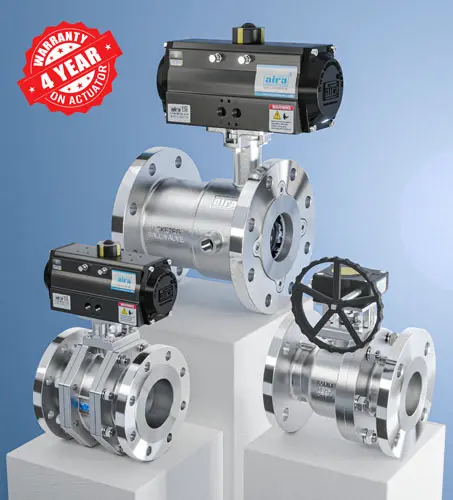
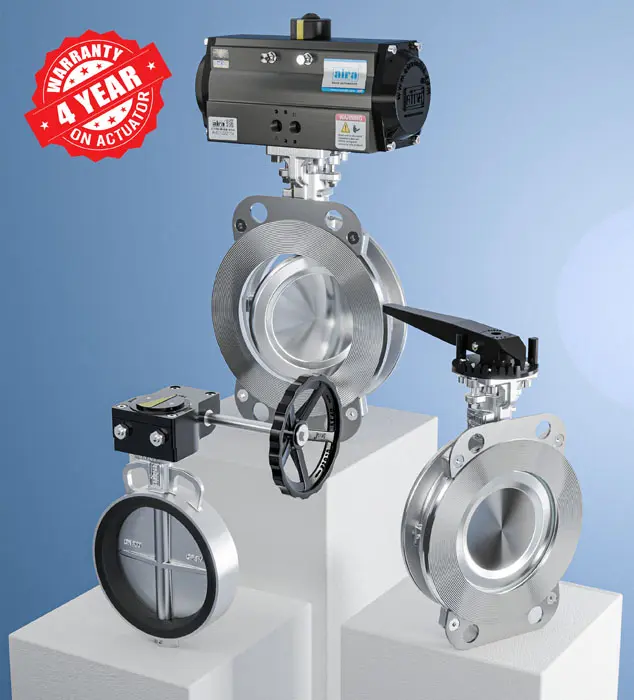
Both ball valves and butterfly valves are often used alongside non return valves in process systems. The ball or butterfly valve provides positive isolation when maintenance is required, the NRV providing automatic backflow prevention during normal operation.
How to Choose the Right Non Return Valve
- Flow velocity and direction — Confirm the installation orientation and the expected flow velocity. High-velocity applications need fast-closing types. Low-velocity or intermittent flow applications need spring-loaded closing elements.
- Fluid type — Clean fluids allow the widest choice. Viscous, corrosive, or particle-laden fluids narrow the suitable options and drive material selection.
- Pressure rating — Select a valve rated comfortably above the maximum system pressure, including surge pressures.
- Pressure drop requirement — If minimising pressure loss is important, swing check valves in the correct size offer the lowest resistance in the fully open position.
- Water hammer sensitivity — For pump discharge and compressor discharge lines, fast-closing dual plate or tilting disc types are strongly preferred.
Connect With Aira Euro Automation for Non Return Valve Solutions
Aira Euro Automation supplies non return valves, ball valves, butterfly valves, and a complete range of industrial pipeline components for process applications across India. As a valve manufacturer in Ahmedabad with broad application experience, Aira Euro Automation can help you select the right valve type and specification for your specific system requirements.
Contact Aira Euro Automation today at www.airaindia.com/contact to discuss non return valve requirements for your project or plant.
Conclusion
A one-way valve and a non return valve are functionally the same; both prevent reverse flow through a pipeline. The terminology varies by industry and region; the function does not.
What matters in practice is selecting the right type of swing check, dual plate, lift check, ball check, or spring piston for the specific application. Flow velocity, fluid type, closure speed requirements, and installation orientation all influence which type is the right choice. Working with a valve manufacturer in India who understands these distinctions ensures you get the right valve for the job.
Frequently Asked Questions
Are check valves and non-return valves the same thing?
Yes. Check valve is the American English term, while non-return valve (NRV) is the British and Indian standard terminology. Both describe a valve that allows fluid flow in one direction only and closes automatically to prevent reverse flow. The terms are interchangeable across international engineering documentation.
What is the difference between a swing check valve and a dual plate check valve?
A swing check valve uses a single hinged disc that closes relatively slowly, making it more prone to water hammer in high-velocity applications. A dual plate check valve uses two spring-loaded half-discs that close quickly before flow fully reverses, significantly reducing water hammer. Dual plate valves are also more compact and are commonly preferred for pump discharge service.
Can a non-return valve be installed in any orientation?
It depends on the valve type. Gravity-dependent swing check valves without springs generally require horizontal or specific vertical installation to operate correctly. Spring-loaded non-return valves can typically be installed in any orientation because the spring provides the closing force independently of gravity. Always follow the manufacturer’s installation guidelines.
What causes a non-return valve to fail to close properly?
Common causes include worn or damaged seating surfaces, debris trapped between the disc and seat, excessive wear on the hinge pin or pivot, spring failure in spring-loaded designs, and incorrect valve sizing that causes disc chattering under high-velocity flow conditions.
How do I know what size non-return valve to specify?
Non-return valve sizing is based on the required flow coefficient (Kv or Cv), the design flow rate, and the available pressure differential. The valve should remain fully open during normal operating conditions. An undersized valve increases pressure drop, while an oversized valve operating at low flow velocity may experience disc flutter and premature wear.