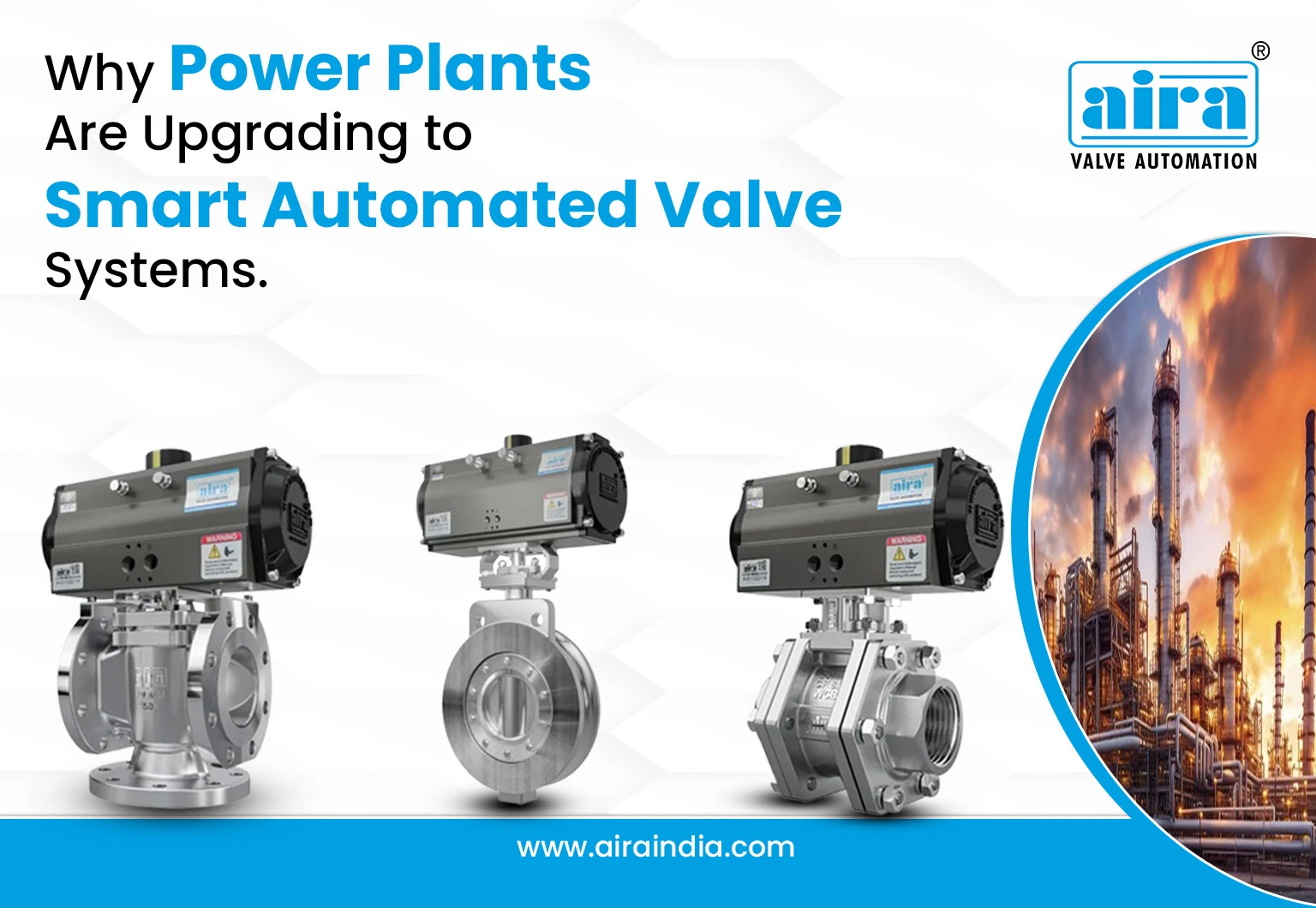
Power generation is one of the most demanding environments in the industrial world. Whether it is a coal-fired thermal plant, a combined-cycle gas turbine facility, or a nuclear station, the operational conditions are extremely high-pressure steam, corrosive chemicals, fluctuating load demands, and zero tolerance for unplanned shutdowns.
In this context, every component matters. And few components are more critical — or more frequently overlooked than the valve. Thousands of valves manage steam flow, cooling water, fuel supply, condensate return, and emergency isolation across a typical power plant.
Power plant operators across India and globally are now upgrading to automated valve systems, and the reasons are compelling. From operational efficiency and regulatory compliance to predictive maintenance and emergency safety, smart valve technology is proving its value in power generation in ways that were not possible even ten years ago.
What Makes Power Plants Different From Other Industries?
Before getting into the specifics of the upgrade trend, it helps to understand what makes power plant valve applications uniquely demanding.
- Extreme operating conditions — Steam lines in thermal plants can operate at pressures above 150 bar and temperatures exceeding 540°C. Valves in these services must perform reliably under conditions that would destroy lesser equipment.
- Continuous operation — Power plants do not run on shifts. Many operate 24 hours a day, 365 days a year. Valves must maintain performance over long periods without frequent human intervention.
- High consequence of failure — A valve failure in a critical steam or fuel line can trigger a forced outage that costs millions in lost generation and emergency repairs.
- Complex process interdependencies — Steam turbines, boiler feed systems, condensate systems, cooling towers, and fuel handling are all interconnected. Precise valve control across all these systems is essential for stable operation.
Given these demands, the case for intelligent industrial valve automation in power generation is not just about efficiency — it is about operational survival.
The Problem With Aging Valve Infrastructure
A large proportion of power plants currently operating in India were built in the 1980s and 1990s. Many of these facilities are still running valves that were installed at commissioning — valves with manual operators, basic pneumatic actuators, or outdated control interfaces that offer no digital communication capability.
As these plants approach the midpoint of their operational lives, the maintenance burden on aging valve equipment is growing. Actuators wear out. Packing seals develop leaks. Control interfaces become incompatible with modern DCS platforms. And spare parts for discontinued valve models become increasingly difficult to source.
Also read, Large-Bore Pipeline Problems Nobody Talks About Until Something Goes Wrong
Plant operators face a clear choice: continue patching an aging system at rising cost and risk, or make a structured transition to modern automated valve systems. An increasing number are choosing to upgrade — and the results are justifying the investment.
Key Reasons Power Plants Are Making the Switch
1. Improving Steam and Thermal Efficiency
In a thermal power plant, the precise control of steam flow through turbine stages has a direct impact on generation efficiency. A control valve that maintains accurate setpoints through variable load conditions allows the turbine to operate closer to its design efficiency curve — reducing fuel consumption and emissions per unit of electricity generated.
Even a 1–2% improvement in steam circuit valve accuracy can translate into measurable fuel savings over a full year of operation. At scale, that means significant cost reduction and a lower carbon footprint.
2. Enhanced Emergency Shutdown Capability
Power plants are required to meet functional safety standards for emergency shutdown systems. Modern automated valve systems — particularly those equipped with solenoid-operated pneumatic actuators can achieve full closure in seconds when triggered by safety system logic, meeting the requirements of IEC 61511 and similar standards.
Older manual or semi-automatic valve systems cannot provide this level of deterministic, auditable safety performance. Upgrading to smart valve systems is increasingly a regulatory necessity, not just an operational preference.
3. Remote Monitoring and Diagnostics
Modern power plants are moving toward leaner operating models with fewer on-site personnel. Smart valves equipped with HART or PROFIBUS communication provide continuous diagnostic data, including valve position, actuator torque, travel time, and seat leakage, that can be monitored from the control room or even offsite.
This visibility allows operators to identify developing issues early. A valve that is taking longer to stroke to its setpoint may have increasing packing friction, a warning sign that maintenance should be scheduled before the next planned outage, rather than waiting for a failure in service.
4. Integration With Modern DCS Platforms
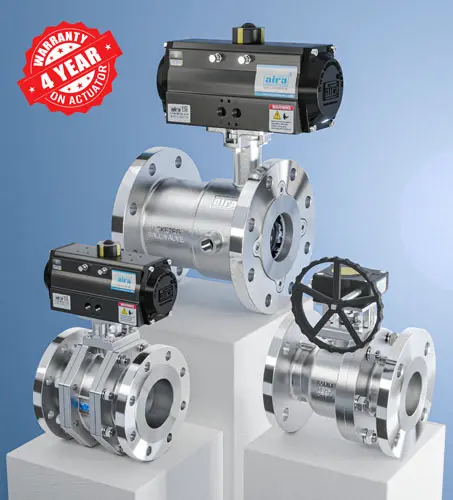
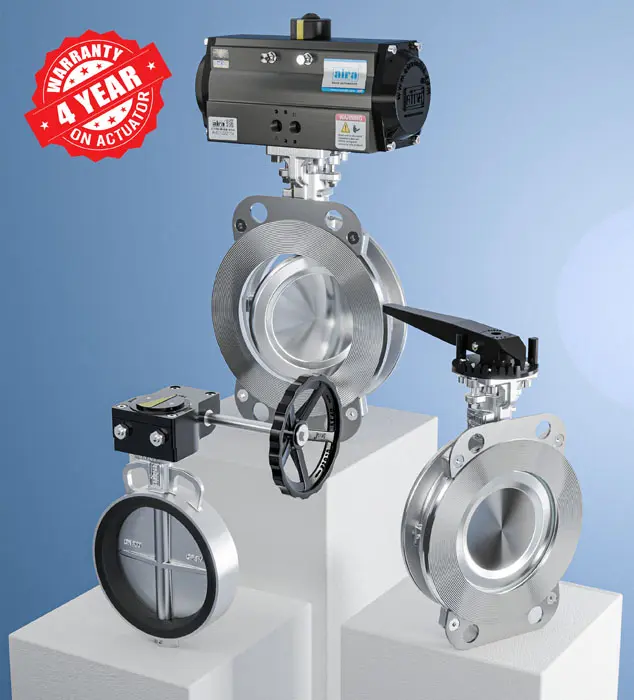
Many plants upgrading their distributed control systems find that their existing valve infrastructure is incompatible with the new platform’s communication requirements. Retrofitting smart positioners and actuators onto existing valve bodies allows plants to bring their valve estate into alignment with the new control architecture. Both ball valves and butterfly valves can typically be retrofitted with modern actuators, making them compatible with SCADA and DCS systems that support digital communication protocols.
5. Reducing Maintenance Costs and Unplanned Outages
Unplanned outages are the most expensive events in power plant operations. A forced shutdown for valve-related failures can result in significant lost revenue and emergency repair costs on top of the actual maintenance expense.
Predictive maintenance through smart valve diagnostics directly addresses this risk. When valve performance data is monitored continuously and trended over time, maintenance teams can plan interventions during scheduled outages rather than responding to emergencies.
Applications Where Smart Valve Automation Adds the Most Value
Not every valve in a power plant needs to be automated to the same level. But certain applications deliver the highest return:
- Main Steam and Reheat Steam Lines — Precise control of steam flow to turbine stages directly affects heat rate and output. Smart control valves here pay for themselves through efficiency gains.
- Boiler Feed Water Systems — Feed water control valves regulate flow into the boiler drum. Automated control with accurate positioners ensures stable drum level — a critical safety and performance parameter.
- Turbine Bypass Systems — During startup and load rejection events, bypass valves must respond quickly and precisely. Automated systems handle these transients far more reliably than manual operation.
- Cooling Water Circuits — Large butterfly valves on cooling water systems can be modulated automatically based on condenser temperature and ambient conditions — improving cooling efficiency.
- Fuel Handling — For gas-fired plants, fuel gas control valves must maintain accurate pressure and flow to burners across the full load range, directly affecting combustion efficiency and emissions compliance.
What to Look for When Upgrading Valve Systems
A valve upgrade project in a power plant requires technical assessment, compatibility verification, and careful project planning. When selecting a valve manufacturer in Ahmedabad or a regional supplier, consider:
- Product Range — You need a supplier who can cover the full spectrum of valve types and sizes, from small instrument isolation valves to large-bore control and safety valves.
- Actuator Expertise — The valve is only as smart as its actuator. Ensure your supplier can provide the right actuation technology for each specific application, along with properly sized accessories.
- Application Engineering Support — Power plant valve applications have specific requirements around pressure ratings, materials, leakage class, and flow characteristics. A supplier with genuine engineering capability will help you specify the first time correctly.
- Service and Parts Availability — In a 24/7 operation, availability of spare parts and service support is critical. A locally established valve manufacturer in Ahmedabad with warehoused inventory offers significantly faster response than an overseas supplier.
Connect With Aira Euro for Power Plant Valve Solutions
Aira Euro has supported industrial clients across India with valve automation solutions for demanding process environments. As an established valve manufacturer in Ahmedabad, Aira Euro offers a complete product range, including actuated ball valves, butterfly valves, control valves, and pneumatic actuator assemblies. Get in touch with Aira Euro today and take the first step toward smarter, safer, more efficient valve control in your power plant.
Conclusion
The upgrade to smart automated valve systems in power plants is not a trend driven by novelty it is a practical response to operational, regulatory, and economic pressures that are only intensifying. As plants age and control platforms evolve, the gap between aging manual valve infrastructure and the demands of modern power generation widens.
The plants that are making the switch are seeing real returns: better thermal efficiency, lower maintenance costs, stronger safety compliance, and reduced exposure to unplanned outage risk. Choosing the right valve manufacturer in Ahmedabad with the product range, technical depth, and local support capability to deliver on that promise is the critical first step.
Frequently Asked Questions (FAQs)
Why are power plants upgrading to automated valve systems now?
Several factors are driving the upgrade trend simultaneously. Aging valve infrastructure in plants built in the 1980s and 1990s is reaching the end of its reliable service life. Modern DCS platforms require digital communication capability that older valve systems cannot provide. Tightening functional safety regulations demand auditable, deterministic emergency shutdown performance that manual valves cannot deliver.
How do pneumatic actuators improve valve performance in power plants?
Pneumatic actuators provide fast, reliable valve stroking using compressed air — typically available throughout a power plant from the instrument air system. They respond to control signals in milliseconds, which is critical for steam bypass control and emergency shutdown applications. Modern smart pneumatic actuators also provide position feedback and diagnostic data to the control room.
What role do control valves play in power plant efficiency?
Control valves regulate the flow of steam, water, and fuel at critical points in the power generation cycle. When these valves are precisely positioned and rapidly responsive to control signals, the plant can operate closer to its design efficiency point across variable load conditions. Even small improvements in control valve accuracy can translate into meaningful fuel savings and emissions reductions over a year of operation.
Can existing power plant valves be retrofitted with smart actuators?
In many cases, yes. Ball valves and butterfly valves with standard mounting flanges can often accept modern pneumatic or electric actuators without replacing the valve body itself. Smart positioners with HART communication can then be added to provide digital connectivity to the plant DCS. This retrofit approach is frequently more cost-effective than full valve replacement and can be executed during a planned maintenance outage.
What safety standards apply to automated valve systems in power plants?
Power plant safety valve systems are typically required to meet IEC 61511, which defines functional safety requirements for process industry Safety Instrumented Systems (SIS). This standard requires that emergency shutdown valves achieve defined Safety Integrity Levels (SIL), with documented proof test procedures and failure rate data. Modern automated valve systems from reputable manufacturers come with the certification documentation and diagnostic capability needed to support IEC 61511 compliance.