When an HVAC system starts underperforming, the instinct is to look at the big-ticket items: the chiller, the cooling tower, the air handling unit, or the control system. These are expensive, visible components, and it makes sense that they would be the first suspects when something goes wrong.
But more often than not, the real cause of poor HVAC performance is something far smaller and far less glamorous: the valves. Specifically, valves that are worn, leaking internally, stuck, or simply no longer suited to the demands being placed on them.
Valves control the flow of chilled water, hot water, condenser water, and refrigerant through every circuit in an HVAC system. When they stop performing properly, the entire system suffers efficiency drops, temperatures become inconsistent, energy costs climb, and maintenance teams spend time chasing symptoms rather than fixing the actual problem.
This article covers the warning signs that your HVAC system’s valves may need replacing, why valve performance deteriorates over time, and what the consequences are of leaving the problem unaddressed.
Why Valves Are More Critical Than Most People Realise
An HVAC system is fundamentally a fluid management system. Whether it is a large central plant serving a commercial building, an industrial process cooling system, or a district energy network, the performance of the system depends entirely on the ability to move the right amount of fluid to the right place at the right time.
Valves are what make that possible. They isolate circuits for maintenance, balance flow distribution across branches, regulate water flow to coils and heat exchangers, and modulate system capacity in response to load changes. A chiller that is performing perfectly will not cool a building effectively if the valves controlling water distribution through the air handling units are leaking past their seats or stuck in the wrong position.
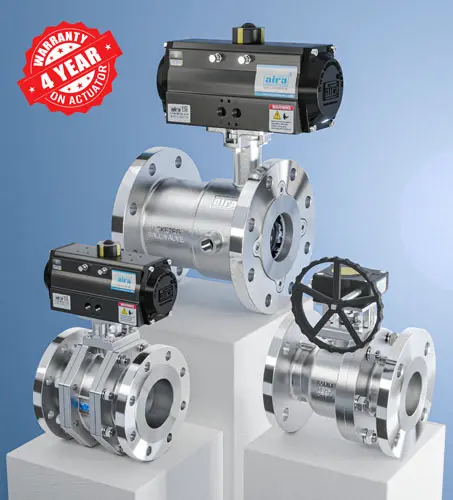
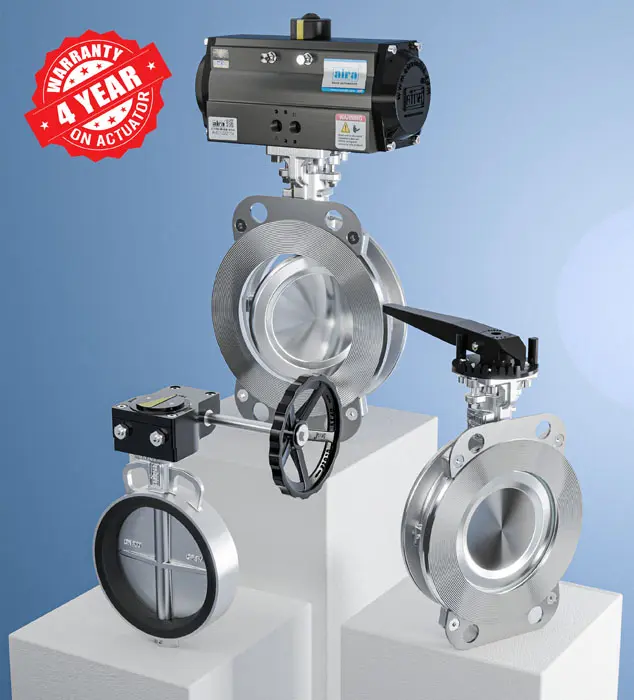
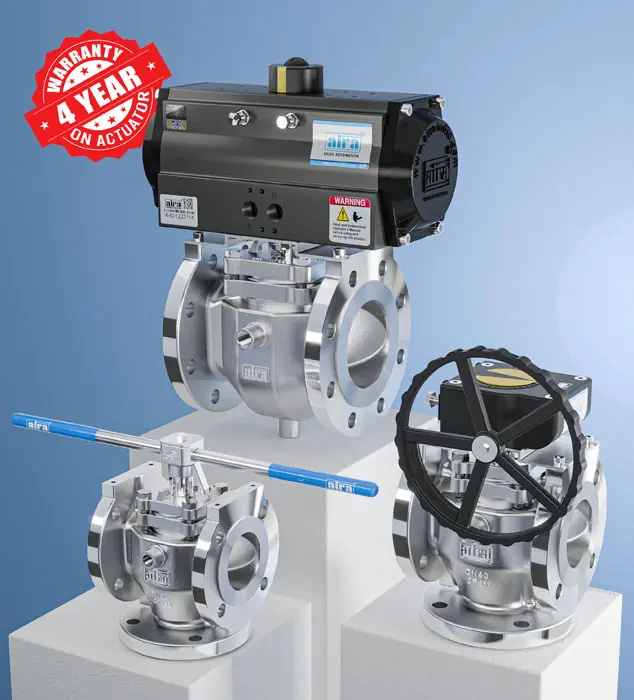
In a typical HVAC plant room, you will find several different valve types working together: ball valves for isolation service, butterfly valves for balancing and larger pipe sizes, and control valves for modulating flow in response to temperature and pressure signals. Each plays a specific role, and degradation in any one of them affects the whole system.
How Long Do HVAC Valves Actually Last?
This is a question that rarely gets a straight answer, partly because it depends heavily on the quality of the original valve, the water quality in the system, how often the valve cycles, and whether the system has been maintained properly.
As a general benchmark, a good quality isolation ball valve in clean chilled water service, used primarily for maintenance isolation and not cycled frequently, can last 15 to 20 years or more. A control valve that modulates continuously in response to load changes, opening and closing thousands of times per year, will typically need attention within 8 to 12 years, and may need trim replacement before that in demanding service.
Butterfly valves used for balancing or infrequent isolation generally fall somewhere in between, depending on disc and seat material and water quality.
The issue is that many HVAC systems in commercial and industrial buildings in India were installed in the 2000s or even earlier. The valves in those systems are now approaching or past the end of their reliable service life, but because they are still functioning in some capacity, they tend to get overlooked until the performance impact becomes undeniable.
Warning Signs That Your HVAC Valves Need Replacing
Uneven Temperatures Across Zones or Floors
One of the most common complaints in commercial buildings with aging HVAC systems is that some zones are too cold while others cannot reach the setpoint temperature. The thermostat calls for cooling, the AHU is running, but the room stays warm.
In many cases, the root cause is a control valve on the chilled water coil that is stuck partially open or not modulating properly. If the valve cannot close fully, warm water recirculates through the coil rather than being replaced with cold water from the chiller. If it cannot open sufficiently, the coil does not get enough flow to meet the cooling load.
Before calling in the chiller service team, it is worth checking whether the zone control valves are actually responding to their control signals and achieving the commanded positions.
Rising Energy Consumption With No Change in Load
If your building’s energy bills are creeping up and nothing obvious has changed the same occupancy, the same set points, the same season valve problems are a strong suspect.
A control valve with internal seat leakage allows chilled water to flow through a coil even when the zone does not need cooling. The chiller keeps running to replace that lost cooling energy. The pump keeps circulating water through a circuit that should be closed. The system consumes energy to compensate for a valve that should be holding shut but is not.
Also read, Which Valve Should You Choose? Needle Valve vs Ball Valve
This type of loss is difficult to see directly but shows up clearly in energy monitoring data as a baseline load that is higher than expected. In a large commercial building with dozens of zone control valves, even modest seat leakage in each one adds up to a significant energy penalty across the full year.
Water Hammer or Noise in the Pipework
Banging, thudding, or water hammer in HVAC pipework is often attributed to air in the system or pump issues. But worn or incorrectly sized valves particularly check valves on pump discharge lines or balancing valves that have lost their set position— are a common and frequently overlooked cause.
A check valve that is no longer closing properly allows backflow through the pump when it stops, which causes the characteristic water hammer thud. A control valve whose actuator is hunting — moving back and forth repeatedly rather than settling at the commanded position — generates a continuous pressure pulsation in the connected pipework.
If noise in the pipework has developed gradually over time, valve condition is worth investigating before assuming the problem is elsewhere.
Visible External Leakage
This one is straightforward: if you can see water dripping from a valve body joint, packing gland, or flange connection, that valve needs attention. External leakage in a chilled water or hot water system causes corrosion of surrounding steelwork, creates slip hazards, and eventually leads to significant water loss if left unaddressed.
Stem packing leakage on a control valve or butterfly valve can often be corrected by packing adjustment or replacement without replacing the full valve. But if the body itself is leaking at a joint or the corrosion around the valve is extensive, full replacement is the right call.
Control Loops That Cannot Hold Setpoint
In a building management system (BMS), a control loop that is consistently unable to hold its setpoint or that oscillates continuously is a sign that something in the control chain is not performing correctly. The controller, sensor, or actuated valve could be at fault.
When the controller and sensor have been confirmed as functioning correctly, the problem almost always lies with the control valve itself. A valve with excessive mechanical hysteresis, where it takes a significant change in signal before the valve actually moves, will cause the control loop to hunt continuously. A valve that is oversized for the current load will cause large swings in flow with small movements, making stable control impossible.
In both cases, valve replacement with a correctly specified unit resolves the control problem permanently.
Actuators That Are Working Harder Than They Should
If pneumatic actuators on HVAC control valves are consuming more air than normal, or if electric actuators are drawing higher current and running warmer, the cause is often increased friction or resistance in the valve itself. Corroded stems, worn packing, or a damaged seat that the actuator is fighting against all increase the load on the actuator.
Left unaddressed, this not only increases energy consumption but accelerates wear in the actuator itself, turning a valve problem into both a valve and actuator replacement job.
The Role of Water Quality in HVAC Valve Life
One factor that significantly affects how quickly HVAC valves deteriorate is the quality of the water in the system. Untreated or poorly treated chilled water and condenser water circuits are corrosive environments. Dissolved oxygen, biological growth, suspended solids, and chemical imbalance all attack valve internals over time.
Corrosion on valve seats reduces sealing effectiveness. Deposits on valve stems increase friction and cause stiction. Scale buildup on valve trim changes flow characteristics. In systems where water treatment has been inconsistent or inadequate over the years, valve life is significantly shorter than in well-maintained systems.
When replacing valves in an older system, it is worth reviewing the water treatment programme at the same time. Installing new valves into an untreated system simply means the new valves will deteriorate at the same rate as the ones being replaced.
Valve Repair vs Full Replacement in HVAC Systems
Not every underperforming HVAC valve needs to be replaced outright. Some problems can be addressed with targeted maintenance:
- Stem packing leakage — Often resolved by repacking the stem without removing the valve from the line.
- Actuator problems — If the valve body and trim are in good condition, replacing only the actuator assembly can restore full functionality.
- Positioner recalibration — A smart positioner that has drifted can often be recalibrated without replacing the valve.
- Seat leakage in larger valves — For larger butterfly or ball valves where the body is still sound, seat replacement or reconditioning may be cost-effective.
Full valve replacement makes the most sense when:
- The valve body is corroded or has significant wall thinning
- The valve is undersized or oversized for current load conditions
- The valve model is discontinued, and spare parts are no longer available
- The same valve has been repaired repeatedly without lasting improvement
- The valve specification is simply wrong for the current application
When replacing HVAC valves, it is worth taking the opportunity to reassess the specification. If the building load profile has changed since the system was originally commissioned, the valve sizing may need to be updated as well. A valve manufacturer in Ahmedabad with application engineering capability can assist with resizing calculations if required.
The Real Cost of Ignoring Valve Problems in HVAC Systems
Valve problems in HVAC systems are easy to defer. The system is still running. The building is still being cooled or heated, just not as efficiently or as evenly as it should be. It is tempting to keep patching and adjusting rather than committing to a valve replacement programme.
But the deferred cost is real. Energy waste from leaking control valves accumulates month after month. Equipment that runs harder to compensate for valve problems wears faster; chillers, pumps, and cooling towers all have shorter service lives when the system they serve is not balanced correctly. And when a valve does fail a stuck-open control valve on a critical AHU, or a failed isolation valve that cannot be closed for maintenance the disruption is far more costly than a planned replacement would have been.
A systematic valve inspection programme, particularly in systems more than ten years old, is one of the most cost-effective maintenance investments a building or facility manager can make.
Connect With Aira Euro for HVAC Valve Solutions
Aira Euro supplies a comprehensive range of valves for HVAC and building services applications, including isolation ball valves, butterfly valves, and modulating control valves suitable for chilled water, hot water, and condenser water service.
As a trusted valve manufacturer in India, Aira Euro combines product availability with technical support, helping facility managers, HVAC contractors, and plant engineers specify and source the right replacement valves for their specific systems. Whether you need a like-for-like replacement or a correctly resized valve for a changed load condition, the team at Aira Euro can guide you through the selection process.
Contact Aira Euro today at www.airaindia.com/contact to discuss your HVAC valve requirements.
Conclusion
HVAC systems are only as good as the components controlling the flow through them. When valves age, corrode, or simply wear out, the impact ripples through the entire system: higher energy bills, inconsistent temperatures, increased wear on major plant, and growing maintenance headaches.
The warning signs are there if you know what to look for: uneven zone temperatures, rising energy consumption, water hammer, control loops that will not settle, and actuators that are working harder than they should. Each of these points back to valve condition as a likely contributing factor.
Addressing valve problems systematically rather than waiting for a complete failure is the most cost-effective approach. And partnering with an experienced valve manufacturer in Ahmedabad like Aira Euro ensures you get the right replacement products, correctly specified for your system, with the technical support to back it up.
Frequently Asked Questions
How do I know if my HVAC control valve is failing?
Common signs include zones that cannot reach their temperature setpoint even though the HVAC system is running, building management system (BMS) control loops that continuously hunt or oscillate, and higher-than-normal energy consumption without any increase in building load. If the valve fails to reach its commanded position, confirmed through positioner diagnostics or a manual stroke test, it is a strong indication that the valve requires inspection or replacement.
Can a leaking HVAC valve significantly increase energy costs?
Yes. A control valve with internal seat leakage allows chilled or hot water to continue flowing through a coil even when the valve should be closed. As a result, the chiller or boiler must work harder to replace the wasted thermal energy. In large commercial buildings with multiple leaking valves, the resulting energy loss can easily exceed the cost of replacing the faulty valves.
How often should HVAC valves be inspected?
For commercial and industrial HVAC systems, inspecting valve condition every two to three years is a good general practice. Control valves that operate continuously should be inspected annually. Isolation valves should be exercised regularly to prevent seizure, while HVAC systems older than ten years can benefit from a comprehensive valve audit to identify components approaching the end of their service life.
What types of valves are most commonly used in HVAC systems?
HVAC systems commonly use ball valves for equipment and branch isolation, butterfly valves for larger pipelines and balancing applications, and control valves to regulate chilled water or hot water flow through coils and heat exchangers. Each valve type serves a different function and requires periodic maintenance to ensure efficient system operation.
Is it better to repair or replace aging HVAC valves?
The best option depends on the valve’s condition. Issues such as stem packing leakage, actuator replacement, or positioner recalibration can often be repaired without removing the valve from the pipeline. However, if the valve body is corroded, the valve has experienced repeated failures, or it is no longer properly sized for the current HVAC load, replacing the valve is generally the most cost-effective long-term solution.