Manufacturing plants today look nothing like they did twenty years ago. Assembly lines that once depended heavily on manual intervention are now governed by real-time data, interconnected sensors, and intelligent control systems. Machines talk to each other. Processes self-correct. And downtime once an accepted cost of doing business is increasingly becoming preventable.
But beneath all the digital sophistication of a modern smart plant, there is a physical layer that makes everything possible: the movement and control of fluids, gases, and slurries through pipelines. And the components that govern this movement are valves.
When valves are automated connected to actuators, controllers, and plant-wide communication networks they become active participants in the intelligence of the plant rather than passive hardware. This is the foundation of industrial valve automation, and it is reshaping how manufacturers think about efficiency, safety, and process control.
What Are Automated Valve Systems?
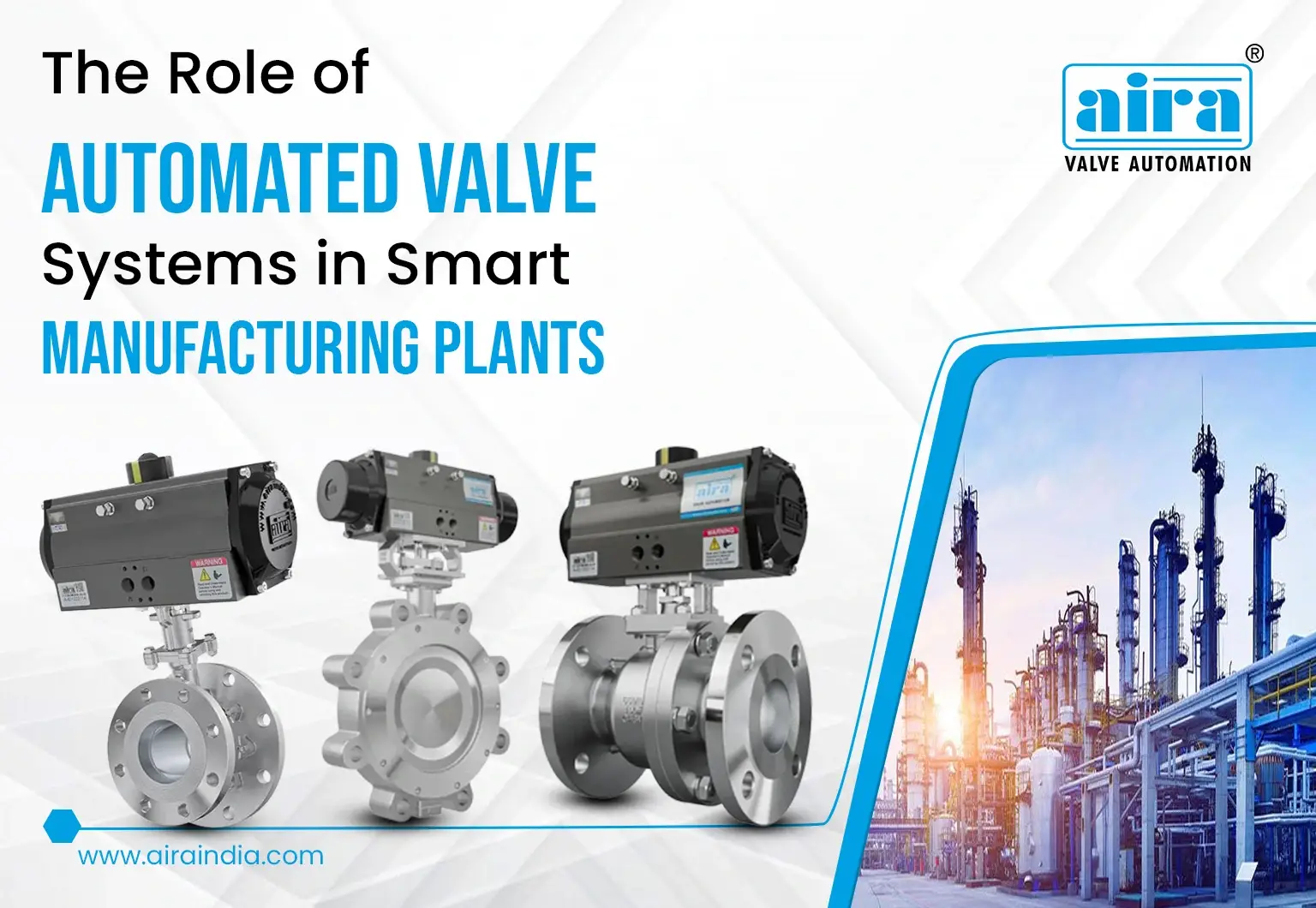
An automated valve system replaces manual operation with a combination of valve hardware, an actuator, a positioner, and a control interface. Rather than a technician physically adjusting a valve, a signal from a control system a PLC, DCS, or SCADA platform tells the actuator to move the valve to a specific position.
The key components working together include:
- The valve body — ball valve, butterfly valve, globe valve, or gate valve depending on the application
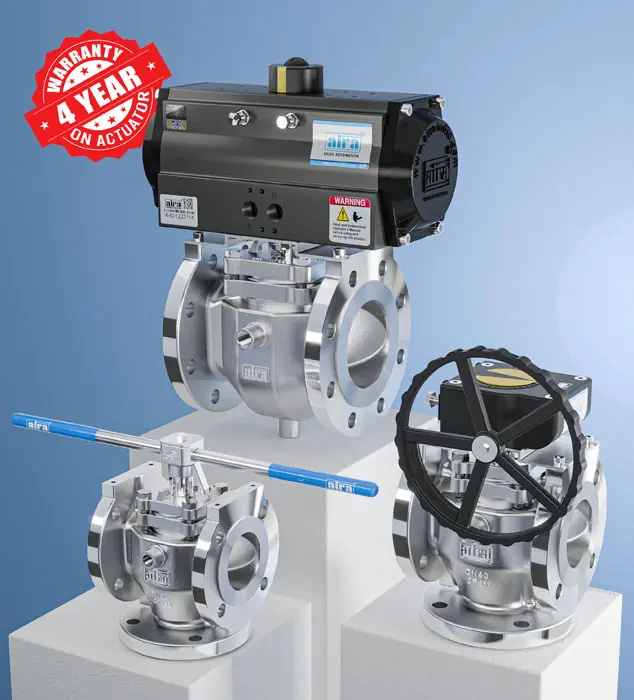
- The actuator — pneumatic, electric, or hydraulic, depending on speed and torque requirements
- The positioner — ensures the valve reaches and holds the exact required position
- Sensors and transmitters — provide real-time feedback to the control system
A pneumatic actuator uses compressed air to drive valve movement almost instantaneously far faster and more repeatable than any manual adjustment. In a smart manufacturing environment where process conditions can shift within seconds, that speed is not a luxury. It is a requirement.
The Connection Between Valve Automation and Smart Manufacturing
Industry 4.0 Demands Real-Time Control
Smart manufacturing under the Industry 4.0 framework depends on continuous, bidirectional data flow between machines, sensors, and control systems. Every process variable — temperature, pressure, flow rate, pH needs to be monitored and acted upon in real time.
Valves sit at the intersection of measurement and action. When a sensor detects a pressure spike in a pipeline, it is an automated valve that responds — throttling flow or triggering a shutdown before the situation escalates. Manual valves, no matter how experienced the operator, simply cannot match that response time.
Integration With SCADA and DCS Platforms
One of the most significant advantages of modern automated valve systems is how cleanly they integrate with existing plant control infrastructure. A control valve fitted with a smart positioner can communicate valve position, actuator health, and cycle data directly to the control room giving engineers complete process visibility without being on the plant floor.
This integration is what separates a connected plant from a truly intelligent one. When valve data feeds into analytics platforms, patterns emerge patterns that help predict failures before they happen, optimize setpoints in real time, and reduce energy consumption across the facility.
Enabling Predictive Maintenance
In traditional plants, valves are serviced on fixed schedules or after a failure. Both approaches are inefficient. Scheduled maintenance often replaces components that still have useful life. Reactive maintenance creates unplanned downtime that disrupts production.
Automated valve systems change this equation. When a smart positioner detects that a valve is taking longer than usual to reach its setpoint, or that actuator load is increasing, that data flags a developing problem before it becomes a failure. Maintenance teams can schedule intervention at a convenient time, with the right parts already on hand.
Benefits of Valve Automation in Manufacturing
The operational and financial case for process automation through intelligent valve systems is well established across industries. Here is what plants consistently gain:
- Process Accuracy: Automated valves hold tighter tolerances than manual operation, which is critical in pharmaceutical manufacturing, food processing, and specialty chemicals where small deviations affect product quality.
- Speed and Responsiveness: Pneumatic and electric actuators respond to control signals in milliseconds. Dynamic processes with fluctuating conditions need this level of responsiveness.
- Reduced Operating Costs: Fewer manual interventions translate into lower labor costs, fewer errors, and less product waste. Over a full year of production, the savings are substantial.
- Enhanced Safety: When sensors detect a hazardous condition, automated systems can trigger emergency shutdown sequences faster than any human can react.
- Remote Operability: With HART, PROFIBUS, or FOUNDATION Fieldbus communication, valves can be monitored and operated remotely invaluable for hazardous or remote facilities.
Industries Driving Adoption of Smart Valve Systems
Industrial valve automation is not limited to one sector. Virtually any industry that handles process fluids or gases benefits from it.
- Oil and Gas — Pipeline flow control, wellhead management, and refinery processing all require precise, reliable valve performance.
- Pharmaceuticals — Sterile manufacturing, batch control, and clean-in-place (CIP) systems depend on hygienic, precisely controlled valve operation.
- Food and Beverage — Consistent dosing, temperature control, and sanitary fluid handling are non-negotiable in food production.
- Chemical Manufacturing — Reactive processes under high pressure or temperature leave no room for slow or imprecise valve response.
- Water Treatment — Distribution networks, dosing systems, and treatment processes benefit from centralized valve control and monitoring.
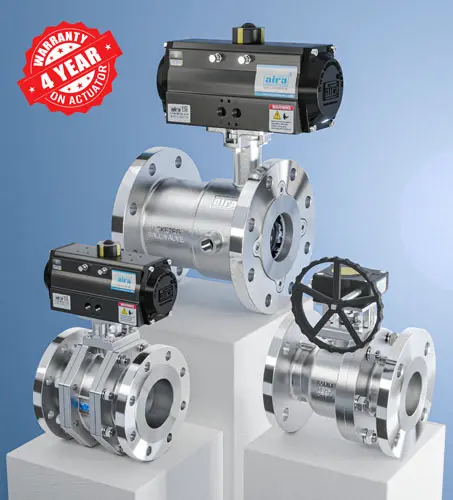
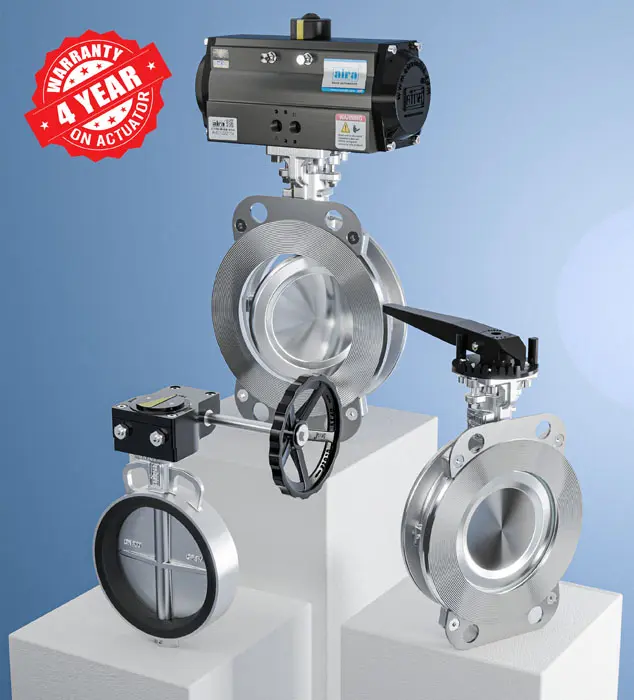
Across all these industries, both ball valves and butterfly valves serve critical functions. Ball valves handle tight shut-off requirements in high-pressure lines, while butterfly valves manage throttling and flow regulation across larger pipe diameters and both are well suited to automation.
How Automation Improves Efficiency and Safety Together
When valve automation is implemented systematically across a plant, the benefits compound. Control loops tighten because PID controllers can make micro-adjustments through automated valves continuously rather than waiting for a manual check. Operator workload drops, allowing engineers to focus on higher-level decisions which reduces fatigue-related errors.
In emergencies, automated safety loops can isolate plant sections within milliseconds. That speed can mean the difference between a contained incident and a catastrophic failure.
Also read, Air Operated Valve vs Electric Actuated Valve: Which is Better?
Energy consumption also improves. Pumps, compressors, and heat exchangers all operate more efficiently when the valves controlling them are precisely managed. Even modest improvements in valve control accuracy add up to meaningful energy savings over a full year of operation.
Choosing the Right Valve Automation Partner
Selecting the right supplier matters as much as selecting the right technology. When evaluating a valve automation partner, look for:
- Proven manufacturing capability across a full range of valve types and sizes
- In-house quality control at every production stage
- A complete product portfolio including valves, actuators, and control accessories
- Application engineering support not just product sales
- Responsive after-sales service and parts availability
Working with a locally established valve manufacturer in Ahmedabad offers practical advantages too — faster delivery timelines, easier coordination for site-specific requirements, and a partner who understands the regulatory and industrial landscape in India.
Connect With Aira Euro Automation for Your Automation Needs
If your plant is moving toward smart manufacturing or if you are looking to improve the performance of an existing automated system Aira Euro Automation has the products and expertise to support you.
As a trusted valve manufacturer in Ahmedabad, Aira Euro Automation offers a comprehensive range of automated valve solutions including pneumatic actuator to ball valves, butterfly valves, control valves, and complete actuator assemblies all built to stringent quality standards and backed by experienced application support.
Contact us today to discuss your valve automation requirements and find the right solution for your plant.
Conclusion
Automated valve systems are not a peripheral upgrade in smart manufacturing they are one of its core enabling technologies. The ability to control, monitor, and respond through valves in real time is what allows a modern plant to be genuinely intelligent rather than just digitally connected.
From tighter process accuracy and predictive maintenance to faster emergency response and lower energy consumption, the value of industrial valve automation touches every part of plant operations. As Industry 4.0 continues to reshape manufacturing, facilities that invest in quality valve automation today are building the operational resilience they will need tomorrow.
Partnering with an experienced valve manufacturer in Ahmedabad like Aira Euro Automation gives you both the technical foundation and the supply chain reliability to make that investment work.
Frequently Asked Questions (FAQs)
What is the role of automated valve systems in smart manufacturing?
Automated valve systems are central to smart manufacturing because they enable real-time process control without manual intervention. By connecting valves to actuators and plant control networks, manufacturers can regulate fluid and gas flow dynamically, respond to changing process conditions instantly, and collect data that drives predictive maintenance and continuous improvement.
How do pneumatic actuators work in industrial valve automation?
A pneumatic actuator uses compressed air to generate the mechanical force needed to open, close, or modulate a valve. When the plant control system sends a signal, the actuator responds almost immediately — making it ideal for applications where fast, reliable valve response is critical. Pneumatic actuators are also preferred in hazardous environments where electrical sparks pose ignition risks.
Which valve types are best suited for automation in manufacturing plants?
Ball valves and butterfly valves are among the most commonly automated valve types. Ball valves offer tight shut-off and are well suited for on/off applications in high-pressure systems. Butterfly valves are preferred for larger pipe diameters and throttling service. Control valves with modulating actuators are used wherever precise, continuous flow regulation is required.
What is the difference between a control valve and a regular industrial valve?
A standard industrial valve is typically designed for fully open or fully closed operation — it either allows or stops flow. A control valve is designed to modulate — it can be positioned anywhere between fully open and fully closed, allowing the process engineer to regulate flow rate, pressure, or temperature precisely in response to control signals.
How does valve automation support process safety in manufacturing?
Automated valve systems support safety through Emergency Shutdown (ESD) capabilities that can isolate hazardous plant sections in milliseconds. Smart positioners provide continuous diagnostic data to identify developing faults before they become failures. Automated systems also create timestamped operational records that support regulatory compliance and incident investigation.