Control valves play an important role in industrial automation systems by regulating the flow, pressure, temperature, and level of fluids within a process line. Depending on the application requirement, control valves are operated using different actuator systems such as pneumatic actuators and electric motorized actuators.
Among the available automation technologies, pneumatic control valves are widely preferred in industrial applications because of their fast response, reliability, and operational efficiency. While both pneumatic and motorized control valves perform similar functions, pneumatic systems offer several advantages in demanding industrial environments.
Understanding the differences between these two valve automation systems helps industries select the most suitable solution for process control applications.
What is a Motorized Control Valve?
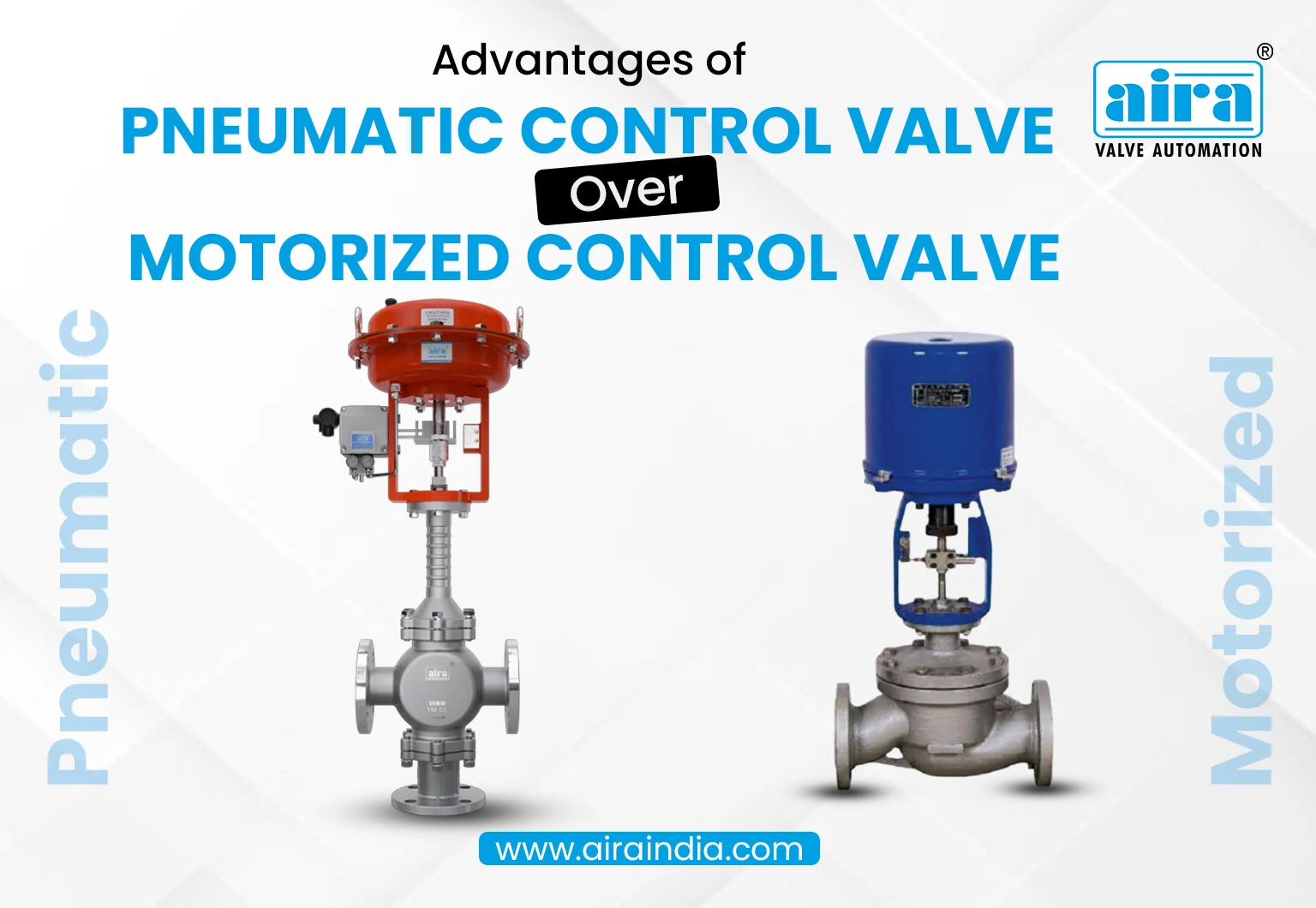
A motorized control valve uses an electric actuator to regulate fluid flow inside the valve body. The electric motor receives signals from the controller and moves the valve stem to open, close, or control the flow according to process requirements.
Motorized control valves are commonly used in applications where electrical control systems are available and precise positioning is required.
These valves are widely used in:
- HVAC systems
- Water treatment plants
- Utility systems
- Industrial automation processes
What is a Pneumatic Control Valve?
A pneumatic control valve operates using compressed air through a pneumatic actuator. The actuator receives signals from the controller and converts air pressure into mechanical movement to control the valve position.
Pneumatic actuators are commonly available in diaphragm and piston actuator designs. These valves are widely used in industrial automation systems because they provide fast response and reliable operation in harsh working conditions.
For industries requiring continuous process control and rapid valve operation, pneumatic control valves are considered highly efficient automation solutions.
Why Pneumatic Control Valves Are Preferred in Industrial Applications
Industrial systems often require quick valve movement, continuous operation, and safe performance in demanding environments. Pneumatic control valves are capable of handling these requirements efficiently due to their simple mechanical design and fast actuation capability.
Compared to electric motorized systems, pneumatic actuators generally offer:
- Faster response time
- Higher operational reliability
- Better suitability for hazardous environments
- Lower maintenance requirements
- Higher torque for large valve operations
These benefits make pneumatic automation highly suitable for process industries such as chemical processing, pharmaceuticals, oil and gas, water treatment, food processing, and power generation.
Benefits of Pneumatic Control Valves
Faster Response Time
One of the biggest advantages of pneumatic control valves is their rapid operating speed. Pneumatic actuators respond much faster compared to electric motorized actuators because compressed air generates immediate movement inside the actuator mechanism.
Motorized actuators contain gears and electric motor components that generally require more operating time. Pneumatic systems are therefore preferred in applications where quick valve operation is critical.
Better Performance in Hazardous Environments
Pneumatic control valves are highly suitable for hazardous and explosive industrial environments because they do not rely directly on electrical power at the actuator point.
Industries such as:
- Oil and gas
- Chemical processing
- Petrochemicals
- Refineries
often prefer pneumatic automation because compressed air systems reduce the risk of electrical spark hazards.
Lower Maintenance Requirements
The pneumatic actuator generally have a simpler mechanical design compared to electric motorized actuators. Electric systems include motors, gearboxes, and electrical components that may require regular servicing and maintenance.
Because pneumatic systems have fewer complex moving components, they are easier to maintain and often provide longer operational reliability.
High Torque Output
For large industrial valves, pneumatic actuators can generate high torque efficiently without requiring bulky actuator systems.
Motorized actuators handling large valves may become heavy and consume significant electrical power. Pneumatic systems can often achieve higher torque with a comparatively compact design.
Reliable Continuous Operation
Pneumatic control valves are widely used in industries where valves operate continuously throughout the production cycle. Their durable actuator design supports repetitive operations without significant performance loss.
This makes pneumatic systems suitable for:
- Continuous process plants
- Industrial automation lines
- Flow control systems
- High-cycle applications
Better Suitability for Fast Automation Systems
Modern industrial automation systems require fast and responsive control equipment. Pneumatic actuators can quickly adjust valve positions according to controller signals, improving process stability and operational efficiency.
For advanced automation applications, pneumatic systems are commonly integrated with:
- valve positioners
- automated control systems
- process monitoring equipment
- industrial control valves
Cost-Effective for Industrial Applications
In many industrial applications, pneumatic control valves provide a cost-effective automation solution due to:
- lower maintenance expenses
- reliable operation
- long service life
- efficient performance in heavy-duty applications
For facilities already operating compressed air systems, pneumatic automation becomes even more economical.
Common Applications of Pneumatic Control Valves
Pneumatic control valves are commonly used in:
- Chemical industries
- Pharmaceutical plants
- Water treatment systems
- Steam applications
- Food processing industries
- Oil and gas plants
- HVAC systems
- Industrial automation systems
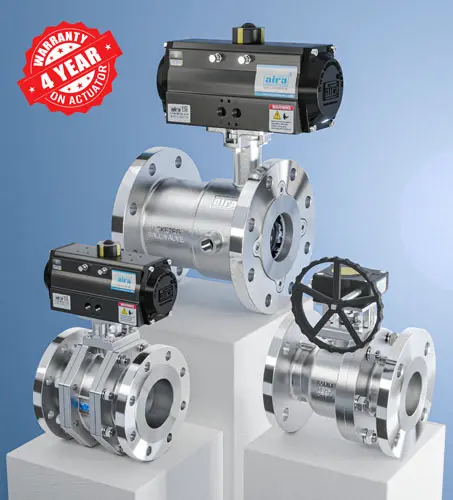
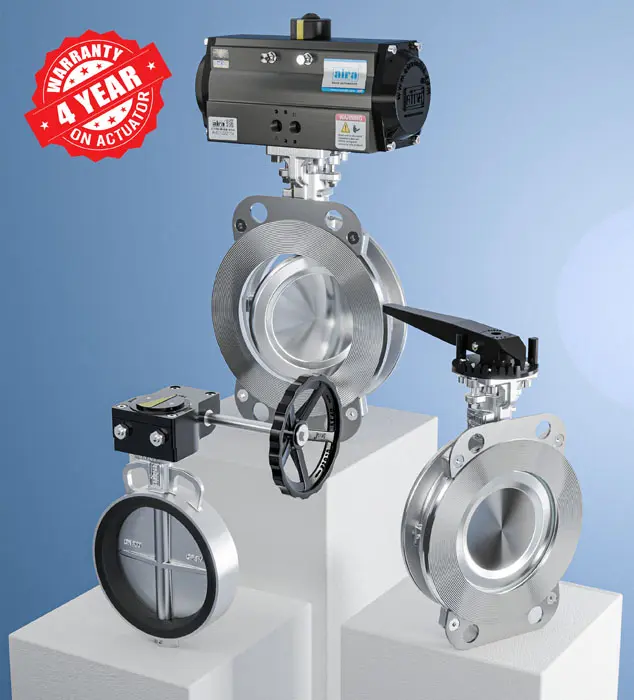
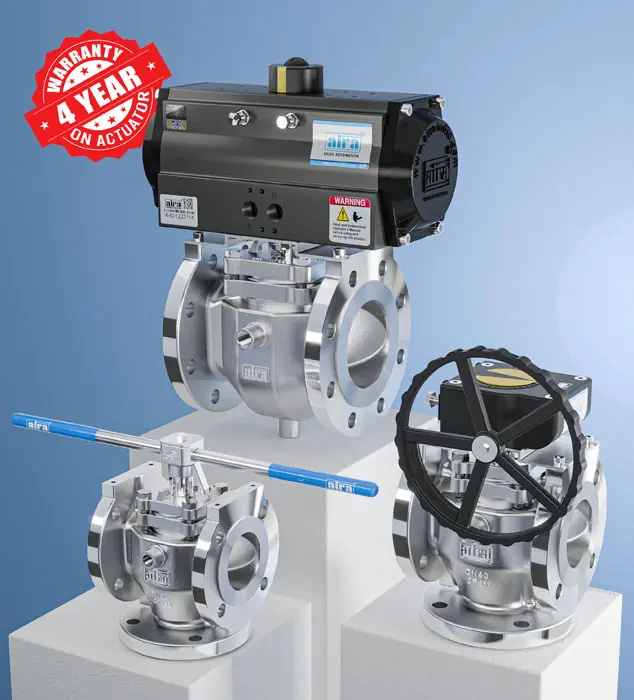
These valves are frequently combined with products such as butterfly valve, ball valve, and 3 way control valve systems for efficient process automation.
Looking for Reliable Pneumatic Control Valve Solutions?
Aira Euro Automation manufactures high-performance pneumatic control valves designed for industrial automation and process control applications. These valves are engineered for fast response, operational reliability, and efficient fluid control across multiple industries.
For product inquiries or technical assistance, visit our contact us page
Frequently Asked Questions
What is the main difference between pneumatic and motorized control valves?
Pneumatic control valves operate using compressed air, while motorized control valves use electric actuators for valve operation.
Why are pneumatic control valves faster?
Compressed air provides immediate actuator movement, allowing pneumatic systems to respond faster compared to electric motor-driven systems.
Are pneumatic control valves suitable for hazardous areas?
Yes, pneumatic control valves are widely used in hazardous environments because they reduce electrical spark risks.
Which industries commonly use pneumatic control valves?
Industries such as oil and gas, chemical processing, pharmaceuticals, water treatment, and manufacturing commonly use pneumatic control valves.
Do pneumatic control valves require high maintenance?
No, pneumatic actuators generally require lower maintenance due to their simpler mechanical construction compared to motorized actuators.