In the era of Industry 4.0, the physical movement of a valve is only half the story. The other half is the data that movement generates. For a modern industrial plant to function at peak efficiency, the Pneumatic Actuator must be able to “speak” to the plant’s central nervous system—the Distributed Control System (DCS) or Programmable Logic Controller (PLC).
At Aira Euro Automation, we recognize that “Smart Manufacturing” is only possible when there is seamless communication between field devices and the control room. This guide explores how our actuation solutions bridge the digital gap using modern communication protocols like HART, PROFIBUS, and Foundation Fieldbus.
The Language of Automation: Why Protocols Matter
A Pneumatic Actuator is inherently a mechanical device powered by compressed air. However, to integrate it into a digital ecosystem, we equip it with a “translator”—usually a Digital Valve Positioner.
Without a standardized protocol, a valve is an island. With protocols like HART or PROFIBUS, that same valve becomes a source of diagnostic intelligence, reporting its position, health, and operational history in real-time. This connectivity is the foundation of the strategies we discussed in our recent post about The Rise of IoT-Integrated Valves.
HART Protocol: The Industry Standard
The HART (Highway Addressable Remote Transducer) protocol is perhaps the most widely used in the world of flow control. It is a “hybrid” protocol that allows digital signals to ride on top of traditional 4-20mA analog wiring.
How Aira Euro Automation Implements HART: Our Pneumatic Actuator series, when paired with HART-compatible positioners, allows for “Bi-Directional” communication. This means the controller can send a command to the valve, and the valve can send back a health report simultaneously.
- Benefit: You don’t need to replace your existing wiring to get digital diagnostics.
- Application: Ideal for upgrading legacy plants to Industry 4.0 standards without a massive infrastructure overhaul.
PROFIBUS & PROFINET: High-Speed Precision
For plants that require massive amounts of data at high speeds—such as large-scale chemical refineries or water treatment facilities—PROFIBUS (Process Field Bus) is the gold standard.
Integration with Aira Solutions: Aira’s heavy-duty Pneumatic Actuator units are designed to house high-speed digital interfaces. Unlike the analog-based HART, PROFIBUS is entirely digital, allowing for much more complex data transmission, such as detailed “Signature Curves” of the valve’s stroke.
- Benefit: Reduced wiring complexity. One “bus” cable can connect dozens of actuators to a single controller.
- Application: Modern, large-scale automated facilities where precision and speed are non-negotiable.
Foundation Fieldbus (FF): For Mission-Critical Control
In highly complex environments like Oil & Gas, the Foundation Fieldbus protocol is often preferred because it allows “Control in the Field.”
As we explored in our article on Oil & Gas Valves Innovations, safety is paramount. FF allows Aira actuators to communicate directly with other field devices (like pressure sensors) without even needing to talk to the main PLC first. This creates a decentralized, highly reliable safety network.
The Hardware: Aira’s Pneumatic Actuator and Digital Positioners
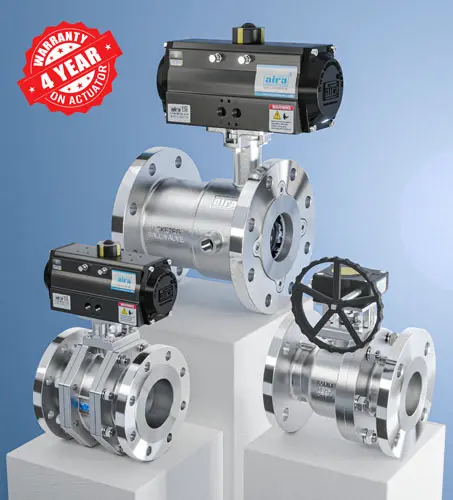
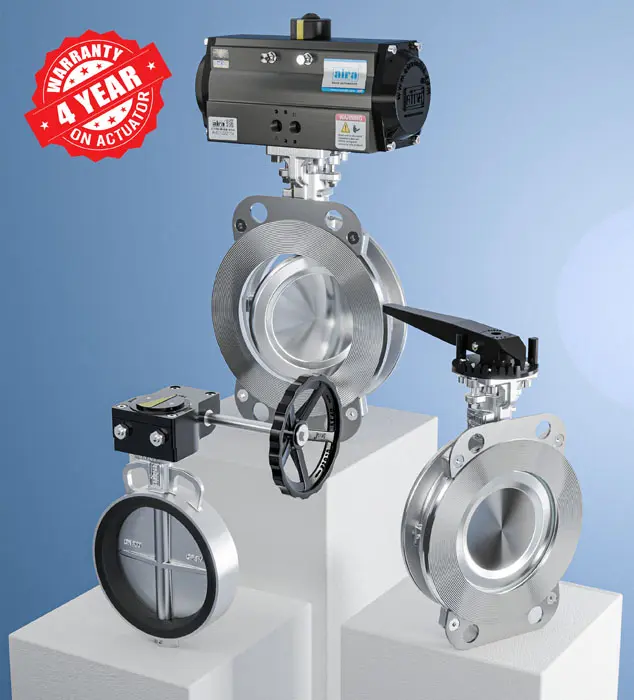
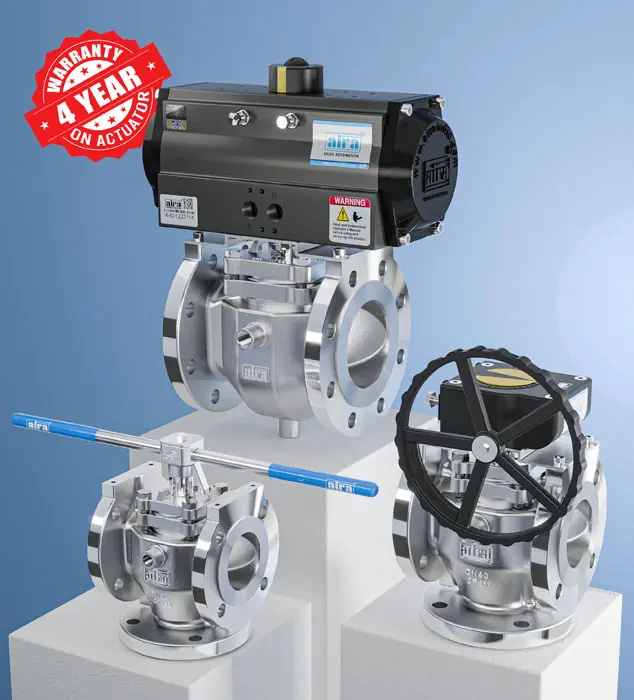
The protocol is the language, but the Pneumatic Actuator is the muscle. At Aira Euro Automation, our actuators are built to withstand the harshest industrial environments—from corrosive chemical vapors to extreme temperatures.
However, the “Intelligence” is added through our digital positioner range. These devices provide:
- Auto-Calibration: Reducing commissioning time by up to 80%.
- Dynamic Response: Adjusting the air flow to the actuator in milliseconds to maintain the exact setpoint of a Control Valve.
- Fugitive Emission Monitoring: Detecting leaks in the pneumatic circuit before they lead to energy waste.
Overcoming the Integration Gap
One of the biggest hurdles in Industry 4.0 is the “silo” effect—where different machines speak different languages. Aira Euro Automation solves this through Interoperability.
Our engineering team ensures that our actuators are compatible with major automation platforms (Siemens, Emerson, Honeywell, Rockwell, etc.). By providing standardized EDD (Electronic Device Description) and DTM (Device Type Manager) files, we make sure that “plug-and-play” is a reality, not just a marketing slogan.
The Economic Value of Connectivity
Why spend the extra effort on communication protocols? The answer lies in the Total Cost of Ownership (TCO). A standard actuator might be cheaper initially, but a smart Pneumatic Actuator with HART or PROFIBUS pays for itself by:
- Reducing Cable Costs: Connecting multiple valves via a single bus cable.
- Faster Commissioning: Digital setup is significantly faster than manual mechanical adjustments.
- Lower Maintenance Costs: Using data to fix only what is broken.
Conclusion: Future-Proofing with Aira Euro Automation
As we navigate the complexities of 2026, the gap between “mechanical” and “digital” is closing. A Pneumatic Actuator from Aira Euro Automation is no longer just a cylinder and a piston; it is a sophisticated node in a global industrial network.
By choosing the right communication protocol, you ensure that your plant is not just automated for today, but ready for the AI-driven maintenance cycles of tomorrow. As a leader with 25 years of manufacturing excellence, Aira Euro Automation is here to guide you through every step of this digital transformation.