Ball Valves for the Oil and Gas Industry: Types, Applications & Selection Guide
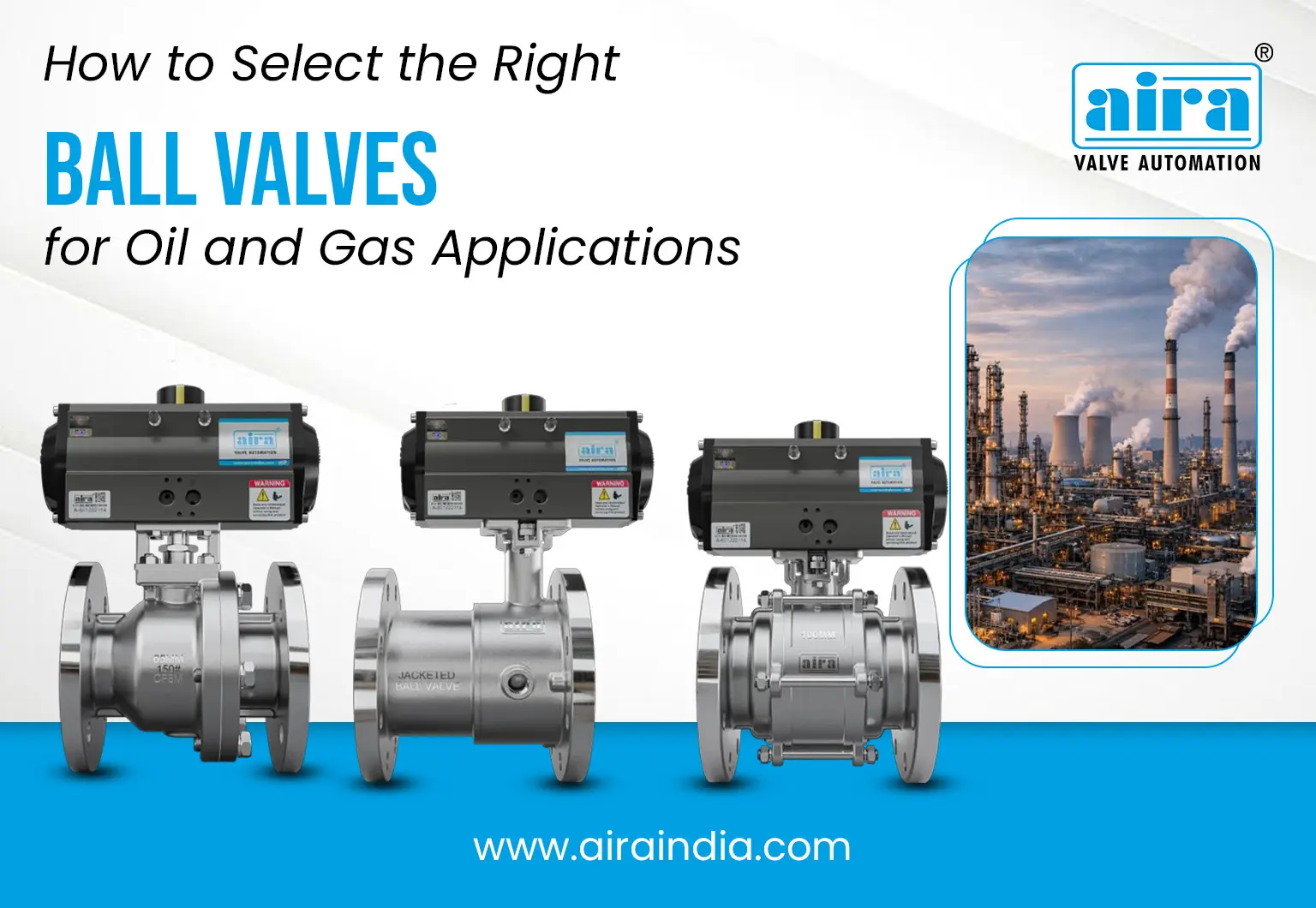
Hello Readers, do you know there are several valves that are specifically designed and developed to control gas and oil applications? Yes, there are more than 5 types of industrial control valves that are developed for use in the gas and oil industry. Ball Valve, Butterfly Valve, Gate Valve, Globe Valve, Plug Valve, and safety valve are on this list. In order to maintain the flow of oil and gas in pipelines, several reliable pieces of equipment are required. Control valves are one of those pieces of equipment. It is impossible for the oil and gas industry to ensure that crude oil, refined gas, natural gas, and other materials reach their destination without control valves. In this article, we will recognize the role of ball valves in the petroleum industry. So first of all let’s take a brief look at the ball valve.
What is a Ball Valve?
As well as on/off, ball valves can also be used for throttling purposes. They are easy to open and close, requiring only a quarter-turn. There is a hollow ball inside the valve body, which is connected to the stem. You need to rotate the stem to operate the ball valve. When the hollow ball is parallel to the pipeline it allows the fluid to flow out and vice-versa when the hollow ball is perpendicular. Ball Valve requires a manual hand lever or actuator in large sizes and at high operating pressures to overcome the operating torque. Both onshore and offshore oil and gas production facilities use ball valves to shut off fluid. Ball valves are also used in furnace fuel gas systems.
What Types of Ball Valves Are There?
As per their body structure and design, the ball valves can be classified into three types: single-piece ball valve, two-piece design ball valve, and three-piece design ball valve. According to the ball valve’s central hollow ball fittings, the ball valves are also available in three types which are: side entry ball valve, floating ball valve, and trunnion mounted ball valve. These all types of ball valves are designed for a specific functionality apart from controlling the fluid flow. As ball valves are lightweight and perform quick action in comparison to other valves, these are the most demanded valves in chemical industries as well. Due to this engineers have also designed lined ball valves to control corrosive fluids. The PFA and PTFA materials are used in lined ball valves. There are also fire-safe design ball valves, extended shaft ball valves, and UPVC ball valves available. Multiple-way ball valves are also available in the market.
Types of Ball Valves Used in the Oil and Gas Industry
Different segments of the oil and gas value chain require different ball valve configurations. Understanding each type helps engineers and procurement teams specify the right valve for the right application.
1. Full Bore (Full Port) Ball Valves
Full bore ball valves have a ball bore diameter equal to the internal diameter of the pipe, meaning there is no flow restriction. They are the standard choice for oil and gas transmission pipelines where pigging (pipeline cleaning and inspection) is required, and where minimising pressure drop is critical. Full bore ball valves are larger and heavier than reduced bore equivalents but are essential for mainline pipeline isolation.
2. Reduced Bore (Standard Port) Ball Valves
Reduced bore ball valves have a bore one or two pipe sizes smaller than the pipe diameter. While they introduce some flow restriction, they are more compact and lighter, making them suitable for instrumentation lines, utility services, and secondary process lines where pigging is not required.
3. Floating Ball Valves
In a floating ball valve, the ball is supported only by the seat rings and moves slightly under line pressure to seal against the downstream seat. Floating ball valves are suited to smaller diameters (typically up to 6 inches) and lower pressure classes. They are commonly used in downstream refinery applications and gas distribution networks.
4. Trunnion Mounted Ball Valves
Trunnion mounted ball valves have the ball mechanically anchored by trunnions at the top and bottom, transferring mechanical loads away from the seats. This design handles larger diameters and higher pressures with lower operating torque — making trunnion ball valves the industry standard for oil and gas mainline pipelines, compressor stations, and high-pressure upstream service. (See Aira Euro’s trunnion mounted ball valve product page for specifications.)
5. Metal-to-Metal Seat Ball Valves
Where soft seat materials (PTFE, PEEK) cannot withstand the operating temperature, such as in high-temperature steam service, furnace fuel gas systems, or fire-safe applications, metal-to-metal seat ball valves are specified. These valves maintain sealing integrity at temperatures where soft seats would degrade.
6. Lined Ball Valves
For corrosive media in petrochemical and refining processes — such as acids, alkalis, and aggressive solvents- lined ball valves with FEP, PFA, or PTFE lining provide chemical resistance that standard carbon or stainless steel cannot match. These are widely used in chemical processing plants and downstream refinery units.
Is a Ball Valve Better than a Gate Valve?
A ball valve and a gate valve are two of the most commonly used valves in plumbing or gas systems to control the flow of fluid. In terms of sealing effectiveness and reliability and longevity, ball valves are more reliable than gate valves but tend to be more expensive. These valves are often used for shutoffs and controls. Water hammer is more likely to occur with ball valves since they can open and close immediately. If a valve is closed quickly on water flowing at high pressure through pipes, it can create shock waves in the plumbing that cause it to hammer. Water hammer can weaken and break a pipe if the pressure is high enough. Because of this, users are advised to turn the ball valve lever slowly to avoid water hammers.
Ball valves and gate valves are both used for isolation duty in oil and gas pipelines, but they have different strengths. Understanding the comparison helps engineers make the right selection:
| Feature | Ball Valve | Gate Valve |
|---|---|---|
| Operation | Quarter-turn (fast) | Multi-turn (slow) |
| Shut-off Quality | Bubble-tight seal | Good but may leak over time |
| Flow Restriction | Full bore: zero restriction | Partial restriction |
| Size & Weight | Compact and lightweight | Larger and heavier |
| Actuation | Easy to automate | More complex to actuate |
| Maintenance | Simple, minimal parts | More complex internals |
| Cost | Higher initial cost | Lower initial cost |
| Best Use | On/off, high-cycle applications | Infrequent operation, large pipes |
As a general rule, ball valves are preferred for new oil and gas installations where automation, weight reduction, and reliable shut-off are priorities. Gate valves remain in service in legacy pipelines and very large diameter applications where the lower initial cost is a decisive factor.
What are the Advantages of Ball Valve?
Ball Valves are a perfect choice for controlling different applications and sometimes they are picked over any other valves which have less control in the throttling use. Some advantages of ball valves are as below:
- Ball Valves offer leak-proof services,
- They can be opened and closed quickly,
- Multiple-way ball valves like 3 way and 4 way Ball Valves are used for diverting and mixing applications.
- They can be installed vertically or horizontally
- Ball Valves are much smaller than gate valves,
- Ball Valves are lighter than gate valves,
- Neither Gate valves nor Globe valves offer multi-designed flexibility like ball valves, thereby reducing the number of valves required.
- Ball valves are manufactured in different sizes and shapes providing flexibility in the selection
- High-quality ball valves provide safe operation at high temperatures and pressures, and
- Ball valves require less force to operate when compared with other valves.
Why Ball Valves Are Widely Used in Oil and Gas Applications
The oil and gas industry demands valves that can handle extreme pressures, high temperatures, corrosive media, and — in many cases — remote or automated operation. Ball valves are preferred for these applications for several key reasons:
- Bubble-tight shut-off: The ball-and-seat mechanism provides a reliable, leak-free seal even under high differential pressure, making ball valves ideal for isolation duties on oil and gas pipelines.
- Quarter-turn operation: A 90-degree turn fully opens or closes the valve — fast, simple, and easy to automate with pneumatic or electric actuators for remote operation.
- Full bore design available: Full bore (full port) ball valves allow pigging operations and have zero flow restriction — critical for long-distance oil and gas transmission pipelines.
- Compact and lightweight: Compared to gate valves of equivalent pressure rating and bore size, ball valves are significantly more compact, reducing weight on offshore platforms and pipeline installations.
- Low maintenance: With few internal moving parts and durable seat materials, ball valves offer long service life with minimal maintenance requirements.
- Wide material options: Ball valves are available in carbon steel, stainless steel, duplex, and exotic alloys — covering the full range of oil, gas, and petrochemical service conditions.
Standards and Certifications for Oil and Gas Ball Valves
Ball valves used in oil and gas applications must comply with recognised international standards. The most relevant are:
- API 6D: The primary standard for pipeline ball valves, covering design, material, testing, and inspection requirements for pipeline and piping valves.
- API 6A: Applies to wellhead and Christmas tree equipment including valves for upstream production service.
- API 608: Covers metal ball valves for general petroleum and petrochemical service.
- ASME B16.34: Standard for pressure-temperature ratings, dimensions, and testing of flanged and butt-weld end valves.
- API 607 / BS 6755: Fire-safe testing standards, verifying valve performance during and after fire exposure.
- ISO 15848: Fugitive emissions testing for valve stem seals — increasingly required on gas service ball valves.
Conclusion
Aira Euro Automation manufactures a comprehensive range of ball valves for oil and gas, petrochemical, and industrial applications — including full bore, trunnion mounted, metal-to-metal, and lined ball valves. Contact our engineering team to discuss the right valve specification for your project.