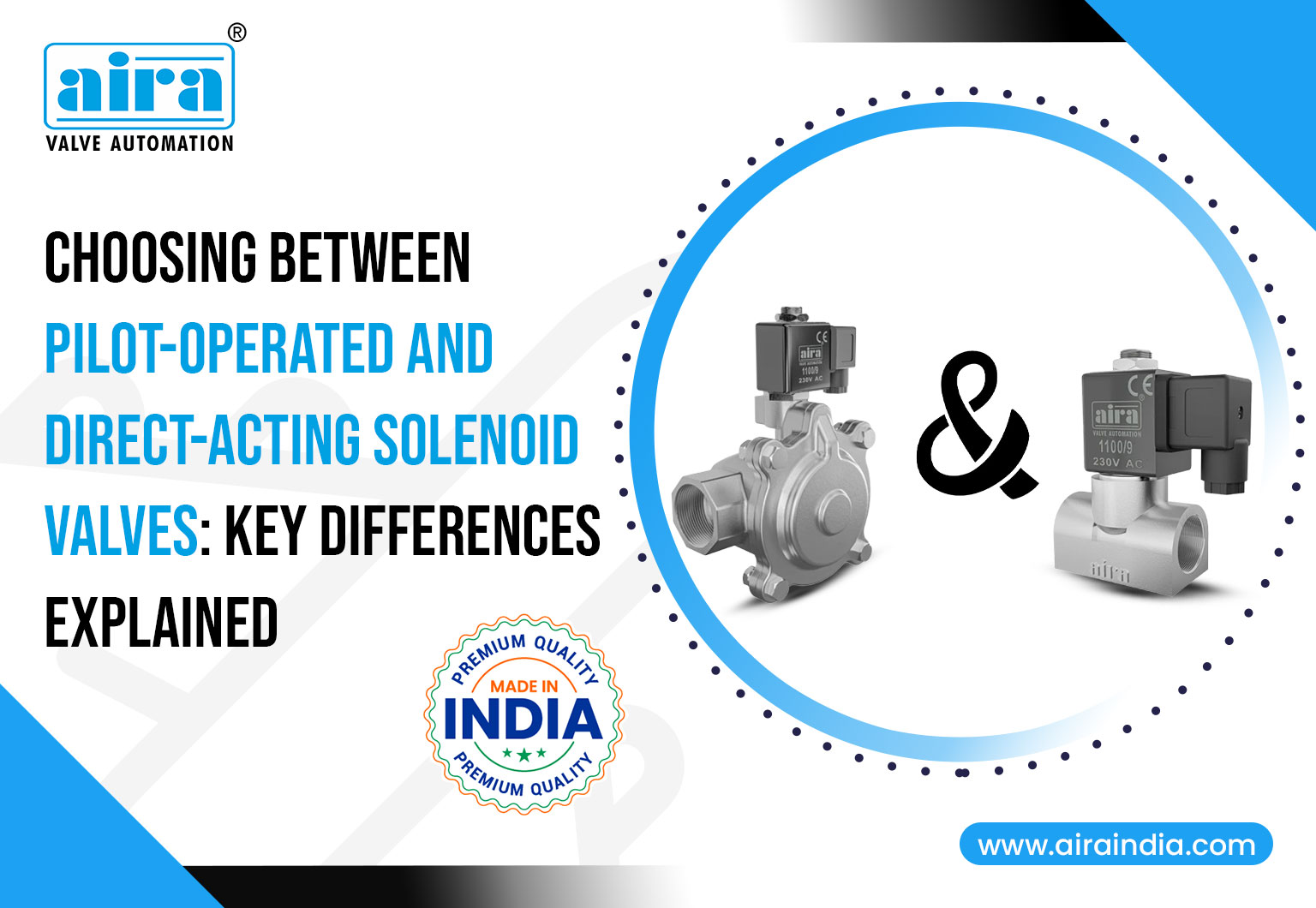
When it comes to automation and fluid control, not all solenoid valves operate in the same way. Engineers often need to choose between a Direct Acting Solenoid Valve and a Pilot Operated Solenoid Valve based on pressure, flow rate, media, and application requirements.
Choosing the wrong valve type can lead to system inefficiency, unwanted downtime, or premature component failure. In this blog, we’ll clear up the confusion with a simple, side-by-side comparison so you can select the right solenoid valve for your application.
What Is a Direct Acting Solenoid Valve?
A Direct Acting Solenoid Valve is designed so that the electromagnetic coil directly lifts or moves the plunger to open and close the valve. Unlike a pilot operated design, it does not depend on system pressure or a pressure differential to operate.
This makes a Direct Acting Solenoid Valve suitable for low-pressure systems, zero-pressure conditions, gravity-fed flows, and applications with relatively small flow rates.
These valves are commonly used in:
- Gas lines
- Chemical dosing systems
- Laboratory equipment
- Small fluid control systems
- Low-pressure automation applications
One of the main advantages of a Direct Acting Solenoid Valve is that it can operate without a minimum pressure differential. This makes it useful where the available system pressure is very low or where reliable operation at zero pressure is required.
Because the solenoid directly controls the valve’s opening and closing mechanism, these valves can also provide fast response for suitable low-flow applications.
What Is a Pilot Operated Solenoid Valve?
A Pilot Operated Solenoid Valve uses the pressure of the fluid or gas in the pipeline to assist with opening and closing the main valve.
In this design, the solenoid controls a smaller pilot orifice, while the line pressure helps move the main diaphragm or sealing element. As a result, pilot operated valves can handle higher flow rates with comparatively smaller solenoid coils.
However, a Pilot Operated Solenoid Valve generally requires a minimum pressure differential to operate correctly. The exact minimum pressure requirement depends on the valve design and manufacturer specifications, so engineers should always check the relevant datasheet before selection.
Pilot operated solenoid valves are commonly used in:
- Water treatment systems
- Compressed air systems
- Steam lines
- Irrigation systems
- HVAC systems
- Industrial process applications
For applications with adequate line pressure and higher flow requirements, a Pilot Operated Solenoid Valve can be a practical choice.
Side‑by‑Side Comparison Table
Here’s a quick reference table to help you compare both types at a glance:
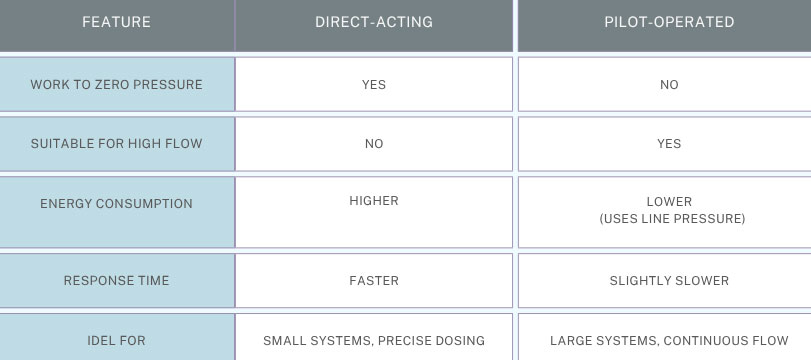
By reviewing these points, engineers can easily match the valve type with their system requirements.
Factors to Consider When Choosing
When deciding between a direct acting solenoid valve and a pilot operated solenoid valve, consider these key factors:
- System pressure: If your system operates at zero or very low pressure, a direct acting model is essential. For pressurized lines, a pilot operated valve is often more efficient.
- Flow rate: Large-bore or high-flow applications demand pilot operated valves, while low‑flow systems benefit from direct acting designs.
- Media type: For gases, chemicals, or viscous fluids, direct acting valves often provide more reliability.
- Frequency of operation: Pilot operated valves are more energy-efficient for continuous operation.
- Power source: Direct acting valves typically consume more power, as the coil must generate enough force to lift the plunger.
Always review valve datasheets, flow curves, and application notes from trusted manufacturers like Aira Euro Automation, a leading industrial valve manufacturer in India, before finalizing your choice.
Also, read SS vs Brass Solenoid Valves: Which One Fits Your System Best?
Direct Acting and Pilot Operated Solenoid Valve Applications
The right valve type can make a significant difference in system performance, reliability, and service life.
Direct Acting Solenoid Valve Applications
Direct acting solenoid valves can be suitable for:
- Medical dosing machines
- Laboratory instruments
- Small fuel gas systems
- Low-pressure fluid control
- Precise chemical dosing equipment
- Small automation systems
Their ability to operate without relying on a minimum pressure differential makes them useful for applications where system pressure is limited.
Pilot Operated Solenoid Valve Applications
Pilot operated solenoid valves are commonly considered for:
- Steam line control
- Large irrigation systems
- Municipal water treatment plants
- Compressed air systems
- HVAC applications
- Industrial water control
- Higher-flow process applications
For these applications, adequate operating pressure and the correct pressure differential are important for reliable valve operation.
Match the Valve to the Job, Not Just the Spec Sheet:
In summary, a Direct Acting Solenoid Valve is generally suitable for precise, low-flow and low-pressure applications where operation without a minimum pressure differential is important.
A Pilot Operated Solenoid Valve, on the other hand, is generally suited to higher-flow applications where sufficient line pressure is available to assist valve operation.
The right choice depends on your actual operating conditions, including pressure, flow, media, temperature, valve size, and operating frequency.
Selecting the correct solenoid valve can help improve system reliability, reduce unnecessary maintenance, and support consistent process performance.
Looking for the Right Solenoid Valve for Your Application?
Selecting between a Pilot Operated Solenoid Valve and a Direct Acting Solenoid Valve should be based on actual system requirements rather than valve size alone.
Aira Euro Automation provides industrial solenoid valve solutions for different automation and fluid-control applications. Our technical team can help you evaluate factors such as operating pressure, flow rate, media, temperature, valve size, and application requirements before selecting a suitable valve.
If you are looking for a reliable solenoid valve manufacturer in India or need help selecting the right solenoid valve for your industrial application, contact Aira Euro Automation with your application details.
Share your operating pressure, media, temperature, flow requirement, valve size, and coil voltage with our team to discuss a suitable solution.
Frequently Asked Questions
What is the main difference between a Direct Acting Solenoid Valve and a Pilot Operated Solenoid Valve?
A Direct Acting Solenoid Valve uses the solenoid coil to directly move the plunger and control the valve. A Pilot Operated Solenoid Valve uses the solenoid to control a pilot opening, while line pressure assists in opening and closing the main valve.
Can a Direct Acting Solenoid Valve work at zero pressure?
Yes, many direct acting designs can operate at zero or very low pressure because they do not depend on line pressure to open the valve. However, the specific valve’s technical specifications should always be checked.
Does a Pilot Operated Solenoid Valve require minimum pressure?
Generally, yes. Pilot operated solenoid valves normally require a minimum pressure differential for proper operation. The required pressure varies according to the valve design and manufacturer.
Which solenoid valve is suitable for high-flow applications?
Pilot operated solenoid valves are commonly used for higher-flow applications when sufficient line pressure is available. The final selection should be based on the required flow rate, pressure, temperature, and valve size.
Which is better for low-pressure applications: direct acting or pilot operated?
A Direct Acting Solenoid Valve is generally more suitable for low-pressure or zero-pressure applications because it does not depend on a minimum pressure differential for operation.