Automated flow control systems play a critical role in modern industrial processing. Before the widespread adoption of modern air-driven automation, valve industries depended heavily on manual handle-operated valves and hydraulically driven systems.
However, legacy hydraulic valves have significant operational limitations. They require extensive maintenance compared to modern automated systems, and their operation can be slow with excessive mechanical vibrations. Furthermore, hydraulic valves or manual handle-operated valves can never be fitted for hazardous or high-temperature environments, as the fluid inside the hydraulic system may leak and cause a fire hazard. Due to these safety and efficiency bottlenecks, the valve industry could not scale to meet complex processing demands at that time.
The Shift Towards Digital Valve Automation
While early fluid control concepts date back over a century, the real turning point for pipeline efficiency happened when the first digitally controlled automated devices entered the market at the end of the 1960s. These digitally controlled systems were cost-effective, required less manpower, and performed fast-acting movements. At this time, heavy-duty automation was brought to the valve industry, forever changing how pipelines handle rapid shut-offs and precise flow modulation.
Modernizing Pipelines with Pneumatic Solutions
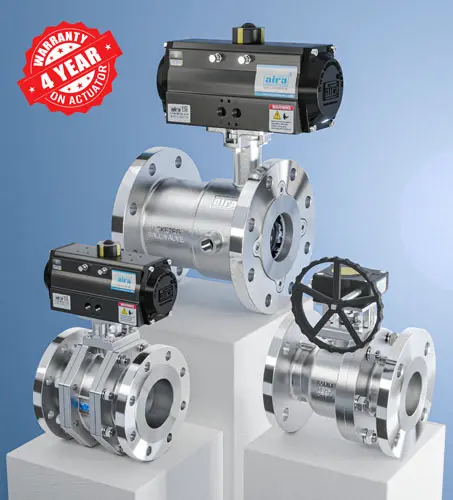
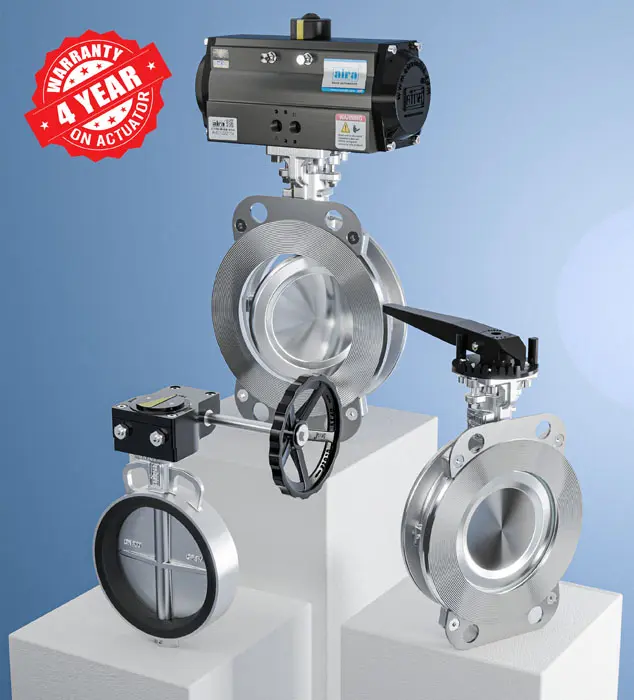
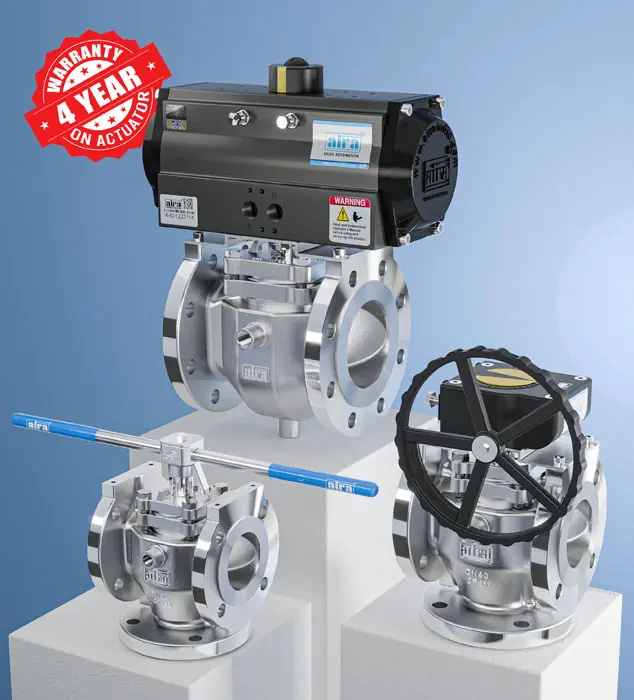
Integrating compressed-air automation brought a revolution to the valve industry by enabling scalable plant modernization. The most common Scotch Yoke type rotary actuator mechanism is widely used in the valve industry for its ability to generate high torque at the beginning of the stroke—perfect for unseating tight valves. These automated setups are available in single-acting (spring-return for fail-safe operations) and double-acting configurations. By upgrading to these systems, plants eliminate the slow response times associated with older mechanical methods.
Operational Advantages of Upgrading Flow Control
There are many automation methods available in the market, like Hydraulic, Electric, Mechanical, and Magnetic, but the valve industry prefers compressed-air solutions because this type of system requires less energy, is easy to integrate, has low maintenance, and yields high cost savings over its lifecycle. Additionally, the most important benefit of these products is that they are eco-friendly and inherently safer since they do not rely on flammable fluids.
Readers also like to read: Durable Valve Technology for Harsh and Corrosive Environments
Some of the key operational benefits include:
- Requires less manpower for operation
- Cost-saving (Lower Total Cost of Ownership)
- Fireproof and Explosion-Proof design
- Fast action cycles for emergency shut-offs
- Can perform in hazardous environments without spark risks
Modern automation has drastically expanded the locations where industrial valves can be safely installed. Currently, from FMCG to nuclear plants, petrochemicals, Fossil & cogeneration power, Refining, Pulp & Paper, LNG & Cryogenics, and Pharma Industries, the valve industry has been serving in all these sectors with the help of advanced automation. Otherwise, flow control pipelines could not have served these large industrial sectors with the necessary accuracy, safety, and response speed required by strict modern regulatory standards.
Conclusion
In conclusion, automating your flow control systems is not only beneficial for valve manufacturers but is essential for plant engineers looking to modernize their facilities. These systems offer the opportunity to increase production, as they are known for fast-action performance at lower long-term costs with low manpower. Hence, producers can optimize their pipelines to minimize downtime and maximize throughput safely.
At Aira Euro Automation, the leading valve manufacturer and exporter in India, we have been supplying our high-performance automation products to more than 20+ countries since 1993. We have broad experience in industrial valve engineering. Before delivery, we rigorously check and test each unit to ensure every product meets strict international safety and performance standards.