Industrial valves play an important role in cement manufacturing plants by controlling the flow of air, slurry, steam, water, fuel, and other process materials throughout the production cycle. Cement plants operate under demanding conditions involving high temperature, abrasive materials, dust handling, and continuous industrial operations. Because of these harsh environments, selecting the correct valve type becomes essential for maintaining process efficiency, operational safety, and long-term equipment reliability.
Different types of industrial valves are used across various stages of cement production, including raw material handling, kiln operations, clinker cooling, dust collection systems, water treatment, and pneumatic conveying systems.
Proper valve selection helps:
- Maintain efficient flow control
- Improve process automation
- Reduce maintenance downtime
- Protect industrial equipment
- Improve operational safety
- Support long-term plant performance
Importance of Industrial Valves in Cement Plants
Cement manufacturing involves continuous movement of materials and fluids through pipelines, processing systems, and pneumatic transfer lines. Industrial valves help regulate, isolate, and control these processes efficiently.
In cement plants, valves are commonly used for:
- Air flow control
- Dust handling systems
- Water distribution
- Fuel transfer systems
- Steam applications
- Slurry movement
- Pneumatic conveying systems
- Process automation applications
Because cement plants operate continuously under heavy-duty industrial conditions, valves must provide reliable performance with minimal maintenance requirements.
Common Types of Valves used for Cement Industry
1. Butterfly Valves
Primary Function:
Flow isolation and regulation in air, water, slurry, and dust handling systems.
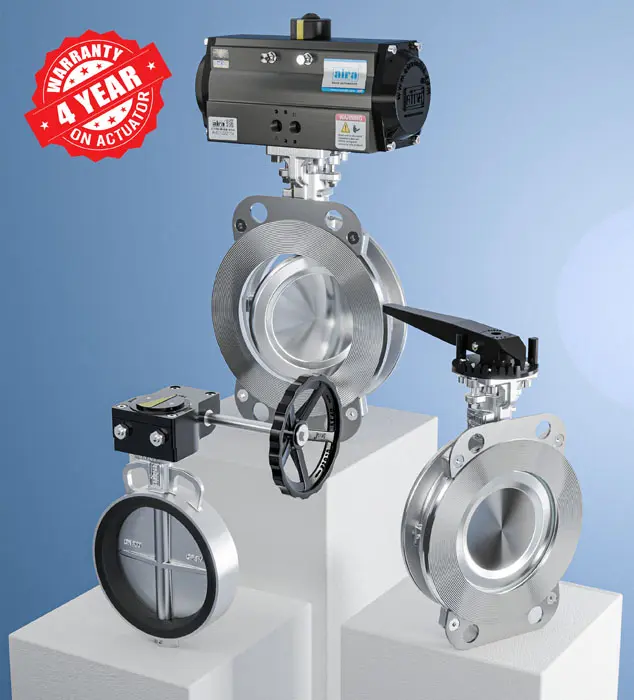
Butterfly valves are among the most commonly used valves in cement plants because of their lightweight construction, compact design, and cost-effective operation. These valves use a rotating disc mechanism to control the flow inside the pipeline.
Butterfly valves are widely installed in:
- Air handling systems
- Water pipelines
- Pneumatic conveying lines
- Dust collection systems
- Utility applications
Advantages of Butterfly Valves in Cement Plants
- Compact installation design
- Fast quarter-turn operation
- Suitable for large pipe sizes
- Low maintenance requirements
- Cost-effective industrial solution
- Efficient flow control performance
For industrial automation systems, butterfly valve solutions are often integrated with pneumatic actuators for automated operation.
2. Ball Valves
Primary Function:
Reliable shut-off applications for fluid and gas handling systems.
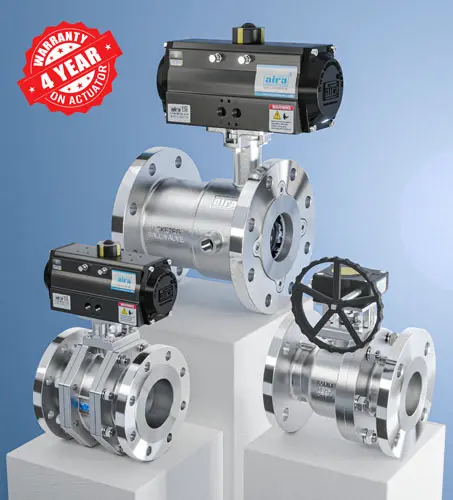
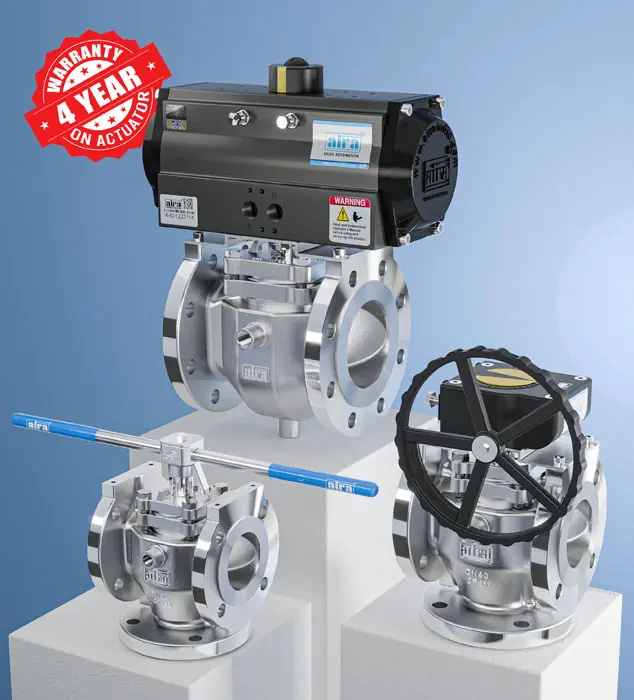
Ball valves are widely used in cement plants because of their strong sealing capability and dependable shut-off performance. These valves use a rotating ball with a central bore to control flow.
Ball valves are commonly used in:
- Fuel systems
- Water applications
- Compressed air lines
- Chemical transfer systems
- Utility pipelines
Advantages of Ball Valves in Cement Plants
- Tight sealing performance
- Quick opening and closing operation
- Low pressure drop
- Long operational life
- Suitable for high-pressure systems
- Minimal maintenance requirements
Many cement plants prefer full port ball valve solutions for maintaining unrestricted flow and efficient fluid transfer operations.
3. Gate Valves
Primary Function:
Complete flow isolation in large industrial pipelines.
Gate valves are widely used in cement plants where full-flow isolation is required. These valves operate using a sliding gate mechanism that moves vertically to open or close the flow path.
Gate valves are commonly installed in:
- Water supply systems
- Process pipelines
- Utility networks
- Slurry transfer systems
- Large-diameter industrial lines
Advantages of Gate Valves in Cement Plants
- Full bore flow design
- Minimal pressure loss
- Suitable for large pipelines
- Reliable shut-off capability
- Durable industrial construction
Because gate valves are designed primarily for on-off service, they are not generally recommended for throttling applications.
4. Globe Valves
Primary Function:
Flow regulation and steam control applications.
Globe valves are used in cement plants where accurate throttling and flow regulation are required. These valves provide better control over pressure and flow conditions compared to isolation valves.
Globe valves are commonly used in:
- Steam systems
- Boiler applications
- Cooling systems
- Process utility lines
- Water control systems
Advantages of Globe Valves in Cement Plants
- Accurate flow regulation
- Better throttling capability
- Suitable for high-temperature systems
- Reliable sealing performance
- Improved pressure management
Globe valves help maintain stable process conditions within industrial systems operating under varying pressure requirements.
5. Control Valves
Primary Function:
Automated flow, pressure, and temperature control.
Control valves are critical components in modern cement manufacturing plants because they support process automation and efficient system control. These valves automatically regulate process parameters based on signals received from controllers and instrumentation systems.
Control valves are widely used in:
- Kiln operations
- Fuel management systems
- Air flow regulation
- Steam applications
- Temperature control systems
- Automated process lines
Advantages of Control Valves in Cement Plants
- Improves process automation
- Provides accurate flow regulation
- Enhances operational efficiency
- Reduces manual intervention
- Supports energy-efficient operations
- Improves process stability
Many industries prefer pneumatic control valve systems because of their fast response time and reliable operation in harsh industrial environments.
Common Applications of Industrial Valves in Cement Industry
Industrial valves are used throughout multiple cement manufacturing processes, including:
- Raw material handling
- Clinker cooling systems
- Dust collection systems
- Pneumatic conveying lines
- Utility water systems
- Steam distribution
- Fuel handling applications
- Air compression systems
Each application requires proper valve selection based on pressure, temperature, fluid type, and process requirements.
Factors to Consider While Selecting Valves for Cement Plants
Choosing the correct valve for cement industry applications depends on several important factors:
- Operating temperature
- Pressure conditions
- Abrasive material handling
- Dust exposure
- Corrosion resistance
- Automation requirements
- Valve material compatibility
- Maintenance accessibility
Using properly designed industrial valves helps improve operational reliability and reduce unexpected downtime in cement manufacturing systems.
Looking for Industrial Valves for Cement Plant Applications?
Aira Euro Automation manufactures high-performance industrial valves designed for cement plants, process industries, pneumatic conveying systems, and industrial automation applications. Our valve solutions are engineered for reliable operation, efficient flow control, and long-term industrial performance.
For product inquiries or technical assistance, visit our contact us page
Frequently Asked Questions
Which valves are commonly used in cement plants?
Butterfly valves, ball valves, gate valves, globe valves, and control valves are commonly used in cement manufacturing plants.
Why are butterfly valves used in cement industry?
Butterfly valves are used because of their compact design, lightweight construction, and efficient flow control capability.
What is the function of control valves in cement plants?
Control valves help regulate pressure, flow, and temperature automatically within industrial process systems.
Which valve is suitable for steam applications in cement plants?
Globe valves and control valves are commonly preferred for steam flow regulation and pressure control.
Why are gate valves used in cement plants?
Gate valves are used for complete flow isolation in large industrial pipelines and utility systems.
Also, read Top 5 Valves Used in Sugar Industry