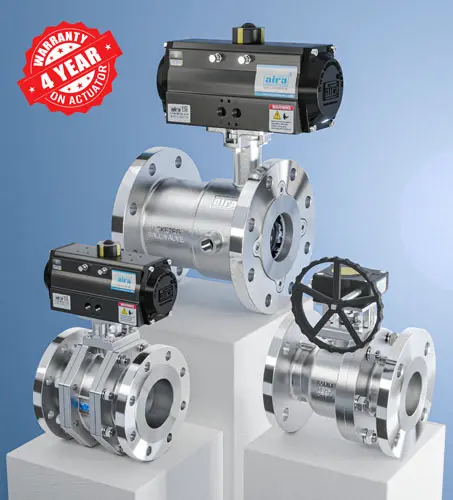
A ball valve is a type of valve used for controlling the flow of gases and liquids. They allow fluid to flow through them in one direction only. They come in many shapes and sizes. This blog will focus on the ball valve. It opens and shuts by rotating a spherical ball with a handle. They are available in various sizes and types and can be used in places such as chemical plants, water treatment plants, power plants, gas stations, breweries, swimming pools, hot tubs, spas, or water or fuel pipelines. This blog will take a closer look at the ball valve.
1. Ball Valves are used Worldwide in Fluid Power Systems as Controllers
Ball valves are used worldwide in plumbing and fluid power systems as a primary control device. The valves are used to regulate the flow of air, water, oil, fuel, and other fluids. They are used in plumbing systems, air compressors, oil pumps, and HVAC systems. A ball valve uses a rotating ball to control fluid flow. Turning the handle 90 degrees (a quarter-turn) opens the valve to let fluid pass, while turning it back completely stops the flow. Manufactured in durable materials like brass, chrome, stainless steel, or plastic, these valves are prized for providing quick, reliable on-off control.
2. Different types of Ball Valves have Different Uses
Ball valves are the most common valves in plumbing. They are used in almost all homes. The ball valve is a simple device that allows the flow of fluid in one direction only. It contains a valve body, which is a hollow cylinder with a hole in the middle. The hole is called the ball seat. The ball is a round piece of metal with a hole in the middle. The ball valve is used to control the flow of liquid or gas. The ball is moved up and down to open or close the hole. The valve is either fully open or fully closed. Ball valves are also used in industrial settings. They are used in many different applications.
3. How to Choose the Best Ball Valve for Your Project
When choosing a ball valve, you must first consider your system’s specific requirements. Ball valves are highly versatile quarter-turn valves used to control the flow of liquids and gases across horizontal, vertical, and inverted pipelines.
What are ball valves used for? Because they provide a tight, reliable seal and cause a minimal drop in pressure, nearly every gas, air, and liquid line utilizes them. Depending on your industry, the primary Ball Valve uses and purposes of the ball valve include:
- Total System Isolation: To safely and completely shut off flow or isolate a leak within the pipeline.
- Remote Automation: When paired with an actuator, they allow a system to be seamlessly controlled from a remote location.
- Local Flow Control: To manually manage water, oil, or gas flow at a specific location, heavily utilized in both industrial process plants and commercial plumbing.
4. How to Maintain a Ball Valve?
A ball valve is an important part of the pipeline system. It works by allowing the flow of product through the pipeline but preventing backflow. However, there is no need to worry about how to maintain ball valves because they are built to last. A ball valve is the simplest type of valve, which is why it is used in many applications. It consists of a valve that is mounted on a valve seat, which is the area of the pipeline where the valve is installed. The valve has a ball that rotates on the seat, allowing the flow of product to pass through the pipeline.
5. The Importance of Choosing the Right Valve Material
Selecting the correct material for your ball valve is just as crucial as choosing the right design. The material dictates the valve’s lifespan, temperature limits, and ability to handle specific fluids safely. For instance, brass ball valves are heavily utilized in commercial plumbing and standard industrial applications due to their excellent durability and cost-effectiveness. In contrast, stainless steel ball valves are the industry standard for harsh environments—such as chemical plants and oil refineries—because of their unmatched corrosion resistance and ability to withstand extreme high pressures.
Want to learn more about industrial valves and automation? Check out these related guides from the Aira Euro technical team:
-
-
- Actuated vs. Manual Ball Valves: Which is Best for Your System? – Take the next step and learn how to automate your pipeline.
- Ball Valve Materials and Industries – A deep dive into choosing the exact right material for corrosive or high-pressure environments.
- Ball Valves vs. Globe Valves – Understand the key differences and when to use each valve type in your facility.
- Proper Valve Installation & Maintenance Guide – Expert tips to extend the lifespan of your industrial valves.
-
Looking for the right valve for your pipeline?
Aira Euro Automation is a leading manufacturer of premium industrial valves. Explore our complete range of Ball Valves to find the perfect match for your system requirements. From durable 3-Piece Ball Valves for easy maintenance to heavy-duty High-Pressure Ball Valves for demanding environments, our technical team is ready to assist you.
Contact Aira Euro Automation today to discuss your project specifications!