A valve that performs perfectly in a chemical plant can fail spectacularly in a pharmaceutical clean room — not because it’s poorly made, but because it was never designed for that environment in the first place. Material compatibility, surface finish, sealing method, and certification requirements shift dramatically from one industry to the next, and choosing based on price alone instead of application fit is one of the most common (and expensive) mistakes procurement teams make.
At Aira Euro Automation, our manufacturing process is built around exactly this reality — one factory, one quality standard, but a product range engineered specifically for the demands of each sector we serve. Here’s a practical breakdown of what we recommend for Oil & Gas, Pharmaceuticals, and Water Treatment applications, and why.
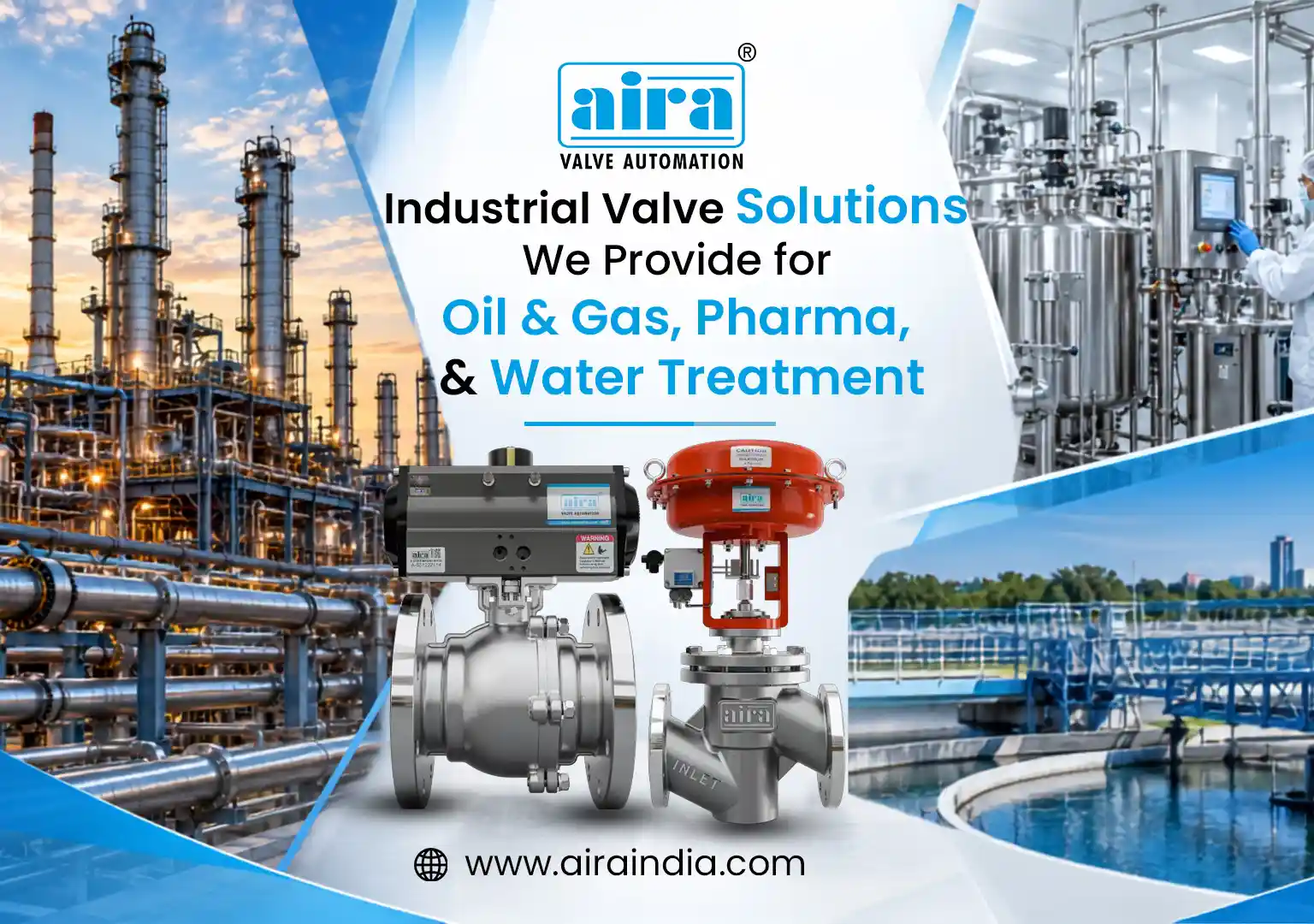
Quick answer: Aira Euro Automation supplies application-specific valve solutions across three major sectors — high-pressure ball, butterfly, and PRV safety valves for Oil & Gas; hygienic flush bottom ball, butterfly, and control valves for Pharmaceuticals; and WRAS-approved knife edge gate, lined, and control valves for Water & Wastewater Treatment.
Oil & Gas and Petrochemical Applications
Oil & Gas environments are unforgiving: high pressure, corrosive media, remote installations, and — in many zones — genuine explosion risk. A valve failure here isn’t just a maintenance headache; it can shut down production or, worse, become a safety incident.
What we recommend:
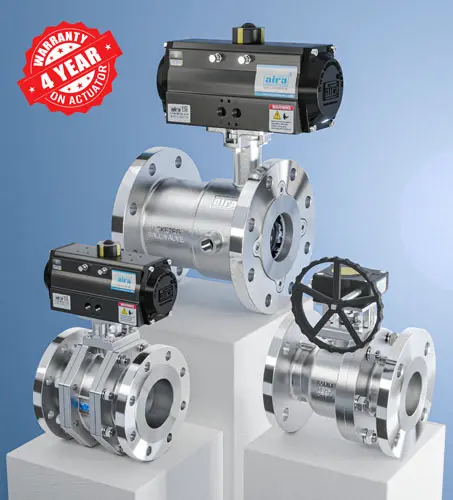
- High Pressure Ball Valves — for upstream and midstream applications where tight shutoff under extreme pressure is non-negotiable.
- Trunnion Mounted Ball Valves — for larger diameter pipelines where torque requirements exceed what floating ball designs can handle.
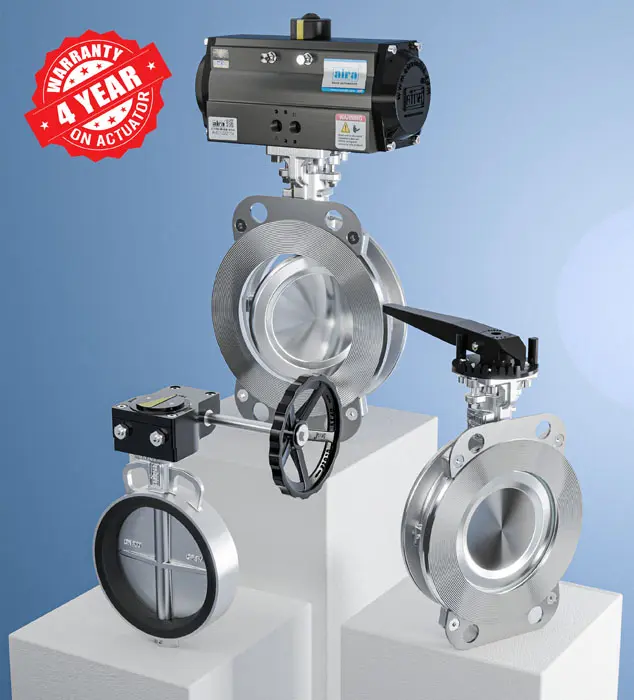
- Double Offset and Triple Offset Butterfly Valves — for lighter-weight isolation duty in large-diameter piping, with triple offset variants suited to higher-pressure, bubble-tight requirements.
- PRV Safety Valves — for overpressure protection, a mandatory safety component across refineries and gas processing plants.
- Pneumatic Actuators — for automated, fail-safe operation in remote or hazardous locations where manual operation isn’t practical.
Given the hazardous-area requirements common across this sector, our ATEX and SIL-3 certified products are particularly relevant here — SIL-3 rated components for emergency shutdown duty, and ATEX-rated actuators and accessories for explosive atmosphere zones.
Pharmaceutical and Life Sciences Applications
Pharma manufacturing operates under a completely different set of constraints. Contamination isn’t just a quality issue — it’s a regulatory and patient-safety issue, governed by strict Good Manufacturing Practice (GMP) requirements. Valves here need smooth, crevice-free internal surfaces, materials that won’t react with process media, and designs that support full drainage and easy cleaning-in-place (CIP) procedures.
What we recommend:
- Flush Bottom Ball Valves — designed for complete drainage of vessels and reactors, minimizing product retention and cross-contamination risk.
- Pharmaceutical Butterfly Valves — hygienic-grade construction suited to sanitary process lines.
- Pharmaceutical Control Valves — for precise flow regulation in sensitive dosing and formulation processes.
Because pharma projects almost always require documented material traceability, this is where our reverse-integrated manufacturing process genuinely pays off — every batch of material used in these valves can be traced and certified, which is frequently a hard requirement during pharma vendor qualification audits.
Water and Wastewater Treatment Applications
Municipal and industrial water treatment plants run continuously, cycle valves frequently, and — for potable water applications specifically — require materials that won’t compromise water quality. Durability under constant operation and regulatory approval for drinking water contact are the two priorities that matter most here.
What we recommend:
- Knife Edge Gate Valves — ideal for slurry, sludge, and other media with suspended solids common in wastewater treatment processes, available in uni-directional and bi-directional configurations.
- Lined Valves, including lined ball, butterfly, diaphragm, and plug valves — for corrosive water treatment chemicals like chlorine dosing lines, where an internal lining protects the valve body from chemical attack.
- Control Valves — for precise flow modulation across treatment stages, from raw water intake to final distribution.
Our WRAS approval is directly relevant here — it confirms that materials in contact with potable water in our applicable product lines won’t affect water quality, a specification requirement frequently written directly into municipal water project tenders.
Power Generation and General Process Industries
Beyond these three core sectors, our full product range supports power plants, chemical processing, and general industrial automation:
- Solenoid Valves for pilot control and automated actuator operation
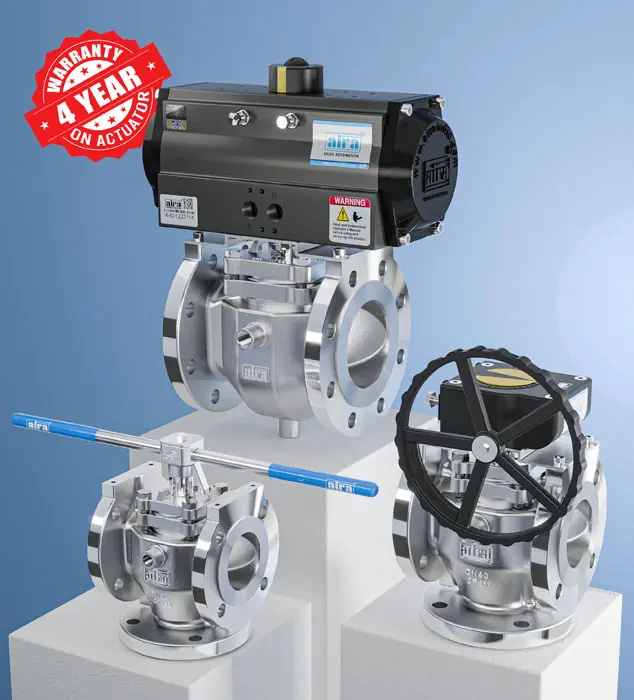
- Plug Valves, including jacketed variants for temperature-sensitive process media
- Accessories — positioners, limit switch boxes, air filter regulator lubricators, and NAMUR solenoid valves — to build complete automated valve packages rather than standalone components
For steam-connected systems in power generation specifically, our IBR certification ensures compliance with Indian Boiler Regulations, a statutory requirement for this sector.
Why Application-Specific Selection Matters More Than Brand Alone
It’s tempting to treat valve procurement as a commodity purchase — same pipe size, same pressure rating, cheapest price wins. In practice, the industries above show why that approach backfires:
- An Oil & Gas facility installing a non-ATEX-rated actuator in a hazardous zone creates a genuine safety and compliance liability.
- A pharma plant using a standard industrial butterfly valve instead of a hygienic flush bottom design risks contamination and GMP audit failures.
- A water treatment plant installing a non-WRAS-approved valve on a potable water line may fail regulatory inspection entirely.
This is precisely why our R&D and design teams review process conditions before recommending a product — the right valve for the application, not just the right valve for the price point, is what actually prevents downstream failures and compliance issues.
Get the Right Valve for Your Application, Not Just Any Valve
Whether you’re specifying equipment for a refinery, a pharmaceutical formulation line, or a municipal water treatment plant, the right valve choice depends on understanding your process conditions — not just your pipe size. Talk to our engineering team and we’ll help you match the right product to your actual application requirements.
Get a Quote from Aira Euro Automation
Frequently Asked Questions
Which valves are best suited for Oil & Gas pipelines?
High-pressure ball valves, trunnion-mounted ball valves, and double- or triple-offset butterfly valves are commonly used in Oil & Gas pipeline applications. PRV and safety valves can provide overpressure protection, while appropriately certified actuators and automation components may be selected for hazardous-area applications.
What makes a valve suitable for pharmaceutical applications?
Pharmaceutical valves typically require smooth, crevice-free internal surfaces, drainable and hygienic designs, suitable product-contact materials, and compatibility with cleaning-in-place (CIP) and sterilization processes. The exact valve specification should be based on the process, cleaning chemistry, temperature, and applicable hygienic standards.
Are Aira’s valves approved for drinking water systems?
Yes. Applicable Aira product lines carry WRAS approval for relevant potable water applications. WRAS approval confirms that the applicable products and materials meet the requirements established for use with public water supplies in the UK.
What valves handle slurry or wastewater with suspended solids?
Knife edge gate valves are commonly used for slurry, sludge, and suspended-solid applications because their gate design can help handle media containing fibrous or abrasive solids. Valve selection should consider solids concentration, particle size, pressure, temperature, and flow conditions.
Can Aira supply a complete automated valve package, not just the valve itself?
Yes. Aira can provide valve automation solutions that combine valves with pneumatic actuators, solenoid valves, positioners, and limit switch boxes. These components can be selected and configured as an integrated automation package according to the application’s control and operating requirements.