A valve installed in a hazardous area isn’t just a flow control component — it’s a piece of safety equipment, held to the same standard as the fire suppression system or the emergency shutdown logic around it. In that context, “certified” isn’t a marketing word. It’s the difference between equipment legally permitted near an explosive atmosphere and equipment that creates a genuine liability the moment it’s installed.
Three certifications come up constantly in hazardous-area valve specifications — PESO, ATEX, and SIL — and they’re frequently confused with each other, even though they certify completely different things. Aira Euro Automation holds all three. Here’s what each one actually means, and why a hazardous-area project typically needs more than one of them.
Quick answer: PESO certification is India’s domestic regulatory approval for equipment used in petroleum, explosives, and hazardous-substance environments; ATEX is the equivalent European certification for equipment used in potentially explosive atmospheres; and SIL (Safety Integrity Level) rates how reliably a safety instrumented component performs its function in an emergency. They are not interchangeable — a project in a hazardous area often requires PESO or ATEX for equipment approval and SIL for safety-critical shutdown components.
PESO: India’s Domestic Hazardous-Area Approval
PESO — the Petroleum and Explosives Safety Organisation, operating under India’s Ministry of Commerce and Industry — is the regulatory authority governing the safe handling, storage, and equipment approval for petroleum products and explosives within India. For any valve or equipment installed in a classified hazardous area at an Indian facility — refineries, gas processing plants, chemical storage terminals — PESO approval is frequently a statutory requirement, not an optional quality mark.
What PESO certification actually confirms:
- The equipment has been assessed against Indian regulatory standards for use in environments where petroleum products or explosive substances are present
- The design and construction meet safety requirements specific to the Indian regulatory framework, which can differ from international standards in procedural and documentation requirements
- The equipment is legally authorized for installation in PESO-regulated hazardous-area facilities in India
For domestic Indian projects specifically, PESO approval is often non-negotiable — a facility simply cannot legally commission equipment in a PESO-regulated hazardous area without it, regardless of what international certifications the product also carries.
ATEX: The European Equivalent for Explosive Atmospheres
ATEX certification serves a similar function to PESO, but under the European regulatory framework. It applies to equipment intended for use in potentially explosive atmospheres — environments where a buildup of flammable gas, vapor, or combustible dust creates genuine explosion risk if an ignition source is introduced.
An ATEX-rated valve or actuator has been assessed against strict design and construction requirements specifically to ensure it cannot become an ignition source — covering factors like surface temperature limits, enclosure design, and electrical component safety where relevant (particularly for actuators and associated instrumentation).
- Why both PESO and ATEX matter together: A project with international scope — an Indian facility built to serve a multinational client, or an Indian manufacturer exporting equipment for installation in European-standard facilities — often needs both. PESO satisfies Indian regulatory requirements; ATEX satisfies the equivalent requirement wherever European standards apply, or where a multinational client’s internal procurement policy specifies it regardless of project location.
SIL: A Completely Different Kind of Certification
This is where confusion most often creeps in. PESO and ATEX certify that equipment is safe to exist in a hazardous atmosphere — that it won’t itself become an ignition source. SIL certifies something different entirely: how reliably a safety function performs when it’s actually called upon.
SIL — Safety Integrity Level — is a measure used for safety instrumented systems, rated from SIL-1 (lowest) to SIL-4 (highest, reserved for extreme-risk applications). A SIL-3 rated component, which is what Aira’s relevant product range carries, means the component has been assessed and verified to reliably perform its safety function — commonly, closing to stop flow during an emergency shutdown scenario — within strict statistical reliability thresholds.
The practical distinction:
- An ATEX/PESO certified valve won’t ignite the atmosphere around it — but that says nothing about whether it will reliably close when a shutdown signal is triggered during an actual emergency.
- A SIL-3 rated valve is verified to perform that shutdown function reliably — but if it’s not also ATEX or PESO rated, it may not even be legally permitted in the hazardous area where that shutdown function is needed.
A genuinely safe hazardous-area installation typically needs both — hazardous-area equipment approval (PESO/ATEX) and safety-function reliability rating (SIL) — because they answer two completely different safety questions.
How These Fit Alongside Our Other Certifications
PESO, ATEX, and SIL-3 sit within Aira’s broader certification portfolio, which also includes ISO 9001:2015, ISO 14001:2015, ISO 45001:2018, CE, IBR, ISI, and WRAS. The hazardous-area certifications specifically matter because they’re backed by the same underlying manufacturing discipline — reverse-integrated production with documented quality control — that makes all of our certifications hold up under real project audits, not just exist as paperwork.
Where These Certifications Matter Most
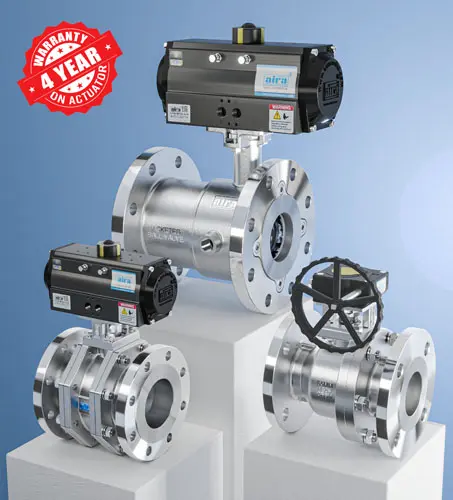
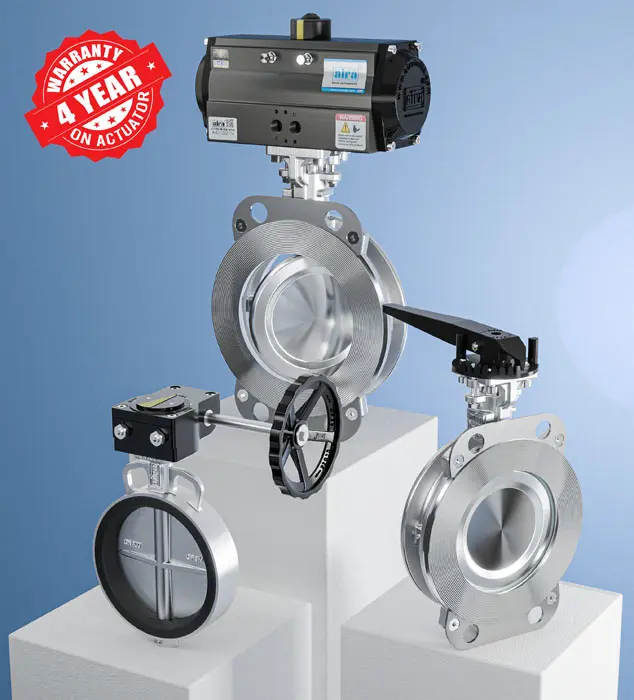
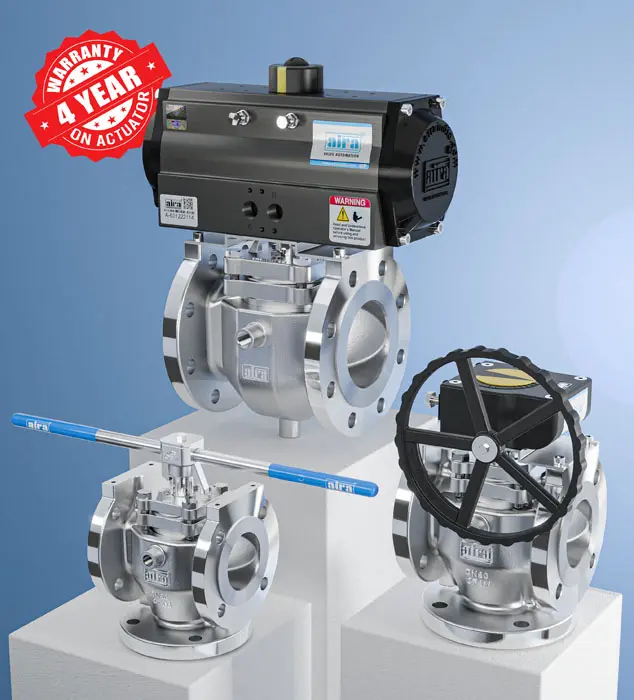
Oil & Gas and Petrochemical facilities — upstream, midstream, and refining operations where hazardous-area classification is standard across much of the facility. Our high-pressure ball valves, PRV safety valves, and pneumatic actuators carry these approvals for exactly this environment.
Gas processing and LPG facilities — where explosive atmosphere risk is a constant operational consideration, not an edge case.
Chemical processing plants handling flammable solvents or reactive chemicals, where both equipment safety (PESO/ATEX) and shutdown reliability (SIL) are frequently specified together in project documentation.
Power generation facilities with fuel handling systems, where PESO compliance intersects with the IBR certification relevant to steam-connected systems.
What to Check Before Specifying Equipment for a Hazardous Area
For engineers and procurement teams working on hazardous-area projects, a practical checklist:
- Confirm the hazardous area classification for the specific installation zone — this determines which certifications are actually required, not assumed.
- Don’t treat PESO, ATEX, and SIL as interchangeable — confirm which specific combination your project’s regulatory and safety requirements actually demand.
- Verify certification currency — certifications can have renewal cycles; confirm the manufacturer’s documentation is current, not expired.
- Check that the certification covers the specific product variant you’re ordering — a certification for one valve size or configuration doesn’t automatically extend to every variant in a manufacturer’s range.
- Request documentation before committing to an order, not after — a reputable manufacturer should produce certification documentation on request without delay.
Specify Certified Valves With Confidence
Hazardous-area projects don’t leave room for certification guesswork. Aira Euro Automation’s PESO, ATEX, and SIL-3 certified products are backed by documented, auditable manufacturing — so when your project demands proof, it’s ready.
Get a Quote from Aira Euro Automation | +91 90994 77256 | mkt@airaindia.com
Frequently Asked Questions
What is PESO certification for valves?
PESO (Petroleum and Explosives Safety Organisation) certification is India’s domestic regulatory approval confirming equipment is authorized for use in petroleum, explosives, and other hazardous-substance environments under Indian regulations.
What’s the difference between ATEX and PESO certification?
Both certify equipment safety for use in potentially explosive atmospheres, but ATEX applies under the European regulatory framework while PESO applies under India’s domestic regulatory framework. Projects with international scope often require both.
Does ATEX or PESO certification guarantee a valve will work reliably in an emergency shutdown?
No. ATEX and PESO certify that equipment is safe to exist in a hazardous atmosphere without becoming an ignition source. SIL certification separately verifies how reliably a safety function, like emergency shutdown, actually performs when triggered.
What does SIL-3 mean specifically?
SIL-3 (Safety Integrity Level 3) certifies that a safety instrumented component reliably performs its safety function within strict statistical reliability thresholds, typically used for high-risk applications like emergency shutdown valves.
Does a hazardous-area project need both equipment certification and SIL rating?
Often yes. Equipment certification (PESO/ATEX) confirms the valve is safe to install in the hazardous area, while SIL rating confirms the valve’s safety function will perform reliably when called upon — they answer different safety questions.