Sugar processing is one of the most demanding continuous-flow operations in the process industry. From cane crushing to juice clarification, evaporation, crystallization, and finally centrifugation, a sugar mill runs as one long, uninterrupted chain of hot, sticky, and often abrasive fluid movement. If even one valve in that chain fails — sticks, leaks, or clogs — the entire batch downstream is affected, and in a 24×7 crushing season, that downtime is measured in lakhs of rupees per hour, not minutes.
At Aira Euro Automation, we’ve worked with sugar plants across India and export markets for over three decades, and if there’s one lesson that comes up again and again, it’s this: valve reliability isn’t a maintenance issue in sugar mills — it’s a production planning issue. The right valve, correctly selected for the right stage, is what keeps a mill running through an entire crushing season without unplanned stoppages.
Where Valves Are Under the Most Stress in a Sugar Mill
A typical sugar mill has several process zones, and each one puts a different kind of stress on valve components.
Juice clarification and heating involves hot, slightly acidic juice at elevated temperatures. Valves here need to handle thermal cycling without warping seats or seals, since clarifiers and heaters go through repeated heat-up and cool-down cycles during shift changes and CIP (clean-in-place) routines.
Evaporator and pan house sections deal with thick, viscous syrup and massecuite. This is where valve sizing and flow characteristics matter most — undersized or poorly profiled valves cause pressure drops that slow down the entire evaporation train.
Molasses and syrup transfer lines are notorious for scaling and crystallization inside the valve body itself. A valve that isn’t designed for full-bore, unobstructed flow becomes a maintenance headache within weeks, as sugar crystals build up on the seat and stem.
Bagasse and ash handling lines, along with boiler feedwater and steam distribution, bring their own challenges — abrasive particulates on one side, high-pressure steam on the other.
The Real Cost of an Unreliable Valve in a Sugar Mill
Sugar mills operate on a seasonal crushing cycle, often running non-stop for four to six months. Unlike a batch chemical plant that can pause and restart with limited loss, a sugar mill that halts mid-crush risks juice deterioration, sucrose loss, and equipment fouling that takes hours to clear. A stuck steam valve on an evaporator, or a leaking control valve on a pan house line, doesn’t just stop one section — it often forces a cascading shutdown because upstream tanks fill up and downstream stations run dry.
Also Read: Why Your HVAC System Might Need New Valves
This is why plant engineers increasingly specify valves not just on price, but on proven duty-cycle performance: how many open-close cycles the actuator can handle, how the seat material holds up against sugar syrup at 80-100°C, and how easily the valve can be serviced without pulling the entire line apart during a short maintenance window.
Valve Types That Perform Well in Sugar Processing
Based on field experience across juice, syrup, and molasses services, a few valve families consistently perform well in sugar mill environments:
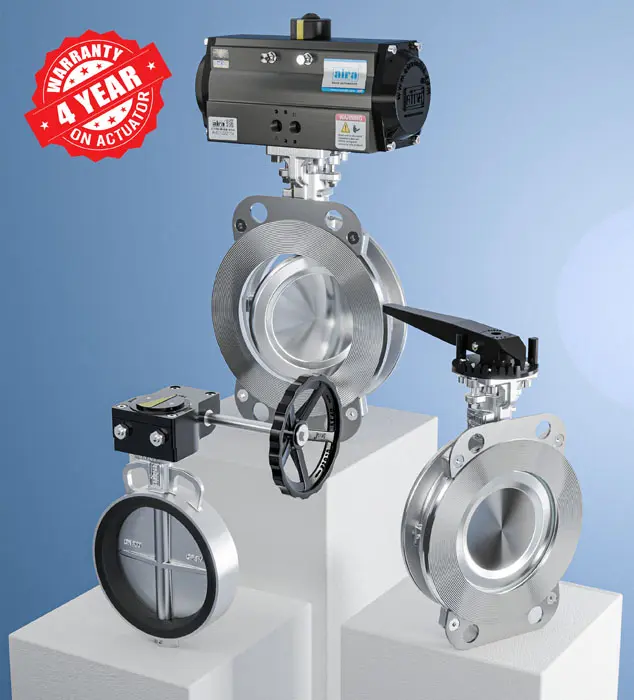
- Butterfly valves are widely used on juice and syrup lines because of their compact design, tight shut-off, and ease of actuation — particularly centric and high-performance double offset variants for higher-pressure sections.
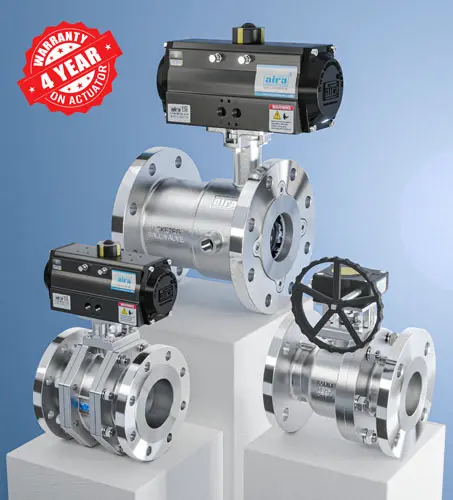
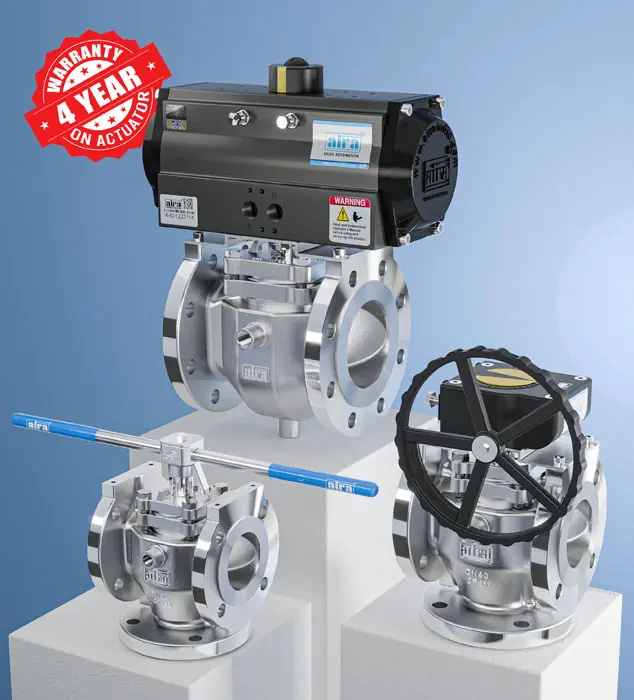
- Ball valves, especially full-bore and 3-piece designs, are preferred where line cleaning and quick maintenance access matter, since the body can be opened without disturbing the pipeline.
- Plug valves are a strong fit for molasses and thick syrup transfer, where their straight-through bore resists the buildup that plagues other valve geometries.
- Control valves with globe or diaphragm-type trims handle the fine flow modulation needed in juice heating and pan house steam regulation.
- Pneumatic actuators paired with these valves give mills the fast, repeatable automated response needed for batch pan control and CIP sequencing, without relying on manual operation during odd shift hours.
Automation and Reliability Go Together
Modern sugar mills are moving away from manually operated valves wherever continuous, precise control matters. Automating key valves with pneumatic actuation reduces human error during shift changes, improves response time during upset conditions, and creates a consistent, repeatable process — which directly improves crystallization yield and reduces sucrose loss.
Reliability, in this context, isn’t just about the valve surviving physically. It’s about the valve doing exactly what the control system asks, every single cycle, for months without recalibration. That’s a function of build quality — proper CNC-machined bodies, correctly selected seat and seal elastomers rated for the actual process temperature, and actuators sized with margin rather than run at their limit.
What to Look for When Specifying Valves for a Sugar Mill
Plant engineers evaluating valve systems for a new mill or a retrofit should look closely at a few practical factors:
- Seat and seal material compatibility with juice pH and syrup temperature across the full crushing season, not just at nominal conditions.
- Full-bore or streamlined flow paths on lines prone to crystallization, to minimize the frequency of manual descaling.
- Actuator duty rating matched to the number of cycles expected per shift, especially on batch pan and CIP-related valves.
- Ease of maintenance — valves that can be serviced in place, without cutting into the pipeline, save enormous time during the short windows available in a running season.
- Proven field performance with other sugar mills, since lab-tested specifications don’t always hold up against real syrup, real scaling, and real shift-to-shift wear.
Aira Euro Automation’s Role in Sugar Industry Valve Solutions
Aira Euro Automation has been manufacturing valves and automation products since 1993, with a manufacturing footprint of over 1,50,000 sq. mtrs and a product range spanning ball valves, butterfly valves, plug valves, control valves, and lined valve systems. Our valves are used across process industries including sugar, and we design our actuator-valve packages specifically for continuous, high-duty-cycle applications like juice and syrup lines.
We understand that sugar mills can’t afford to treat valve selection as an afterthought. That’s why our engineering team works directly with plant teams to match valve construction, seat material, and actuation to the actual duty conditions of each process stage — from juice clarification through to molasses handling — rather than offering a generic, one-size-fits-all solution.
Get Reliable Valve Systems for Your Sugar Mill
If your sugar mill is dealing with frequent valve maintenance, seat wear, or unplanned stoppages during the crushing season, it’s worth having a technical conversation before your next shutdown window. Aira Euro Automation’s team can help you review your current valve setup and recommend the right ball valves, butterfly valves, plug valves, or control valve configuration for continuous, reliable operation.
Get in touch with our team for a technical consultation, or explore our complete product range to find the right valve system for your sugar processing line.
Frequently Asked Questions
Which valve type is best for sugar mill juice and syrup lines?
Butterfly valves are widely used for juice and syrup transfer because of their compact design and reliable shut-off. Plug valves are often preferred for thick molasses lines because their straight-through bore can help reduce crystallization buildup compared with other valve geometries. The final selection should depend on the fluid properties, pressure, temperature, and operating conditions.
Why do valves fail so often in sugar mill evaporators and pan houses?
Repeated thermal cycling, scaling from syrup and massecuite, and continuous 24/7 operation place significant stress on valve seats and seals. Valves that are not correctly rated for the actual temperature, media, pressure, and duty cycle can deteriorate faster in evaporator and pan house applications.
How does valve automation help reduce sucrose loss?
Automated, pneumatically actuated valves can provide faster and more consistent operation than manually operated valves. Better control of juice heating, pan house steam regulation, and CIP sequencing can improve process consistency and help reduce avoidable losses during sugar production.
Can existing manual valves in a sugar mill be retrofitted with automation?
In many cases, yes. Manual quarter-turn valves such as ball and butterfly valves can often be fitted with pneumatic actuators during a planned shutdown without replacing the complete valve body. The existing valve should first be checked for mechanical condition, compatibility, mounting arrangement, and suitability for automated operation.
How often should sugar mill valves be inspected during the crushing season?
Inspection frequency depends on the process stage and valve operating conditions. High-duty valves used in molasses transfer and pan house steam lines generally require more frequent visual and functional checks because of their exposure to scaling, high temperatures, and thermal cycling. Inspection schedules should be based on actual operating conditions and maintenance history.