Ammonia and urea plants run some of the most punishing process conditions in the chemical industry — high pressure, high temperature, and highly corrosive media, often all at the same time. A urea reactor commonly operates above 150 bar and 180°C, in a medium that contains ammonium carbamate — one of the most aggressive substances a valve will ever have to contain. Get the valve specification wrong here, and the consequences range from frequent unplanned shutdowns to serious safety incidents.
Aira Euro Automation has supplied valve systems for fertilizer and petrochemical applications for years, and ammonia-urea plants consistently rank among the most technically demanding installations we work on. This piece covers the recurring valve challenges plant engineers deal with in this sector, and what actually works to reduce failure rates and extend service intervals.
Challenge 1: Corrosion from Ammonium Carbamate
Ammonium carbamate, formed as an intermediate in the urea synthesis reaction, is extremely corrosive to standard stainless steels — even grades that perform well in many other chemical services can suffer rapid attack in carbamate service. This is the single biggest material selection challenge in urea plants. Valves in the high-pressure synthesis loop typically require specialized corrosion-resistant alloys, and even then, wetted parts need to be evaluated for the specific carbamate concentration, temperature, and pressure at each point in the loop — a valve rated for one section of the plant may not survive in another.
Challenge 2: High-Pressure, High-Temperature Sealing
Beyond corrosion resistance, urea synthesis loop valves have to maintain a reliable seal at pressures that can exceed 150-200 bar and temperatures well above 150°C, often with cyclic thermal loading as the plant starts up, trips, and restarts. Standard soft-seated valves aren’t built for this — metal-to-metal seating designs, engineered with precise machining tolerances, are typically required to hold a reliable seal under these combined conditions without the seat degrading over repeated thermal cycles.
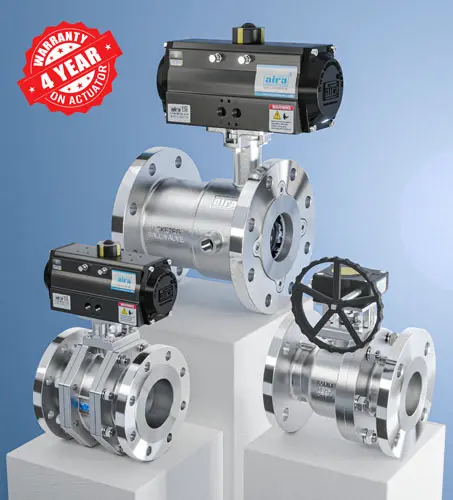
Metal to metal ball valves and trunnion mounted ball valves are common choices for high-pressure isolation duty in these loops, since trunnion designs reduce seat loading and torque requirements compared to floating ball designs at high differential pressures.
Challenge 3: Ammonia Refrigeration and Storage Line Integrity
Ammonia storage and refrigeration circuits bring a different challenge — liquid ammonia at low temperature requires valves with proven low-temperature seat and seal performance, since materials that work fine at ambient temperature can become brittle or lose sealing capability in cryogenic-adjacent conditions. Given that ammonia is toxic and forms explosive mixtures with air within certain concentration ranges, valve leak-tightness in these circuits isn’t just an efficiency issue — it’s a direct safety requirement, and valves here typically need fugitive emission-rated stem seals.
Challenge 4: Erosion in Solid Handling Sections
Urea plants don’t just deal with liquid and gas — the prilling or granulation section handles solid urea particles, and pneumatic conveying lines moving urea prills or granules can cause erosive wear on valves in a way similar to abrasive slurry service, particularly at bends and control points where particle velocity and impact angle increase.
Also Read:How Mining Operations Reduce Valve Wear in Abrasive Slurry Lines
Challenge 5: Control Valve Performance Under Process Swings
Ammonia and urea synthesis loops are sensitive to feed composition and pressure swings, and control valves throughout the plant — on recycle streams, letdown stations, and reactor feed — need to respond precisely without sticking or hunting. A control valve that degrades due to carbamate exposure doesn’t just lose sealing integrity; it loses the fine modulation the process control system depends on, which can push the whole reaction off its optimal operating point and affect conversion efficiency.
Globe type control valves with hardened, corrosion-resistant trims are widely used at letdown and pressure-reduction points, where the combination of pressure drop and carbamate exposure is most severe.
Challenge 6: Steam and Utility System Reliability
Ammonia and urea plants rely heavily on high-pressure steam systems for compression drives and process heating. Valve failures in steam service — whether from thermal cycling, water hammer, or scale buildup — can force partial plant shutdowns even when the core synthesis loop is unaffected. Safety valves and pressure reducing valves in these utility systems need the same rigor in specification as the synthesis loop itself, since a failed safety valve directly affects plant safety margins.
Valve Types Suited to Ammonia-Urea Plant Conditions
Given the range of conditions across a single ammonia-urea complex, plants typically need a mix of valve technologies rather than one universal solution:
- Ball valves — particularly high pressure and trunnion mounted designs — for isolation duty in the high-pressure synthesis loop.
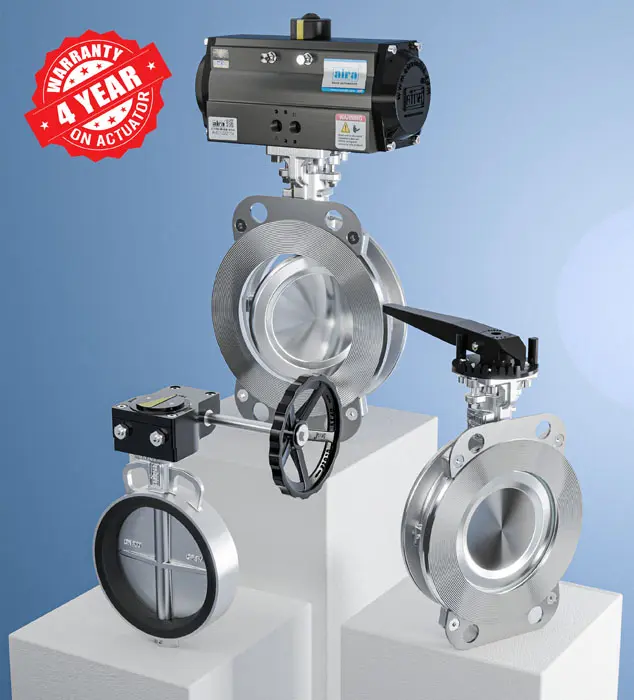
- Butterfly valves, particularly triple offset designs, for tight shut-off in moderate to high-pressure services with reduced weight and space requirements compared to gate or ball valves.
- Control valves with corrosion-resistant trims for precise modulation across recycle, letdown, and reactor feed streams.
- PRV and safety valves for overpressure protection across the synthesis loop and utility systems.
- Pneumatic actuators with appropriate fail-safe action (fail-open or fail-close depending on the safety case) for automated isolation and emergency shutdown valves throughout the plant.
What Plant Engineers Should Prioritize in Valve Specification
- Match wetted material to the exact carbamate concentration and temperature at each specific point in the loop — don’t extrapolate material performance from a different section of the plant.
- Specify metal-to-metal seating for high-pressure, high-temperature isolation duty, rather than relying on soft seats that weren’t designed for combined pressure-temperature cycling.
- Prioritize fugitive emission-rated stem seals on ammonia service valves, given the toxicity and safety implications of leakage.
- Size control valves for the actual process swing range, not just steady-state conditions, since upset conditions are often where control valve failures originate.
- Choose fail-safe actuator action deliberately based on the process safety case for each valve, not as a default setting.
- Work with manufacturers experienced in fertilizer and petrochemical service, since carbamate and high-pressure ammonia conditions require material and design knowledge that goes beyond standard chemical service valve selection.
How Aira Euro Automation Supports Fertilizer Plant Reliability
Aira Euro Automation manufactures valves for demanding petrochemical, fertilizer, and refining applications, with in-house R&D, design, and CNC manufacturing capability that allows us to engineer valves matched to specific process conditions rather than offering generic off-the-shelf solutions. Our high-pressure ball valve, triple offset butterfly valve, and PRV safety valve ranges are built to the material and sealing standards that ammonia-urea plants require, and our team works directly with plant engineers to review process conditions before recommending a valve configuration.
Talk to Our Engineering Team
If your ammonia or urea plant is dealing with recurring valve failures, carbamate-related corrosion, or control valve performance issues, a proper technical review before your next turnaround can help avoid repeat failures.
Contact Aira Euro Automation to discuss your plant’s valve requirements, or explore our complete product range for fertilizer and petrochemical applications.
Frequently Asked Questions
Why is ammonium carbamate so damaging to valves in urea plants?
Ammonium carbamate is highly corrosive and can be aggressive toward many stainless steel grades that perform well in other chemical services. Its effect depends on factors such as concentration, temperature, and pressure at different points in the synthesis loop. Valve materials should therefore be evaluated according to the specific conditions at each installation point.
What type of valve seating works best for high-pressure urea synthesis loops?
Metal-to-metal seating designs are generally preferred for high-pressure and high-temperature isolation duties in urea synthesis loops. Soft-seated valves may not provide the required sealing performance under demanding pressure-temperature cycling and chemical conditions. The final seating selection should be based on the process specification and valve manufacturer’s recommendations.
Why is stem seal quality so critical on ammonia service valves?
Ammonia is toxic, and leakage from valve stems can create significant occupational and process safety concerns. High-quality stem sealing and appropriate fugitive-emission control are therefore important for ammonia service. Valve seals should be selected and maintained according to the pressure, temperature, ammonia concentration, and applicable safety requirements.
How does fail-safe actuator action get decided for ammonia and urea plant valves?
The choice between fail-open and fail-close depends on the specific process safety requirements of each valve. Engineers should evaluate what could happen to the process, equipment, and personnel if the valve loses its air or power supply. The appropriate fail-safe position should be determined through the plant’s safety assessment rather than using a single default configuration.
Can standard chemical-service control valves be used in ammonia-urea plants?
Standard chemical-service control valves may not be suitable for high-pressure synthesis loops or sections exposed to ammonium carbamate. These applications typically require valves with corrosion-resistant materials, suitable trim, and pressure-temperature ratings matched to the specific fertilizer plant service. Valve selection should be verified against the actual process conditions and applicable plant specifications.