It happens more than most people want to admit. A procurement order goes out. The valve arrives on time. Installation happens. And then — three months later — you’re dealing with leakage, a maintenance crew on-site, and a process line that’s sitting idle.
The valve wasn’t defective. It just wasn’t the right one for that application.
This is one of the most common — and costly — mistakes in industrial plant operations. Engineers and procurement teams often select flow control valves based on price, availability, or habit. Not based on what the application actually demands.
At Aira Euro Automation, after 30+ years of manufacturing and supplying industrial ball valves across India and 45+ countries, we’ve seen this pattern repeat itself across power plants, chemical facilities, pharma lines, and refineries. So let’s talk about where the decision actually goes wrong.
It’s Not Just a Valve — It’s a Liability
A wrong valve selection doesn’t just cause inconvenience. It creates a chain of problems.
Unplanned downtime in a chemical or power plant can cost lakhs per hour. Seat wear due to an incompatible material leads to repeated replacement cycles. And in regulated industries — like pharmaceuticals or boiler systems — a valve that doesn’t carry IBR approval, fire safe certification, or the right SIL rating becomes a compliance failure waiting to happen.
The hidden costs add up fast. Replacement parts, labor, process interruption, and sometimes even regulatory penalties. Most engineers don’t realize the selection error until the damage is already done.
The good news? Most of these problems are completely avoidable — if you know what to look for before the purchase order goes out.
One-Piece, Two-Piece, or Three-Piece — Why It Matters More Than You Think
What Changes Between Body Configurations
The body construction of a ball valve determines how it performs over time — not just on day one.
A single-piece valve is compact and economical. But it’s non-repairable. Once the seat wears out, you replace the entire valve. That’s fine for low-stakes utility lines. Not ideal for critical process applications.
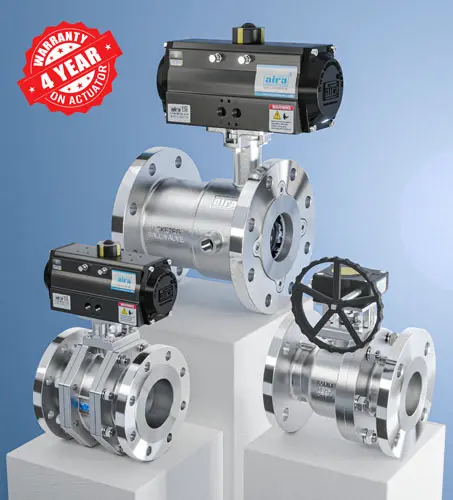
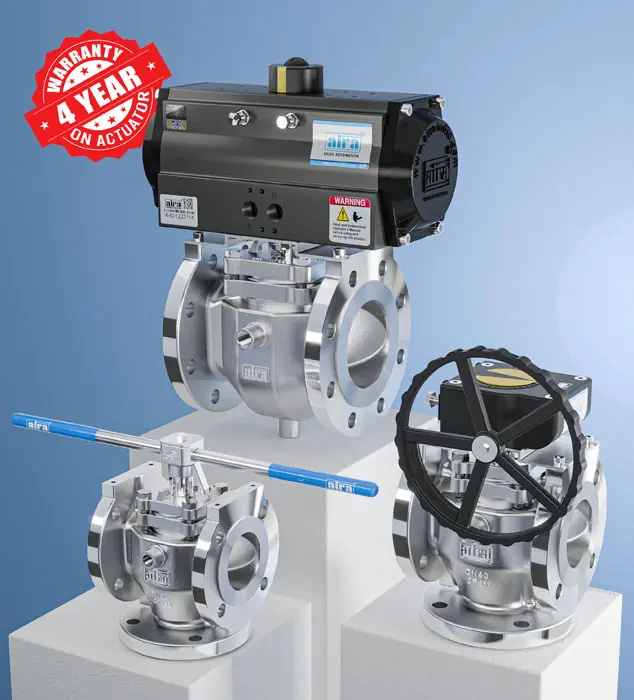
A 2 piece ball valve is the most commonly used configuration in industrial settings. It strikes a solid balance between cost and maintainability. Available in flanged end, screwed end, and other connection types, it suits general process lines well. At Aira, our 2-piece range covers 150#, 300#, and 600# pressure classes — with certifications including CE, SIL3, FIRE SAFE, EIL, and IBR.
The 3 piece ball valve is built for processes that require frequent cleaning, maintenance, or in-line servicing. The three-body design allows the middle section to be removed without disconnecting the pipeline. This is the right choice for pharmaceutical manufacturing, food processing, and chemical applications where CIP (clean-in-place) or regular inspection is part of standard operations.
Where Engineers Go Wrong
The mistake we see most often: selecting a single-piece or 2-piece valve for an application that genuinely needs the serviceability of a 3-piece design. The upfront cost saving looks attractive. But the downstream maintenance burden more than erases it.
The opposite happens too — over-specifying a 3-piece for a simple utility line where it’s unnecessary. Getting this decision right starts with understanding the process, not just the price list.
The End Connection Choice That Creates Long-Term Headaches
Flanged vs Screwed vs Wafer — Not Interchangeable
End connection type is another area where quick decisions cause long-term pain.
Flanged end connections are the industrial standard for high-pressure lines and systems that need regular maintenance access. They provide a secure, leak-tight fit and are the go-to for oil & gas, power, and petrochemical applications.
Screwed end connections work well for low-to-medium pressure systems and compact installations where space is limited. Quick to install, easy to remove.
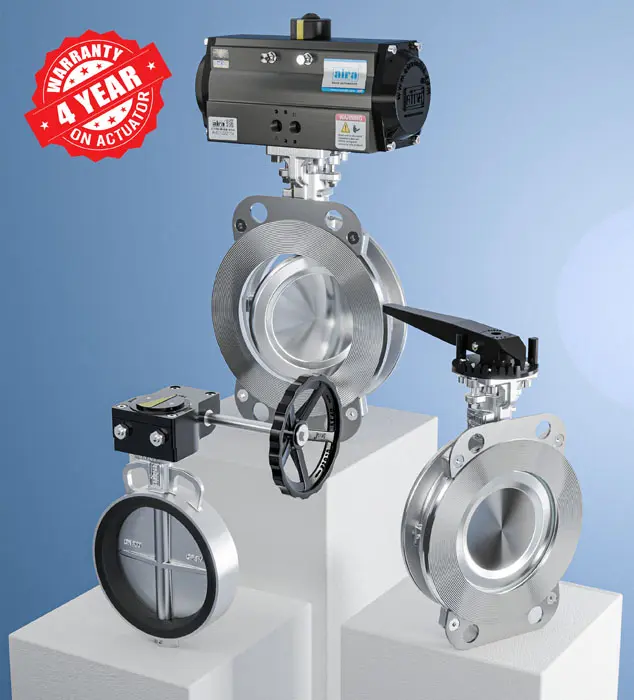
The wafer ball valve is a space-saving solution. It sits sandwiched between two flanges, which makes it compact and cost-efficient — perfect for HVAC systems, water treatment, and utility lines where space is tight and operating pressures are moderate.
The common mistake here: using a wafer type valve in applications that demand a flanged end with a higher pressure rating. Wafer valves are excellent in the right context. In the wrong one, they become a recurring maintenance problem.
Pressure Ratings and Material Selection — The Technical Details Engineers Skip
ANSI Class Ratings — What They Actually Mean in Practice
Selecting the wrong pressure class is one of those errors that doesn’t announce itself immediately. The valve works fine at standard operating pressure. Then a surge event happens — and the valve fails.
ANSI Class 150#, 300#, and 600# aren’t just numbers on a datasheet. They define what the valve can safely handle under pressure, temperature, and flow conditions. At Aira, our ball valves are built to API 6D and ASME B16.34 specifications — standards that exist precisely because under-rated valves in industrial systems create serious risk.
Material mismatch is equally critical. WCB carbon steel handles general-purpose applications well. But put it in a corrosive media environment — and you’ll be replacing it far sooner than expected. CF8M stainless steel is the right call for corrosive or food-grade applications. Duplex, Hastelloy, and Inconel are reserved for extreme environments.
Seat Material Is Not an Afterthought
Most engineers specify the valve body material and stop there. Seat material is often overlooked — and it shouldn’t be.
PTFE seats offer excellent chemical resistance and low friction. They’re the standard choice for most process applications. Metal seats handle high-temperature and abrasive media where PTFE would degrade quickly. For extreme-temperature service — up to 300°C — Aira’s proprietary Aira250 seal and PEEK options provide performance that standard seat materials simply can’t match.
Manual Today, Automated Tomorrow — Plan Before You Buy
Here’s a scenario that plays out regularly in growing plants: a manual valve gets installed, the plant expands, automation becomes necessary — and the valve doesn’t have an ISO 5211 mounting pad for actuator fitment.
Now the plant either runs an expensive custom solution or replaces the valve entirely. Both options cost more than simply specifying automation-readiness from the start.
When selecting a valve for any application with future automation potential, specify a valve that supports pneumatic actuator fitment. Aira’s pneumatic actuated ball valves come with 4 years of actuator warranty — and are designed for direct mounting without adapters.
Also, don’t skip the certifications. IBR approval for boiler and steam systems. Fire safe certification for hydrocarbon services. SIL3 for safety-critical loops. These aren’t optional in regulated industries — and specifying them at the selection stage is far easier than retrofitting later.
How Industry Type Should Drive Your Valve Selection
The right valve for a steel plant is rarely the right valve for a pharmaceutical line. Industry context should be the first filter in any valve selection decision — not the last.
Oil & gas operations need 3-piece flanged configurations with fire safe and SIL3 ratings to meet safety and regulatory demands. Pharmaceutical and food processing facilities require 3-piece triclover-end designs with PTFE or PEEK seats — because CIP/SIP cleanability is non-negotiable.
Water treatment plants generally work well with wafer type configurations — space-efficient and cost-effective for the pressure ranges involved. Power and boiler applications demand IBR-approved valves with appropriate pressure class ratings. Chemical processing often requires CF8M stainless or lined valve options where standard carbon steel would corrode.
Aira serves all of these industries — and the valve specification for each one reflects decades of application-specific learning, not a one-size-fits-all catalog.
Get the Selection Right Before the Valve Goes In
Valve selection isn’t just a procurement decision. It’s a technical and strategic one.
The right body type. The right end connection. The right material and seat. Automation readiness. Certification compliance. Get these five things right — and the valve becomes a long-term asset. Get one of them wrong — and it becomes a recurring cost.
Aira Euro Automation has been manufacturing industrial valves in Ahmedabad since 1993. With 1000+ products, certifications including ISO 9001, IBR, SIL3, and FIRE SAFE, and a manufacturing footprint of over 1,50,000 sq mtrs, we understand what it takes to get the right valve into the right application — the first time.
Not Sure Which Ball Valve Is Right for Your Application?
We have delivered 1500+ products across India and exported to 45+ countries — helping plants make the right valve selection every time. Whether you’re specifying for a new project or troubleshooting an existing line — we’re here to help.
Explore Our Complete Ball Valve Range: https://www.airaindia.com/ball-valve/
Request a Free Quote: https://www.airaindia.com/contact/