A pipeline under pressure doesn’t send you a memo before it gives out.
One moment, the system is running fine. Next, there’s a leak, a burst connection, or worse, a complete shutdown of a process line that costs lakhs per hour to keep idle. And when the investigation begins, the answer is almost always the same: the valve wasn’t rated for what it was handling.
This is the story of how pressure-related pipeline failures actually happen. Not due to freak accidents. But because of wrong valve selection, decisions made at the specification stage seem fine on paper until the system is live.
At Aira Euro Automation, we’ve supplied valves to oil & gas facilities, steam lines, chemical plants, and refineries for over 30 years. We understand what high-pressure applications actually demand and where most selection decisions fall short.
What “High Pressure” Actually Means in an Industrial Context
Not every engineer uses the term the same way. In industrial valve terminology, pressure ratings follow ANSI/ASME class standards: 150#, 300#, 600#, and higher. A standard valve rated at 150# handles roughly 285 PSI at ambient temperature. Push it into a 2000-psi steam or oil line, and the consequences are predictable.
Truly high-pressure applications — refineries, hydraulic systems, high-pressure steam lines, chemical injection points — operate well above these standard ratings. That’s where purpose-built solutions like 2000 PSI, 3000 PSI, and 4000 PSI-rated valves become relevant. Not as upgrades. As minimum requirements.
Using a standard-rated valve in these conditions doesn’t just risk valve failure. It risks pipeline integrity, equipment damage, and in some cases, serious safety incidents.
The Four Real Reasons Pipelines Fail Under Pressure
Under-Rated Pressure Class
This is the most common failure point. The valve carries a pressure rating. The system operates within the ‘normal’ range most of the time. But pressure surges, water hammer, and thermal expansion push the system beyond the valve’s rated limit — and that’s when failure occurs.
Specifying a valve based solely on y-state operating pressure alone, factor in accounting for conditions, is a selection error that may not show up or may not show up until months after installation.
Wrong Body Material for the Operating Environment
Carbon steel handles general-purpose high-pressure applications well. But put it in a corrosive media environment—hydrogen sulfide, chlorides, acidic fluids—and the body degrades faster than the system lifecycle requires.
Stainless steel (SS 304, SS 316), duplex, super duplex, and Hastelloy — these aren’t premium options for high-pressure service. For certain media, they’re the only viable options. Selecting material based solely on cost in corrosive, high-pressure systems is a false economy.
Seat Material That Can’t Handle the Temperature-Pressure Combination
High pressure and high temperature often go hand in hand — especially in steam, oil, and refinery applications. Standard PTFE seats lose integrity above certain temperature thresholds. In high-pressure steam lines, this means a seat failure under the exact conditions the valve is designed to handle.
Metal-seated designs exist precisely for this reason. They handle extreme temperature and pressure conditions that would cause polymer seats to fail. This is not an optional upgrade in high-temperature high-pressure service — it’s a specification requirement.
Missing Certifications for the Application
Oil & gas and petrochemical applications have non-negotiable certification requirements. A valve that isn’t fire-safe certified introduces an ignition risk in hydrocarbon services. A valve without SIL3 certification in a safety-critical loop is a compliance failure. IBR approval is mandatory for boiler and steam applications in India.
Skipping certification verification at the selection stage creates problems at commissioning, inspection, and audit, at a minimum. In a failure scenario, it creates liability.
What the Right High-Pressure Valve Selection Actually Looks Like
Getting it right starts before the purchase order — at the specification stage. Here’s what a sound selection process covers.
Define the True Operating Envelope — Not Just the Normal Range
Specify the maximum surge pressure, not the steady-state operating pressure. Factor in temperature fluctuations, thermal expansion, and any water hammer risk in the system. The valve rating should comfortably exceed the worst-case operating condition — not just match the average.
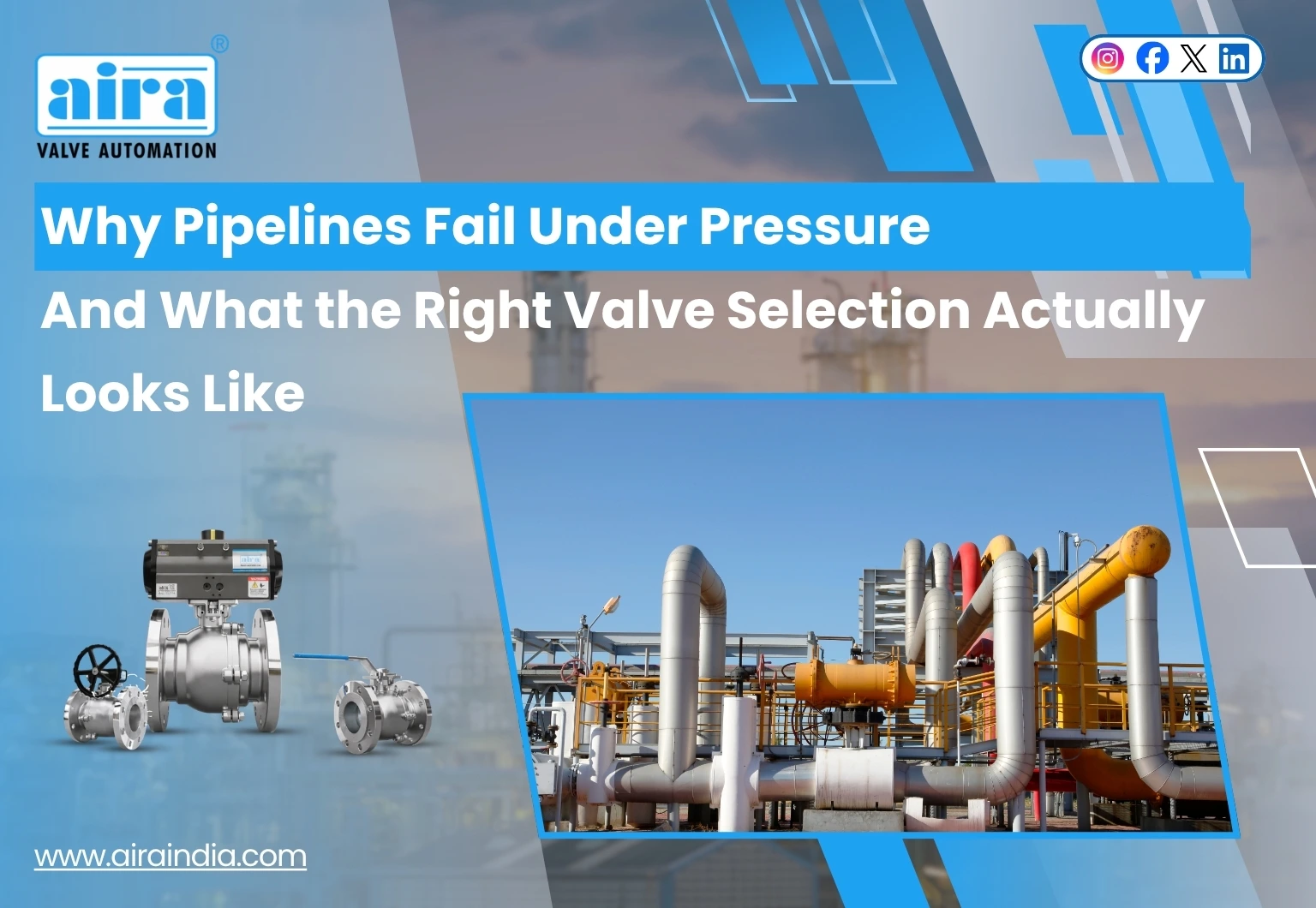
Aira’s high-pressure ball valves cover 2000 PSI, 3000 PSI, and 4000 PSI ratings — all in screwed end configurations with CE, POD, SIL3, and IBR certifications. This range exists because different applications have distinct pressure envelopes, and specifying the correct rating matters.
Match Material to Media — Not to Budget
The media flowing through the valve determines the body and trim material. For general high-pressure service with non-corrosive media, stainless steel SS316 covers most requirements. For aggressive media — H2S, acidic fluids, high-chloride environments — duplex, super duplex, or Hastelloy is the appropriate specification.
For applications where extreme conditions and abrasive or corrosive media are present, metal-to-metal seated designs offer sealing integrity that polymer seats cannot maintain. Our metal to metal ball valves are built for exactly these conditions.
Plan for Automation from Day One
High-pressure systems in refineries, oil & gas facilities, and chemical plants increasingly operate with automated flow control. Specifying a valve without ISO 5211 mounting compatibility means costly retrofitting when automation becomes necessary.
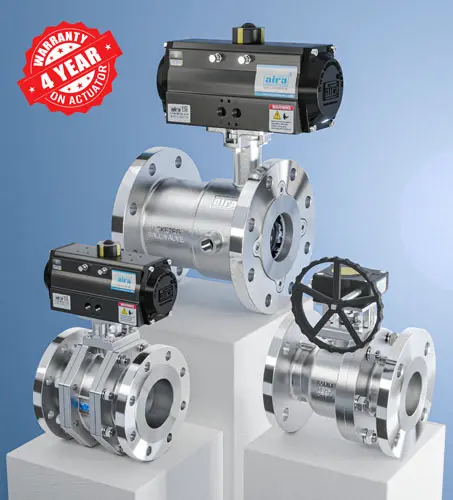
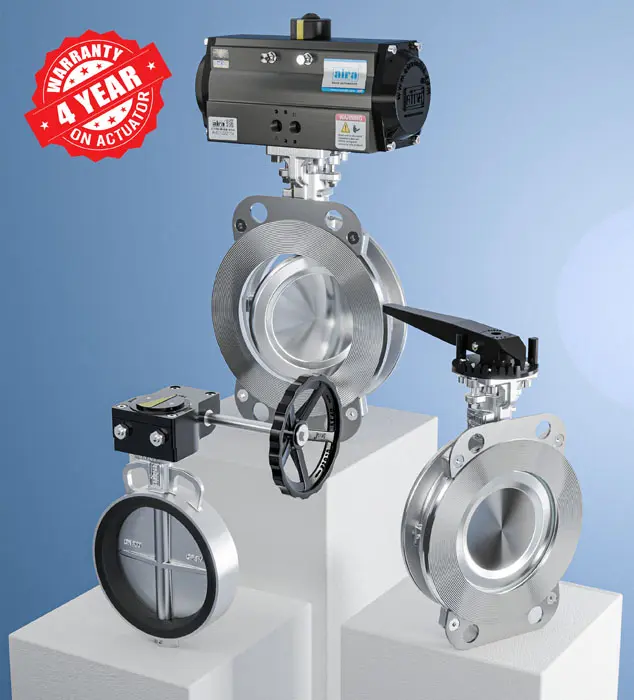
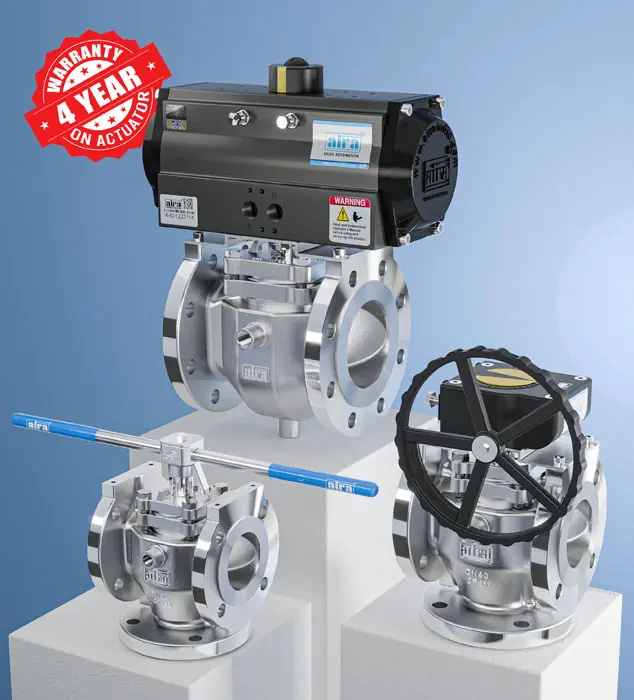
Aira’s high-pressure ball valves support both handle- and pneumatic-actuator configurations. Our pneumatic actuators come with a 4-year warranty and mount directly—no adapters, no complications.
Industries Where High-Pressure Valve Selection Is Non-Negotiable
Some industries simply cannot afford to get this wrong. The stakes are too high — financially and in terms of safety.
Oil & gas pipelines and refineries operate at sustained high pressure, with hydrocarbons that demand fire-safe, SIL-certified valve designs. A failure here doesn’t just mean downtime — it means incident risk.
High-pressure steam lines in power plants and boiler systems require IBR-approved valves as a regulatory baseline. No approval means no compliance — and no commissioning sign-off.
Chemical injection systems and hydraulic circuits operate at pressures that standard industrial valves aren’t designed to withstand. Purpose-built high-pressure valve designs handle these conditions without compromising sealing integrity over time.
Petrochemical processing involves aggressive media at elevated pressure and temperature. Material selection and seat specification here directly determine valve service life — and system reliability.
Pressure Is Just One Part of the Selection Decision
High-pressure rating is a critical specification — but it’s one piece of the broader valve selection picture. Body construction, end connection type, seat material, certifications, and automation readiness all play a role in determining whether a valve performs over its intended service life or becomes a recurring maintenance problem.
If you’re evaluating your broader valve selection process, our earlier piece — The Valve Decision That Most Plant Engineers Get Wrong and End Up Paying For — covers the full selection framework in detail. The two topics connect directly: pressure rating is one of several decisions that compound each other when they go wrong.
A Quick Checklist Before You Finalize a High-Pressure Valve
Before the specification is locked, run through these:
- Is the pressure rating based on maximum surge conditions — not just steady-state operating pressure?
- Does the body material match the media — not just the ambient environment?
- Is the seat material rated for the actual operating temperature range?
- Does the valve carry CE, SIL3, IBR, or FIRE SAFE certification as required by the application?
- Is the valve automation-ready? Does it support pneumatic actuator mounting if needed?
- Has the end connection type been matched to the piping system design?
If the answer to any of these is uncertain — it’s worth resolving before installation, not after.
Right Specification, Zero Surprises
Pipeline failures under pressure are rarely random. They trace back to decisions made at the specification stage: pressure class, material, seat, and certifications. Get those decisions right and the valve becomes a long-term, low-maintenance asset. Get them wrong and the consequences show up at the worst possible time.
Aira Euro Automation manufactures high-pressure ball valves rated up to 4000 PSI, built from SS304, SS316, duplex, super duplex, and Hastelloy — with certifications including CE, POD, SIL3, IBR, and FIRE SAFE. Every valve is manufactured in-house at our Ahmedabad facility, with full quality traceability and BS EN 10204 3.1 and 3.2 material certification available.
Explore our complete ball valve range or reach out directly — our engineering team helps specify the right valve for the application before the order goes in.
Need a High-Pressure Valve Specified for Your Application?
With over 30 years of manufacturing experience and exports to 45+ countries, Aira’s engineering team helps you match the right valve to the right operating conditions — every time.
Explore High Pressure Ball Valves: https://www.airaindia.com/ball-valve/high-pressure-ball-valves/
Request a Free Quote: https://www.airaindia.com/contact/